Dzhendem Tepe: The Youth Hill Viewpoint
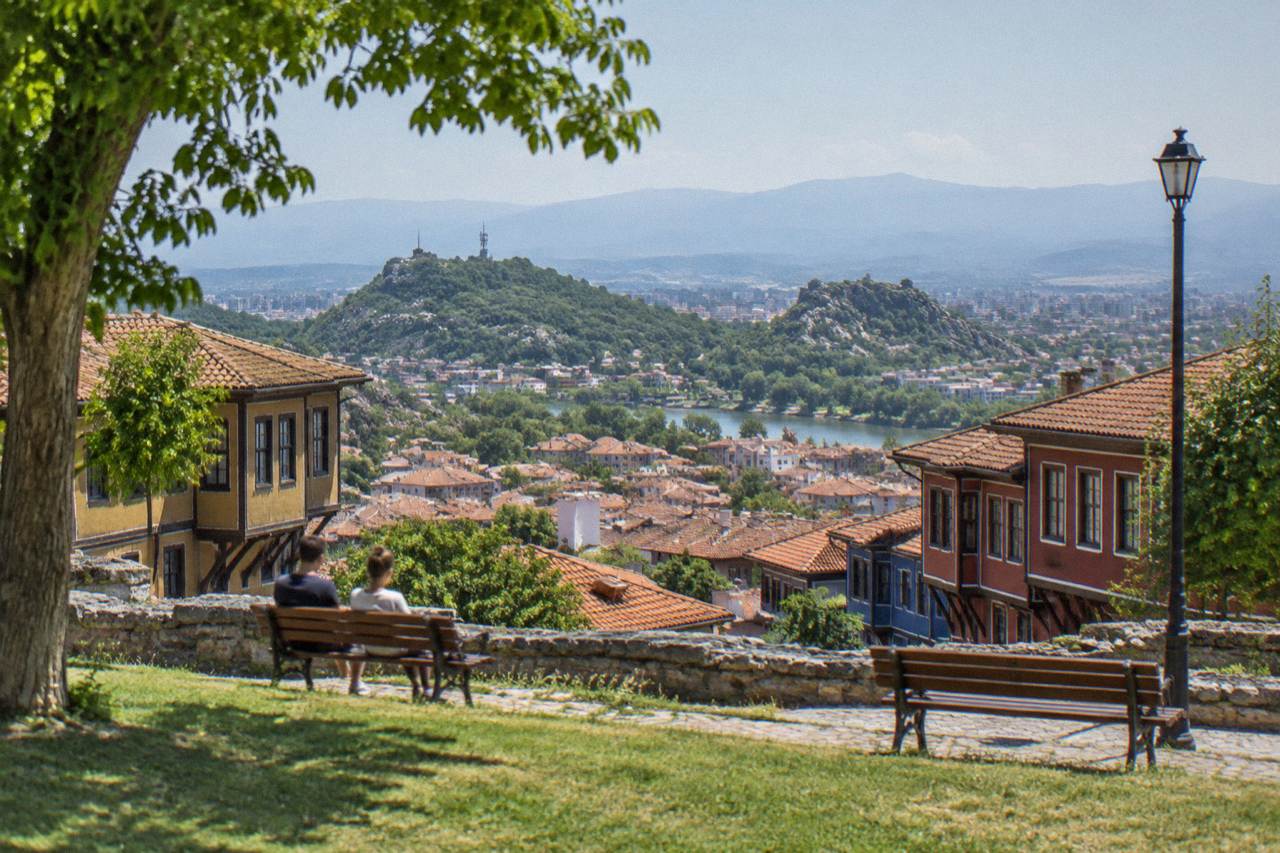
Dzhendem Tepe, or Youth Hill, is the highest of Plovdiv's six hills, a free, open park of 285.5 m with the widest panorama in the city, from the Old Town rooftops to the Rhodopes on the southern horizon.
Short answer
Dzhendem Tepe (Youth Hill) is the highest of Plovdiv's six hills at 285.5 m, according to the municipal tourism site. It is a free public park with unrestricted access, about 20 minutes on foot south of the centre, and it gives the widest panorama in the city, taking in the Old Town, the plain of the Maritsa and the Rhodopes.
Plovdiv, Bulgaria's second-largest city and an inland city in the south of the country, is built around six hills, and the highest of them is Dzhendem Tepe, the hill better known in English as Youth Hill. The municipal tourism site lists it at 285.5 m, the top point of any of the six hills that survived into the present century, and unlike the museum-ticketed Old Town slopes it costs nothing to climb. What the summit gives back is the widest single panorama available anywhere in Plovdiv: the whole bowl of the city, the valley of the Maritsa, and the long blue line of the Rhodopes on the southern horizon.
This page on the Plovdiv Travel Guide covers Youth Hill and its quieter neighbour Danov Hill, the hill with the clock tower that locals call Sahat Tepe. The two sit at opposite ends of the central ridge system, and together they make a free half-day of walking that pairs well with the ticketed sights of the Old Town, which Nebet Tepe and the Three Hills introduce elsewhere on this site.
What Is Dzhendem Tepe In Plovdiv?
Dzhendem Tepe is Youth Hill, the highest of the six hills around which Plovdiv is built, standing 285.5 m above sea level according to the municipal tourism site's relief page. It is a free public park with no ticket, no fence and no opening hours, and the city's tourism site describes it as a green hill used for walks and youth events rather than as an archaeological excavation like Nebet Tepe.
The name explains the hill's modern identity. "Dzhendem Tepe" carries an old Turkish-era meaning close to "hill of paradise", but the Bulgarian name in use today, Halm na Mladostta, translates as Hill of Youth, and the municipal site links it to the open-air gatherings and festivals held on its slopes. Where Nebet Tepe, Dzhambaz Tepe and the rest of the Three Hills group are dense with excavated antiquity, Dzhendem Tepe is the city's big green lung, a wide grass-and-tree hill in the southwestern quarter of the centre.
Its archaeology exists but stays under the grass. The hill carries traces of ancient settlement and a Roman-era aqueduct line that once carried water into Philippopolis, yet nothing on the summit is fenced, ticketed or signposted as a site with hours. That is the practical difference for a visitor: you come here for space, quiet and the view, not for a monument you can walk inside. For the excavated Roman remains, the Ancient Theatre of Philippopolis and the Roman Stadium pages hold the ticketed detail.
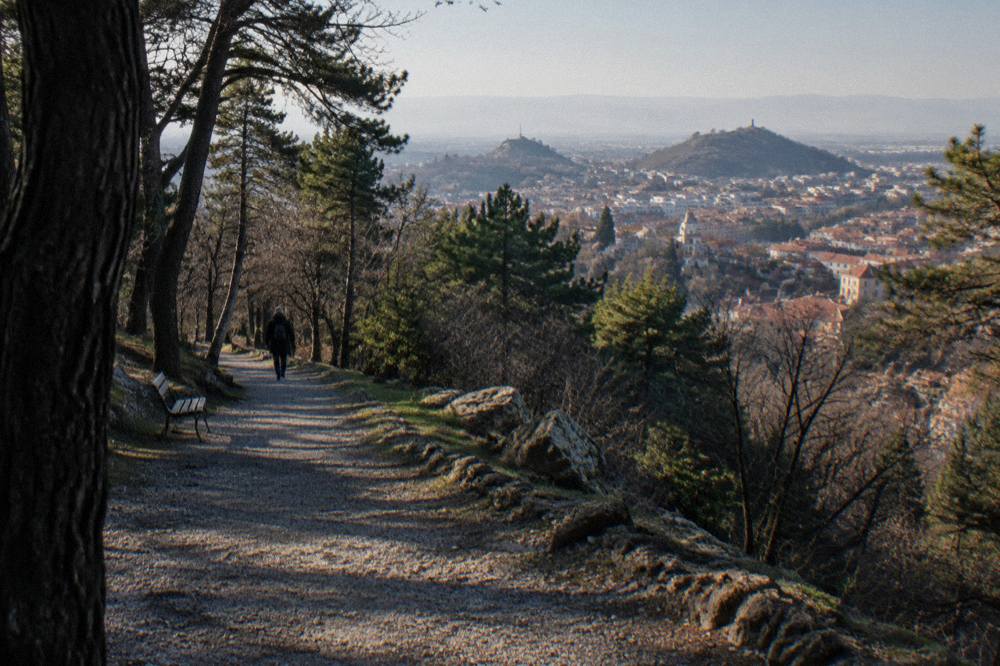
The hill matters to the city's shape in one more way. Plovdiv's nickname in antiquity was Trimontium, the city of three hills, but the modern city spreads across and between six of them, and from the top of Dzhendem Tepe you can see the whole system at once: the Three Hills cluster with the Old Town, the clock tower of Sahat Tepe to the northeast, and the Alyosha monument on Bunardzhika closer to the centre. No other free vantage point in Plovdiv does that.
How High Is Youth Hill Compared With Plovdiv's Other Hills?
Youth Hill, at 285.5 m, is the highest of Plovdiv's six surviving hills, standing above Bunardzhika at 265 m, the clock-tower hill Sahat Tepe at 227 m and the rest, per the municipal tourism site's relief figures. The lowest of the six is Taksim Tepe at 195 m, and there was once a seventh hill, Markovo Tepe, partly quarried away in the 1930s.
The full set of heights, as published by the municipal tourism site, reads as follows.
| Hill | Common English name | Height |
|---|---|---|
| Dzhendem Tepe | Youth Hill | 285.5 m |
| Bunardzhika | Hill of the Liberators | 265 m |
| Sahat Tepe | Danov Hill | 227 m |
| Dzhambaz Tepe | part of the Three Hills | 212 m |
| Nebet Tepe | part of the Three Hills | 207 m |
| Taksim Tepe | part of the Three Hills | 195 m |
Two corrections attach to this table, because the "seven hills of Plovdiv" claim travels further than the truth. There were seven hills until the 20th century, but Markovo Tepe was partly destroyed by quarrying in the 1930s, and the municipal site is explicit that six remain. Plovdiv is therefore a six-hill city, even though its ancient Roman name Trimontium counted only the central three.
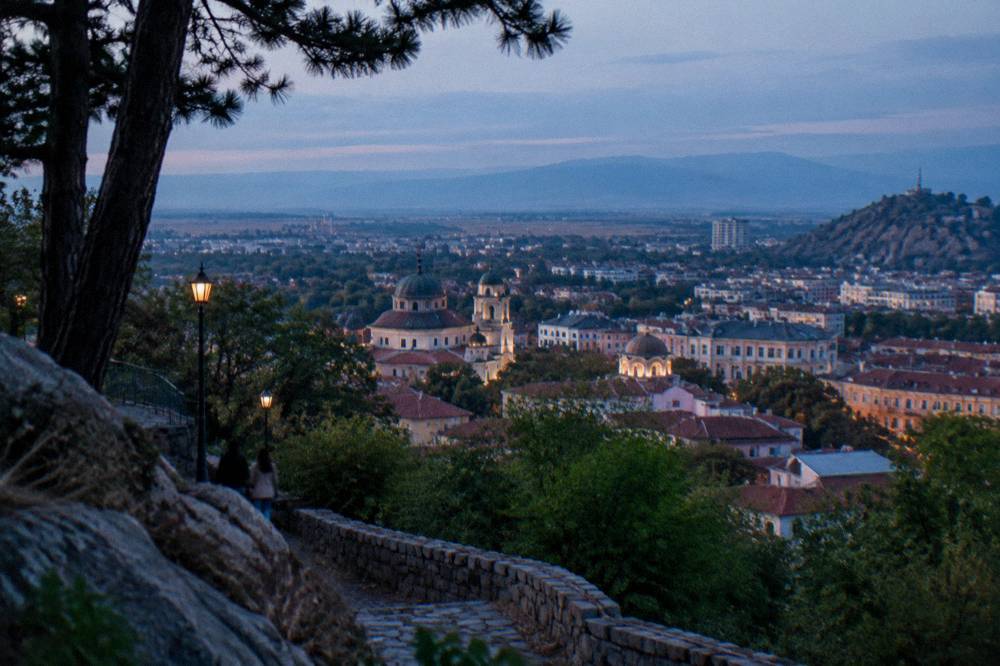
The height ranking also explains the view logic. Because Dzhendem Tepe stands clear of the Old Town ridge and above every other hill in the set, its summit sees over everything: this is why photographers head there for sunset and why the Alyosha monument on the lower Bunardzhika, unveiled in 1957, appears in the foreground of Youth Hill pictures rather than the other way round. A guided walk is the other way to get the geography explained on site: the Old Town and Roman Theatre walking tour covers the lower landmarks, and Check availability for your dates.
What Can You See From The Top Of Dzhendem Tepe?
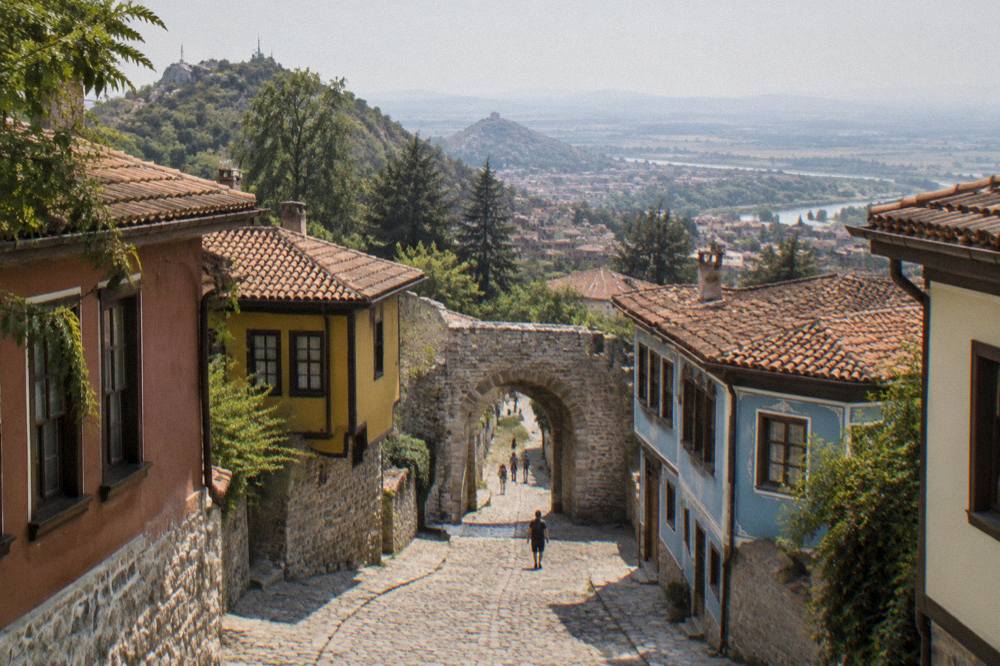
The summit view from Dzhendem Tepe takes in the whole of Plovdiv at once: the Old Town and the Three Hills to the northeast, the Alyosha monument on Bunardzhika, the clock tower on Sahat Tepe, the flat plain of the Maritsa river to the north and west, and the Rhodopes running the full southern horizon. On clear days the long mountain wall is the single most photographed element of the panorama.
The Old Town skyline is the detail worth bringing binoculars for. From Youth Hill the revival-era roofs of the Old Town cluster below the Three Hills, and the green of the Tsar Simeon Garden and singing fountains sits in the middle distance, with the tower blocks of the northern districts behind them. Turning south, the Rhodopes rise without interruption, the same range the site's Rhodopes day trips cover, and on a clear evening the ridge holds the light long after the streets below have gone into shade.
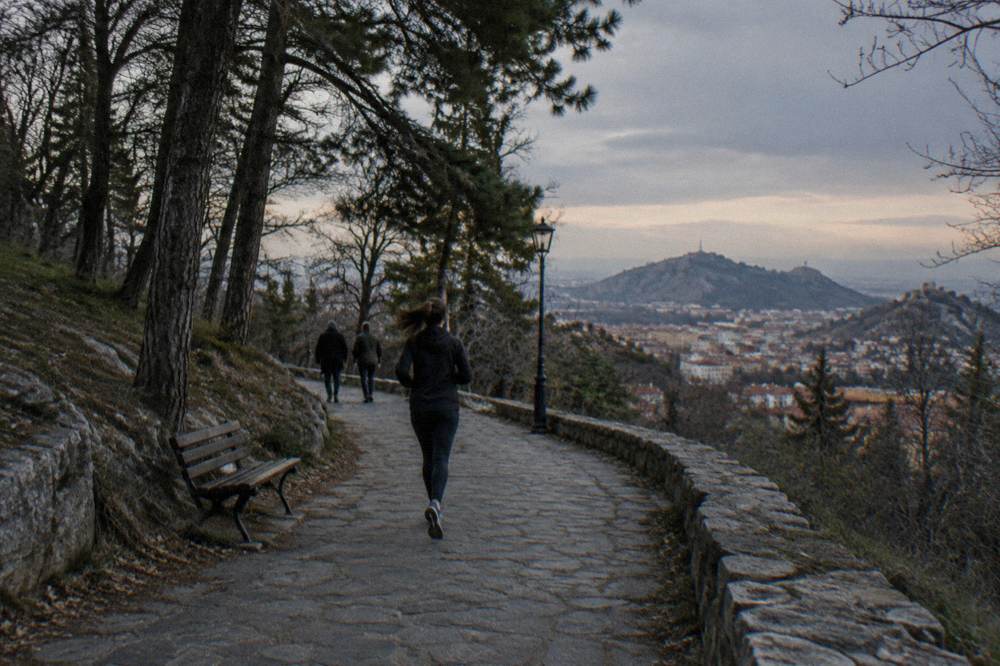
For orientation, the table below matches each visible landmark with its own page on this site.
| Landmark visible from Dzhendem Tepe | Direction from summit | Notes |
|---|---|---|
| Old Town and Three Hills | northeast | Nebet, Dzhambaz and Taksim Tepe with the Old Town on their slopes |
| Alyosha monument, Bunardzhika | northeast, closer | concrete Soviet-era monument, unveiled 1957 |
| Sahat Tepe clock tower, Danov Hill | northeast | hilltop park with the historic clock tower |
| Tsar Simeon Garden | north | city garden with the singing fountains |
| Maritsa valley and northern districts | north and west | flat plain, rowing canal beyond the centre |
| Rhodopes | south | continuous mountain horizon |
The best light comes late. The panorama faces the mountains to the south and the city to the north, so the evening sun behind you warms the rooftops and the Rhodopes keep their colour, which is why the summit fills with locals and tripods in the last hour before sunset. Morning gives the clearer air and the emptier paths instead, and the choice between them is really a choice between two different photographs.
If you would rather trade hill-climbing for a planned programme, the picks below cover the city walk, a wine day in the Thracian Valley and the classic fortress-and-monastery trip south.
What Is Danov Hill And The Sahat Tepe Clock Tower?
Danov Hill, also called Sahat Tepe, is the 227 m hill immediately west of the central shopping street, a green hilltop park whose Turkish-era name means "clock hill" after the historic clock tower on its top. Like Dzhendem Tepe it is a free public park with no ticket and no closing time, and it sits close enough to Main Street to be climbed in a few minutes.
The tower is the anchor. A clock tower has stood on the hill since the Ottoman period, and it has been telling the city the time from the hilltop for generations, which is why every orientation walk in central Plovdiv uses it as a landmark. The municipal tourism site's relief page lists the hill's height and its position in the six-hill system, and its park paths, benches and old trees make it the easiest green climb in the centre, far gentler than the slopes of Youth Hill.
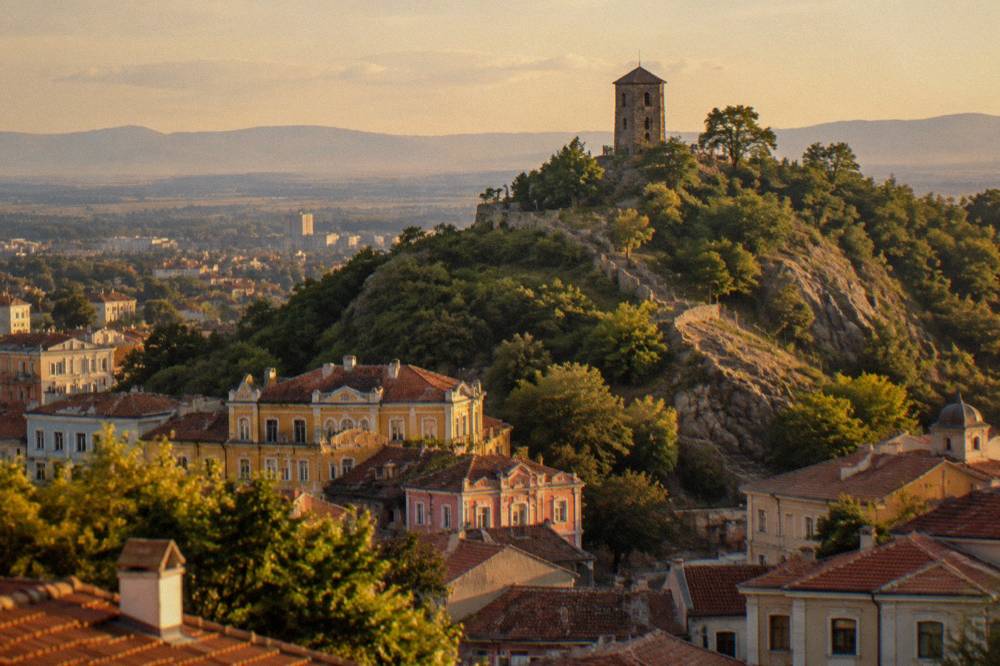
Danov Hill pairs naturally with a museum hour. The Regional Ethnographic Museum sits on the Old Town side of the ridge, closed on Mondays, and the Balabanov House and Hindliyan House lie a short walk further along the same slope, all covered by the Old Plovdiv one-site ticket of 3.58 euro published on the official tickets page. A sensible free-to-cheap circuit is therefore Danov Hill first for the tower and view, then downhill into the Old Town for one ticketed house.
The two hills of this page make an easy comparison for planning.
| Dzhendem Tepe (Youth Hill) | Danov Hill (Sahat Tepe) | |
|---|---|---|
| Height | 285.5 m | 227 m |
| Ticket | free, open access | free, open access |
| Main feature | widest panorama in Plovdiv | historic clock tower |
| Position | southwest of the centre | west of Main Street |
| Effort | longer climb, unpaved paths in part | short climb, park paths |
| Best for | sunset, photography, the Rhodopes view | a quick break between Old Town sights |
How Do You Get To Dzhendem Tepe And What Is The Walk Like?
Youth Hill is reached on foot from central Plovdiv in roughly twenty to thirty minutes, with the climb starting from the southwestern edge of the centre near the Kapana district and the youth centre below the hill's northern slope. There is no ticket, no gate and no formal opening time, the paths are a mix of paved alleys and worn earthen tracks, and the summit is a broad open lawn rather than a built viewpoint.
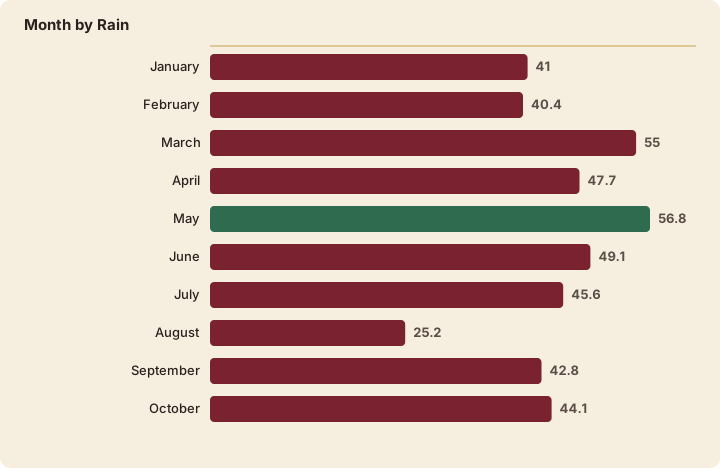
Directions in the practical sense are simple: from Kapana, the creative district whose name means "The Trap", walk south past the modern Trakart and youth-centre buildings at the hill's foot, and take any of the alleys that rise through the trees. The lower paths are stepped and shaded, the upper slopes open into grass, and because the whole hill is a public park you can pick your own line up. Sturdy shoes beat sandals after rain, as parts of the upper track turn to mud, a fair reflection of the 44 to 57 mm of monthly rainfall the ERA5 reanalysis, 1991-2020, gives Plovdiv across spring and autumn.
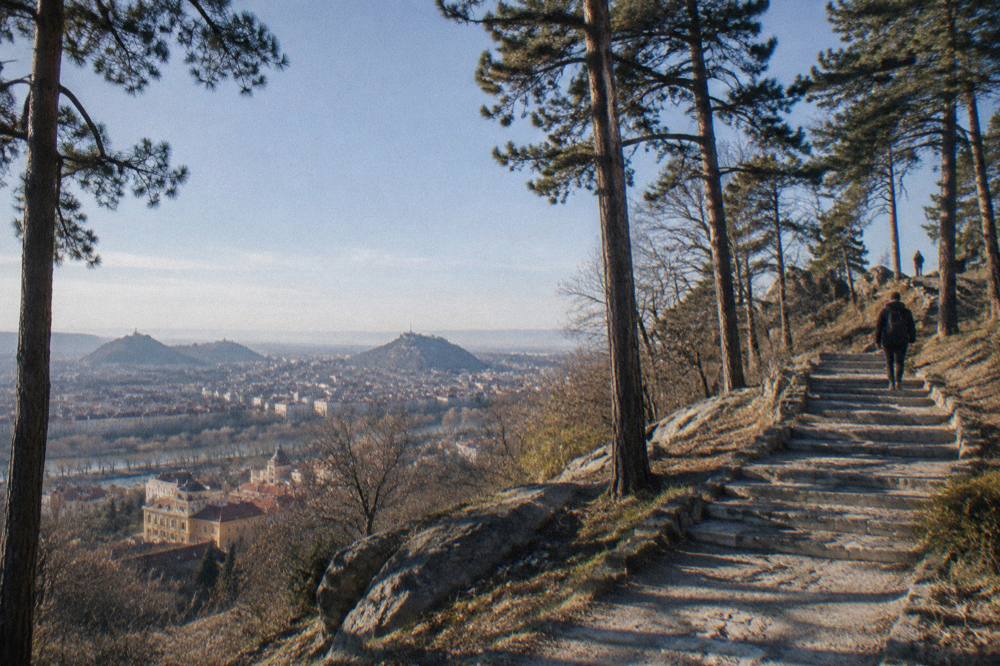
There is no visitor infrastructure at the top: no cafe, no toilet, no water point. Bring what you need, take rubbish down, and plan the descent into either Kapana for food and coffee or, if you loop northeast along the ridge, into the Old Town. That loop, Youth Hill in the late afternoon and the Old Town by early evening, is one of the most satisfying free sequences in the city, and the site's free things to do in Plovdiv page builds other zero-cost routes around the same hills.
A guide changes what you get out of the lower half of that loop. The classic Old Town guided walking tour covers the Roman Theatre and the cobbled streets below the Three Hills, and tip-based walks also run locally; confirm arrangements with the guide directly.
When Is The Best Time To Climb The Plovdiv Hills?
The shoulder months of April, May, September and October give the kindest walking weather on Plovdiv's hills, with ERA5 reanalysis, 1991-2020, modelled mean daily highs of 17.1 to 21.9 C in spring and 18.1 to 23.8 C in autumn, against July and August highs of 28.2 and 28.6 C and January's mean high of just 5.9 C with lows of -2.6 C. Snow lies on the hill paths in cold snaps, so winter climbs need care.
The modelled monthly picture for the city reads as follows, from the ERA5 grid cell over the Old Town. Reanalysis smooths urban heat, so street-level afternoons can run a degree or two warmer than the table.
| Month | Mean daily high | Mean daily low | Rain |
|---|---|---|---|
| January | 5.9 C | -2.6 C | 41.0 mm |
| February | 8.0 C | -1.1 C | 40.4 mm |
| March | 12.1 C | 2.1 C | 55.0 mm |
| April | 17.1 C | 6.4 C | 47.7 mm |
| May | 21.9 C | 11.5 C | 56.8 mm |
| June | 25.9 C | 15.4 C | 49.1 mm |
| July | 28.2 C | 17.9 C | 45.6 mm |
| August | 28.6 C | 18.1 C | 25.2 mm |
| September | 23.8 C | 13.8 C | 42.8 mm |
| October | 18.1 C | 8.8 C | 44.1 mm |
| November | 12.3 C | 3.8 C | 39.7 mm |
| December | 7.0 C | -0.8 C | 49.3 mm |
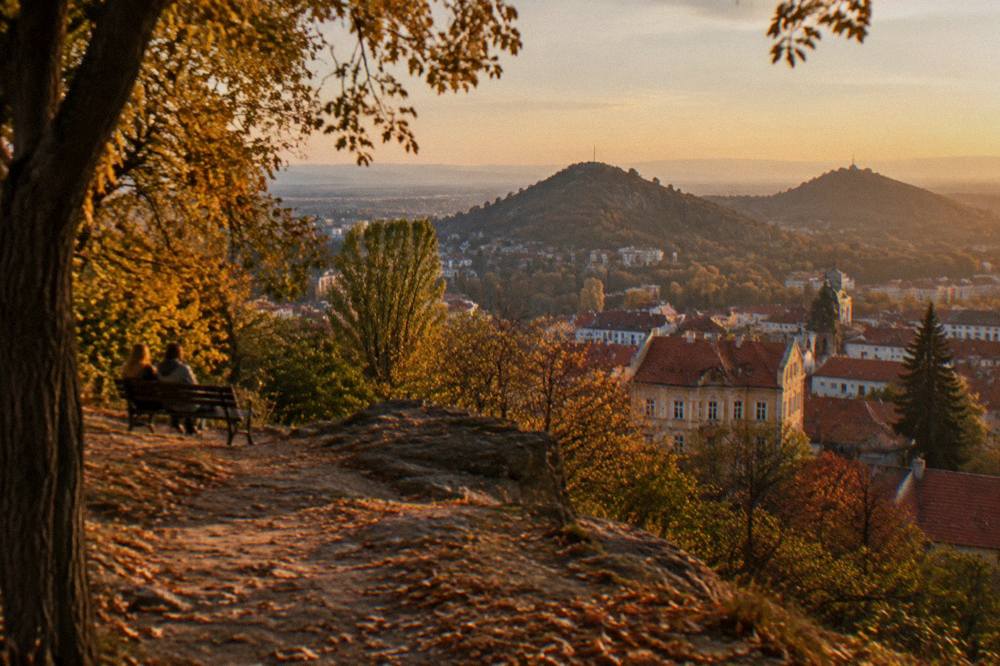
Two readings matter for a hill walk. August is the month with the lowest rainfall at 25.2 mm and the highest mean high at 28.6 C, so it rewards an early-morning climb before the heat builds. May carries the highest monthly rain total at 56.8 mm, closely followed by March at 55.0 mm, which is when the earthen summit paths are at their softest. Autumn splits the difference cleanly: warm afternoons, moderate rain, and low sun that flatters both the rooftops and the Rhodopes. The site's best time to visit Plovdiv page extends the same month-by-month logic to festivals and ticketed sights.
What Else Is Near Youth Hill And Danov Hill In Plovdiv?
Both hills sit within easy walking distance of Plovdiv's core sights: Kapana and the youth-centre complex at the foot of Dzhendem Tepe, Main Street and the Roman Stadium between the two hills, and the whole Old Town, from Hisar Kapia to the Ethnographic Museum, a few minutes beyond Danov Hill, so a single walking day can pair a free summit view with several ticketed landmarks priced between 3.58 and 7.57 euro on the official Old Plovdiv list.
Prefer to cover these sights on two wheels? Book a private Plovdiv bike tour here.
The ticketed anchor points around the two hills, with prices from the official Old Plovdiv tickets page, are these.
| Sight near the two hills | One-site ticket | Hours |
|---|---|---|
| Ancient Theatre of Philippopolis | 3.58 euro | Apr to Oct daily 9:30 to 18:00; Nov to Mar 9:00 to 17:30 |
| Bishop's Basilica | 7.57 euro, priced separately | daily 9:00 to 18:00 |
| Roman Stadium 3D hall | 3.68 euro | Apr to Oct 9:30 to 18:00; Nov to Mar 9:00 to 17:30 |
| Regional Ethnographic Museum | about 3.07 euro (reported) | Tue to Sun; closed Monday |
| Old Plovdiv combined ticket, up to 5 sites | 10.74 euro | 48-hour validity reported, confirm on purchase |
Two practical notes from the official pages. The Dzhumaya Mosque, on the flat ground between Danov Hill and the Roman Stadium, is free to visit outside prayer times, with modest dress and shoes off. And the Hisar Kapia gate, the old Ottoman-era portal into the Old Town, is a public landmark you pass without a ticket on almost any route between these hills.
Bachkovo Monastery, the usual first stop on that southern trip, is a working monastery reported to be free to enter, and the full route is described on the site's Bachkovo Monastery page. Whether you spend your Plovdiv day on a free hilltop or a guided descent into the Old Town, the two hills on this page cost nothing, close never, and hand back the widest view in the city.
Common Questions About Dzhendem Tepe And The Plovdiv Hills
Is Dzhendem Tepe free to visit in Plovdiv?
Yes. Youth Hill is a free public park with no ticket, no gate and no opening hours, and Danov Hill with the clock tower is equally free. Only the museums and ancient sites on the Old Town slopes, from 3.58 euro per site on the official list, are ticketed.
How many hills does Plovdiv have?
Six. There were seven until the 20th century, but Markovo Tepe was partly destroyed by quarrying in the 1930s, and the municipal tourism site lists the six that remain, from Dzhendem Tepe at 285.5 m down to Taksim Tepe at 195 m.
Which is the highest hill in Plovdiv?
Dzhendem Tepe, or Youth Hill, at 285.5 m according to the municipal tourism site, ahead of Bunardzhika at 265 m and Danov Hill, Sahat Tepe, at 227 m.
Can you see the Rhodopes from Dzhendem Tepe?
Yes. The southern horizon from the summit is a continuous line of the Rhodopes, alongside the Old Town, the Maritsa plain and the whole six-hill layout of the city.
What does Sahat Tepe mean?
Sahat Tepe is the Turkish-era name for Danov Hill, meaning clock hill, after the clock tower that has stood on its top since the Ottoman period and gives central Plovdiv one of its best-known landmarks.
