Veliko Tarnovo From Plovdiv: Tsarevets And The River Bend
Veliko Tarnovo sits far north of Plovdiv, wrapped around a river bend and crowned by the Tsarevets hill, and it is the one classic Bulgarian city trip that Plovdiv visitors ask about most often. Here is how the desk at Plovdiv Travel Guide frames the decision, the transport reality and the alternatives.
Short answer
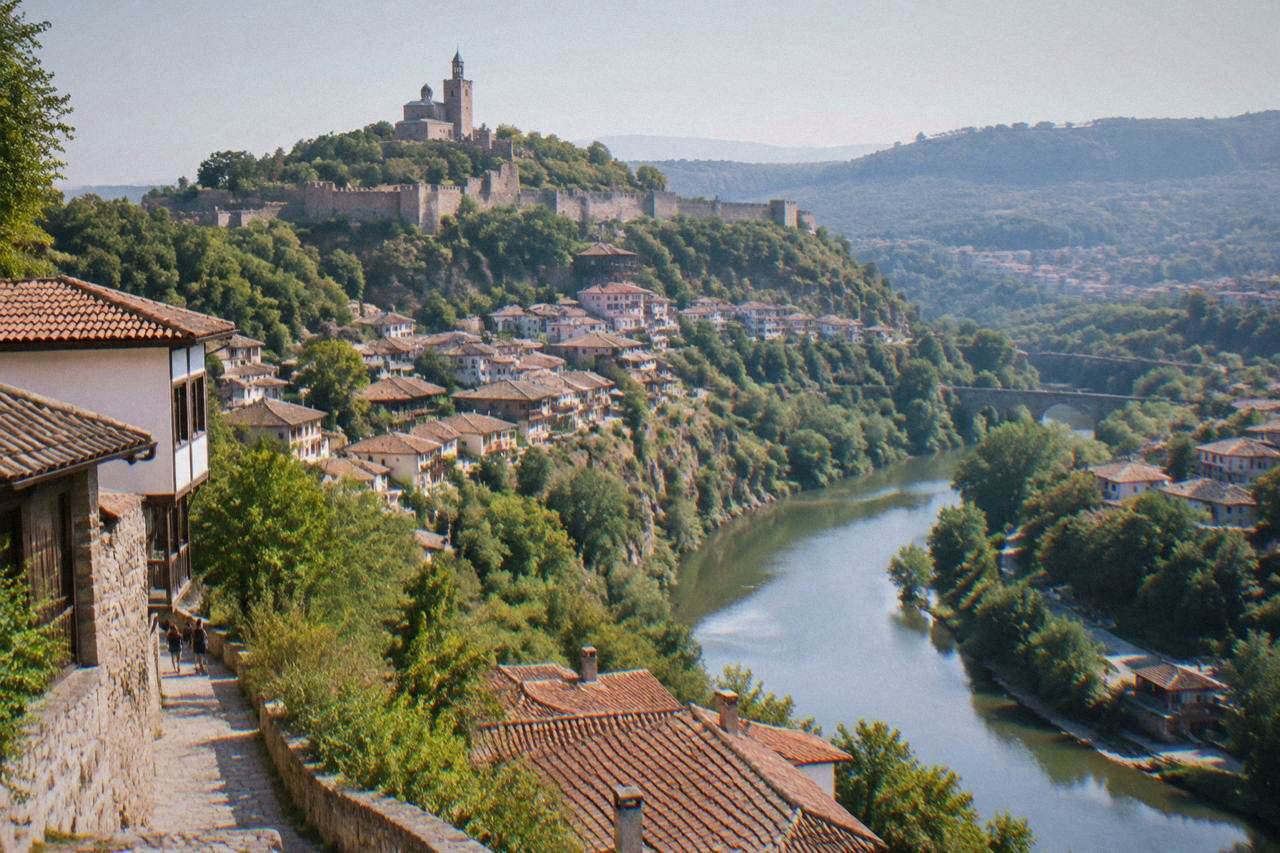
Veliko Tarnovo is commonly described as Bulgaria's medieval capital, a hill-and-river city in the north of the country centred on the Tsarevets fortress. From Plovdiv it is the longest of the classic day trips, so the practical advice is to check current rail and coach connections first, treat it as a full-day commitment, and compare it against closer trips such as Bachkovo, Koprivshtitsa and the Rhodopes before booking anything.
Plovdiv, in southern Bulgaria, is an inland city of six hills with no sea coast, and its day-trip compass points in four directions: south to the Rhodopes and Bachkovo, west to Sofia and Koprivshtitsa, north into the Thracian plain, and, for the ambitious, north-east across the whole width of the country to Veliko Tarnovo. The question this page answers is simple and it arrives weekly in reader mail: is the walled hill of Tsarevets and the river bend town around it worth the travel from a Plovdiv base, or does it belong on a different trip entirely? The short version is that it is a magnificent destination and a demanding day trip, and that the arithmetic of hours on the road should be checked against current timetables before anything else.
Where Is Veliko Tarnovo, And Why Do Plovdiv Visitors Ask About It?
Veliko Tarnovo lies in northern Bulgaria, hundreds of kilometres from Plovdiv by road and rail, and it is billed as the medieval capital of the Second Bulgarian Empire, a city of walls, tsars and revolts wrapped around the Tsarevets hill and the Yantra river bend below it. The pairing with Plovdiv is natural in one sense and awkward in another. Both are historic hill cities. Both carry national-history weight. But Plovdiv's story runs from a Thracian settlement on Nebet Tepe, dated by the city's tourism site to the 4th millennium BC, through Rome, Byzantium and the Ottoman centuries, while Veliko Tarnovo's fame is concentrated in the medieval period, when it was the seat of Bulgarian kings. Visitors who have walked Plovdiv's Old Town often want the northern chapter of the same national story, and that is exactly what Tsarevets is sold as.
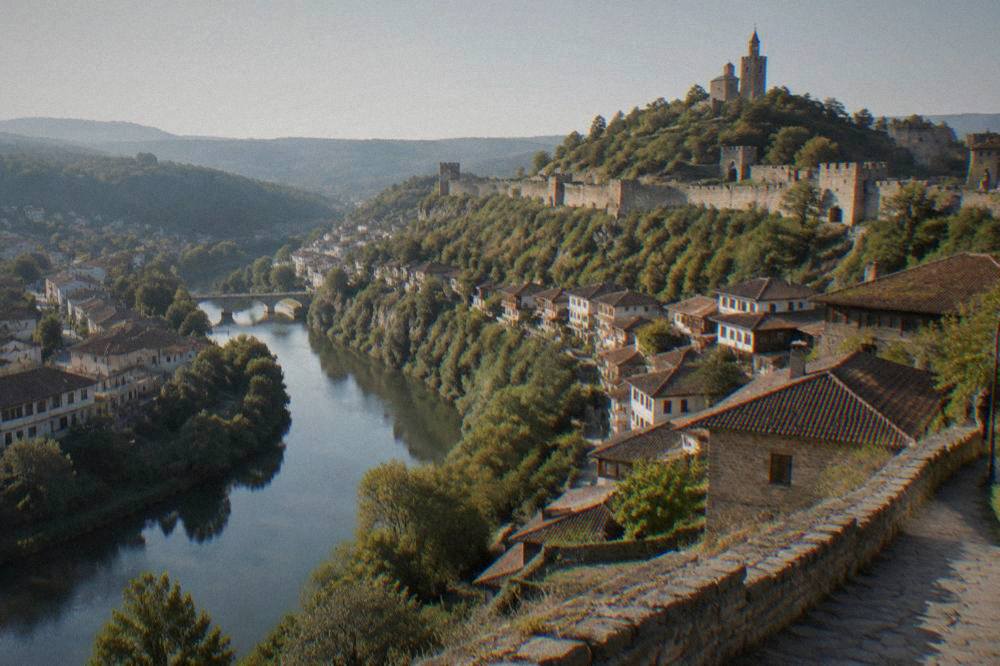
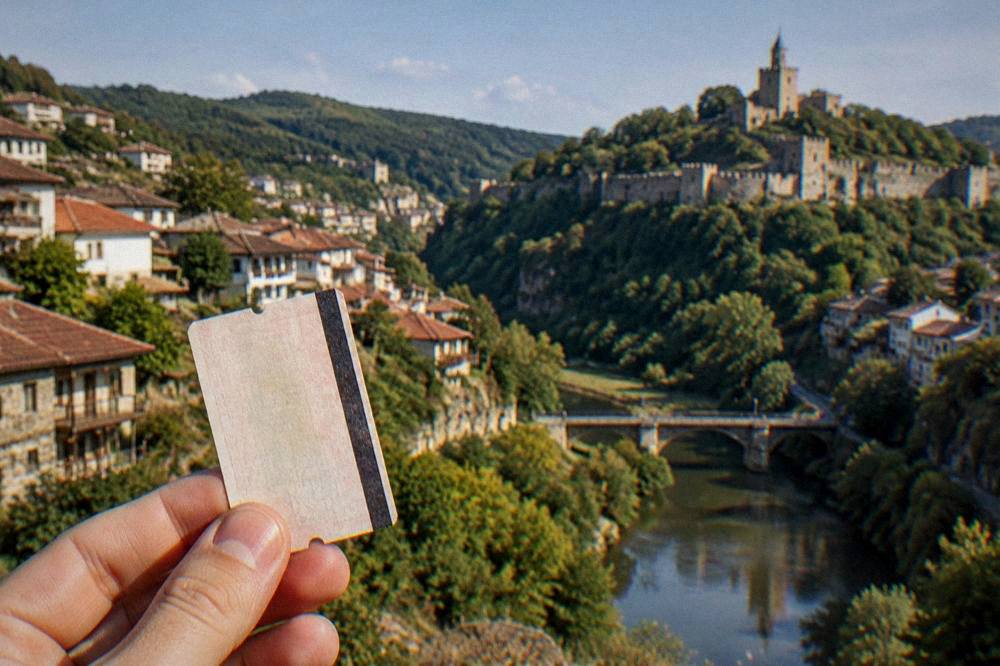
The contrast in geography matters as much as the contrast in history. Plovdiv sits on six hills in the Upper Thracian plain, an inland crossroads city with the Rhodopes to the south. Veliko Tarnovo is described in standard references as strung along a loop of the Yantra river, with the fortress hill standing above the water on three sides. The setting, more than any single building, is what travel writing about the city returns to: houses stacked above a bend, bridges crossing and recrossing, the fortress walls closing the skyline. A visitor from Plovdiv arrives expecting a compact, vertical city, and that expectation is broadly correct.
What the two cities share is the way modern Bulgaria presents them. Plovdiv was European Capital of Culture in 2019, shared with Matera, and its Old Town core, "The Ancient Plovdiv", sits on Bulgaria's UNESCO Tentative List, submitted in 2004, which is a waiting list and not an inscription. Veliko Tarnovo is not on that list either; its draw is domestic history rather than a UNESCO file. Neither city is a World Heritage Site.
How Do You Get From Plovdiv To Veliko Tarnovo?
Check the national rail and coach timetables before planning anything else, because the journey crosses most of Bulgaria and will consume the better part of a day in each direction. The city's central railway station and the Yug (South) bus station stand side by side on Hristo Botev Boulevard, the Rodopi bus station on Macedonia Boulevard serves southern routes toward Bachkovo and Smolyan, and the Sever (North) bus station on Dimitar Stambolov Street serves northern routes, which is the relevant one for any departure toward the north of the country. Any Veliko Tarnovo itinerary starts at one of those three.
The rail reality deserves a frank paragraph. Bulgaria's rail network runs through Sofia and the central corridor, and the Sofia to Plovdiv line is the one with clear timetable data, where direct trains take about 2 h 40 to 3 h 05 and services routed via Karlovo take far longer. Travellers should also note that the Plovdiv railway junction has been under a major modernisation programme, reported by the transport ministry as 85 per cent complete in November 2025 with completion due in 2026, so station access and platform arrangements can change during works.
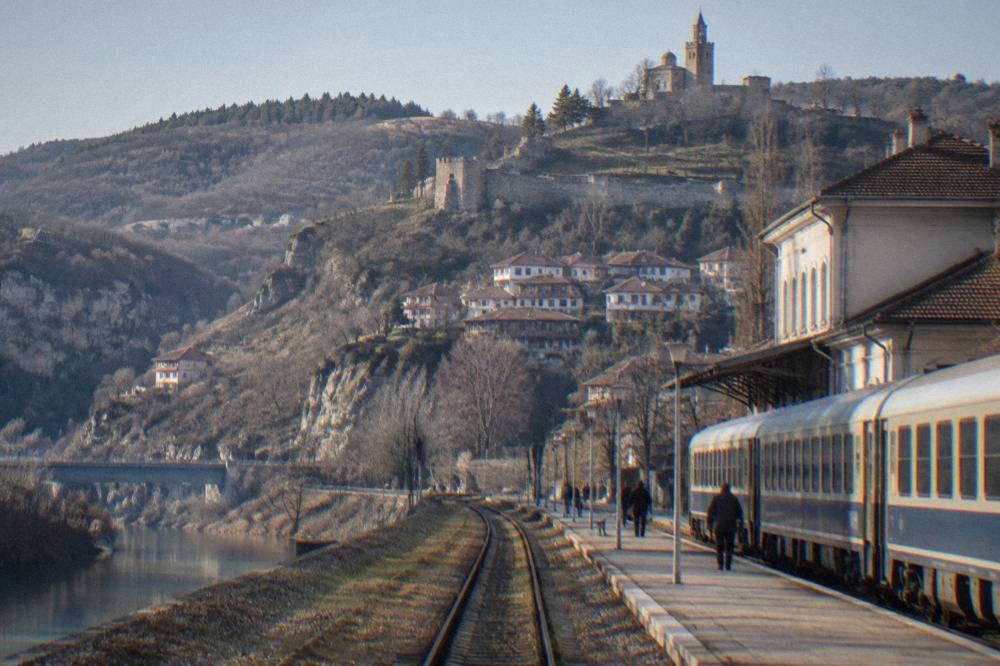
One structural point that is safe to make: the distance pushes many Plovdiv visitors toward organised transport rather than self-drive, and that is where the site's own roster earns its place. A guided day trip moves the timetable burden onto the operator, which matters when the round trip is this long. If Veliko Tarnovo proves too far for your dates, the roster holds strong alternatives in every other direction, and the tour below is a fair starting sample.
Some travellers still prefer their own wheels for a trip this size. Book a rental car here.
For readers who prefer the northern-history theme but want less travel, the honest comparison is Koprivshtitsa, a Revival-era town west of Plovdiv whose six house museums are sold on a combined ticket of about 10 euro. The Koprivshtitsa day trip from Plovdiv page carries that history in full, and the site also maintains a sofia day trip page for the capital run.
What Can You See Around Tsarevets And The River Bend In Veliko Tarnovo?
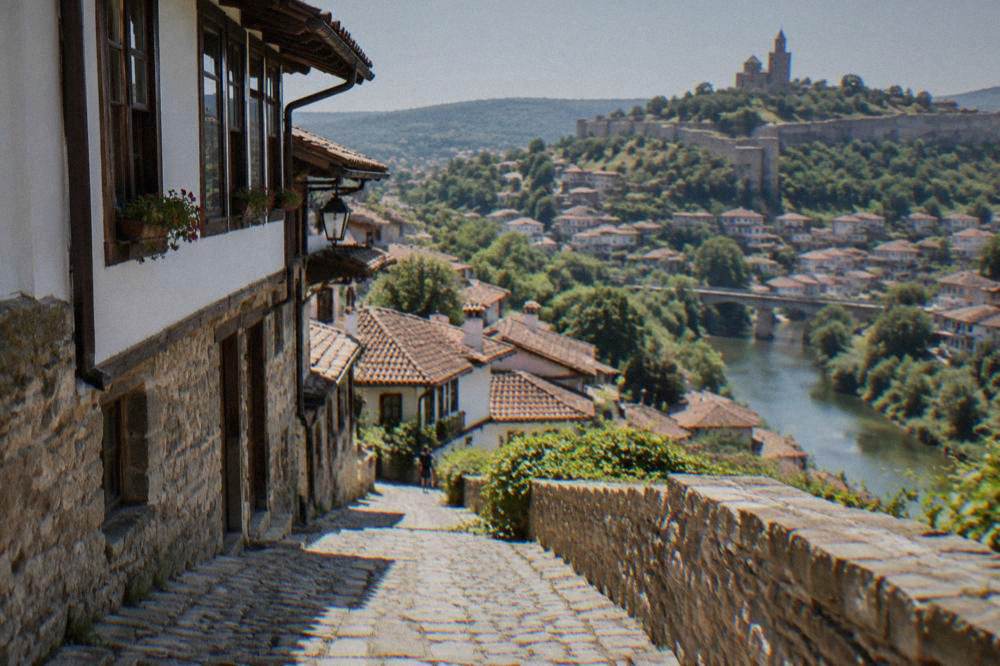
Tsarevets is billed as the fortified citadel of the medieval Bulgarian capital, a walled hill with palace and patriarchal remains and a panoramic walk along its ridge, and the town below it is described as a stack of Revival houses above the Yantra river bend, crossed by pedestrian streets and viewpoints. Entry prices, opening hours and restoration status for Tsarevets are best confirmed locally: confirm tickets and hours on arrival or through the operator before you commit the travel day. What can be reported is how the site is framed by those who sell it, and consistently that framing is "fortress, walls, views, then descend into the old lanes".
A workable shape for the hours on the ground, once you have them, is the classic two-part loop. Ascend Tsarevets first while energy and daylight hold, walk the perimeter walls, and take in the river bend from the top. Then descend into the old town lanes below, which are described in visitor guides as steep, cobbled and lined with craft shops and eateries, and finish along the river itself, where the bridges give the reverse view up at the fortress. None of that requires a ticket beyond the fortress entry, and the town streets are public space in the way Plovdiv's Kapana is: free, open, and best understood through its name, which the municipal tourism site explains as "The Trap", a maze of narrow streets built to hold visitors.
The comparison with Plovdiv's own hills is worth making explicitly, because it calibrates expectations. Plovdiv's Three Hills group, Nebet Tepe, Dzhambaz Tepe and Taksim Tepe, carries layer upon layer from Thracian to Ottoman times, and Nebet Tepe is free public access following the restoration project opened in March 2025. Tsarevets is a different proposition: a single-purpose fortress hill from one era, larger in footprint, with the town wrapped around it rather than spread across it. Visitors who loved Nebet Tepe's layered views tend to enjoy Tsarevets for the opposite reason, its unity.
If the fortress hours or the travel arithmetic defeat the day, the better move is south, not north. The Bachkovo Monastery page covers the working monastery about 30 km from Plovdiv, reached by minibus from the Rodopi station in 35 to 45 minutes, with free entry, and Asen's Fortress sits on the same road with a small entry fee whose figure is unclear, so confirm it on site. Both deliver walls, height and history inside an hour of Plovdiv.
Is Veliko Tarnovo Better As An Overnight Trip From Plovdiv?
Yes: a journey that crosses most of Bulgaria deserves a night, because a same-day return compresses Tsarevets and the old lanes into a rushed window bracketed by hours of travel, while one overnight converts the trip into the relaxed evening-and-morning rhythm the river bend town is described as rewarding. The reasoning is arithmetic more than opinion. Even before checking a single timetable, a destination several hundred kilometres away consumes the fixed daily travel budget that shorter Plovdiv day trips, Bachkovo at about 30 km, Hisarya, Koprivshtitsa, leave largely intact for sightseeing. Confirm accommodation costs at booking.
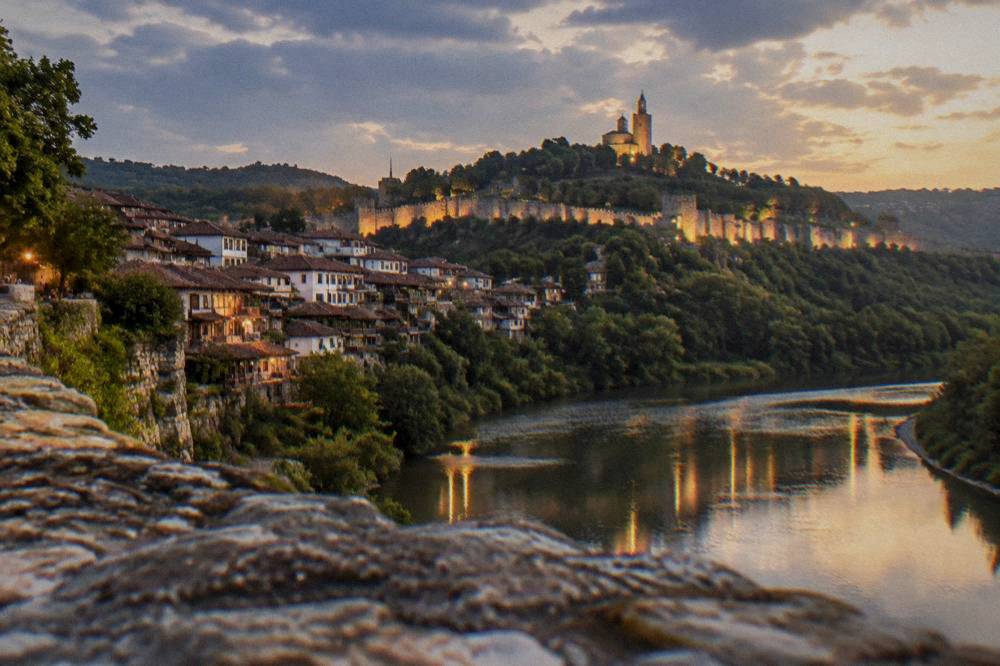
The overnight case has a second, less obvious advantage. Bulgarian cities of this type are described as changing character after the day crowds leave, and the evening view from a fortress hill at dusk, then a quiet morning before the return leg, is the standard recommendation in travel writing about the town. A day trip forces you to experience the town at its busiest hours and its least generous light. Whether that trade is worth it depends entirely on how many days your trip to Bulgaria allows, and for a two-base itinerary, Plovdiv plus Veliko Tarnovo, the Bulgaria itinerary guidance on this site's root page is the better place to plan from than any single day-trip page.
For travellers determined on the single-day version, two rules apply. First, book or confirm everything time-dependent, fortress entry, return transport, before leaving Plovdiv. Second, accept a hard turnaround time and build the day backwards from it, treating anything missed below the fortress as a reason to return rather than a failure. The disappointment pattern is usually the same: the road is longer than hoped, the fortress takes the whole afternoon, and the old lanes get twenty minutes.
How Does Veliko Tarnovo Compare With Plovdiv's Closer Day Trips?
The closer trips win on hours per sight, Veliko Tarnovo wins on scale and singularity, and the honest ranking is not a ranking at all but a match between the trip and the day you have: one long day favours the Rhodopes or Koprivshtitsa, two days or a spare overnight favour the north. Anything without a figure is marked as confirm on site, which is instruction, not decoration.
| Destination from Plovdiv | Direction | Distance Or Time | Entry cost | Notes |
|---|---|---|---|---|
| Bachkovo Monastery | South | about 30 km, minibus 35 to 45 min from Rodopi station | free | working monastery |
| Asen's Fortress | South | on the Bachkovo road via Asenovgrad | small fee, figure unclear, confirm on site | fortress ruins above the river |
That is not an argument against Veliko Tarnovo. It is an argument for treating it as the centrepiece of a Bulgarian itinerary rather than one item on a Plovdiv list, which is how the site's three-day Plovdiv planning pages frame the wider country.
Money is the same story. Prices here are in euro, and anything unconfirmed is worth checking locally.
| Expense on the day | What the research supports | Where to confirm |
|---|---|---|
| Tourist tax | may be charged by accommodation, 2026 euro rate unconfirmed | confirm at booking |
What Should You Eat On A Veliko Tarnovo Day Trip From Plovdiv?
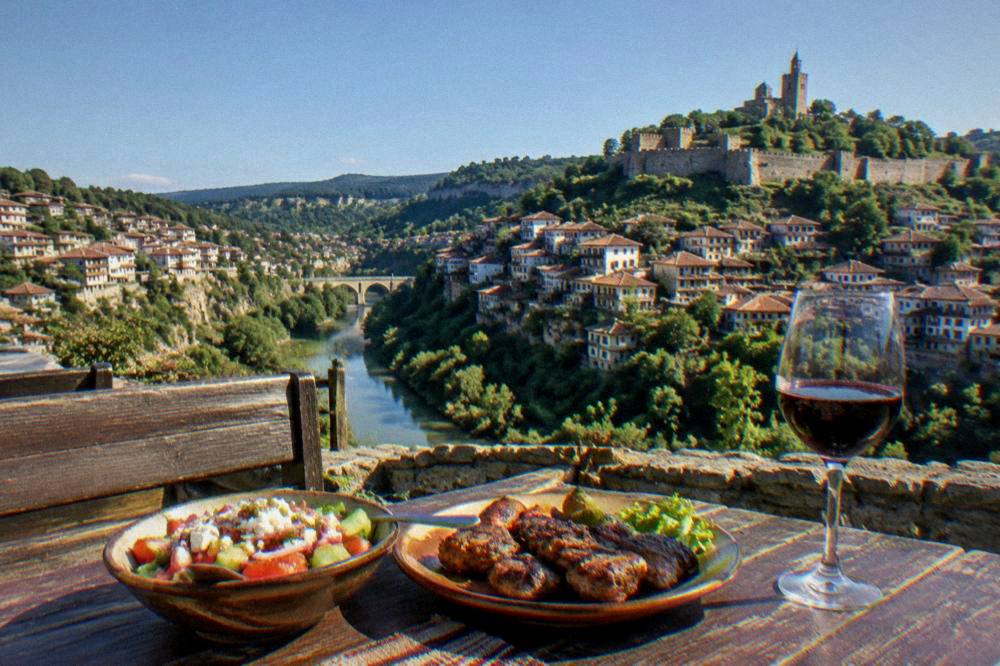
Eat the Bulgarian table you already know from Plovdiv, because the national dishes, shopska salad, kavarma, kebapche, tarator and banitsa, are described across the country's restaurant tradition rather than belonging to one city, and the practical advice is to book a table near the river bend early, since a long day trip compresses lunch into a narrow window. This site's food pages carry the dishes in detail, and none of them is Veliko Tarnovo-specific in the research base. A little planning arithmetic helps: a day built around a distant fortress pushes lunch late, and a town described as steep and cobbled is not the place to hunt for a table at 15:00 with a return coach looming.
The deeper food argument for an overnight, again, is structural. Bulgarian restaurant culture is described as running later than northern European habits, and a rushed day trip samples it at its most hurried. Plovdiv visitors who want the food-and-history combination without the travel should instead look at the food walks in the site's roster, which pair the Kapana district with the Bulgarian table inside the city, or the Rhodope Mountains day trip page, where the mountain cuisine of the south is the draw rather than the detour.
For wine, the comparison is not close. The Thracian Valley around Plovdiv, with estates in the Brestovitsa wine region a short drive out, is Bulgaria's flagship red-wine country, growing Mavrud and Rubin. A day spent travelling north passes no vineyard of that standing, and wine travellers based in Plovdiv should keep their tasting day local. Match the day to the appetite.
How Does The Weather Shape A Veliko Tarnovo Trip From Plovdiv?
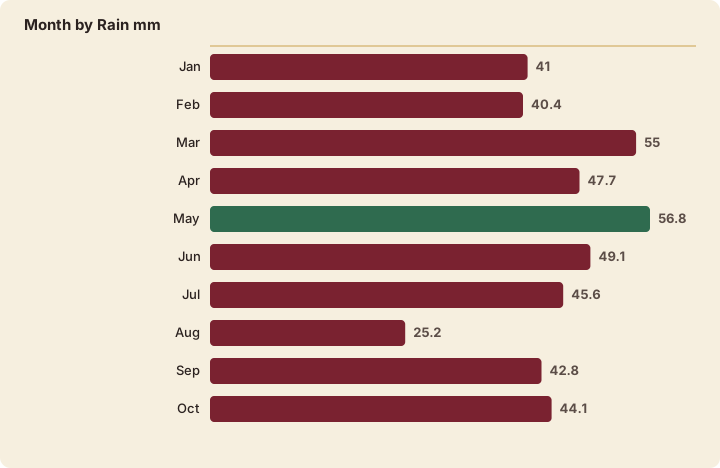
Plovdiv's climate is continental, with ERA5 reanalysis 1991-2020 modelled mean daily highs of 28.2 C in July and 5.9 C in January, and a long travel day to a hilly northern town should be planned around those numbers, because the fortress ridge and the steep lanes offer little shade in summer and real ice underfoot in winter. The figures below are the modelled normals for the Plovdiv grid cell, the departure point of your trip; the northern mountains run a shade cooler, so treat the summer rows as a floor and the winter rows as a mild version of what may await.
| Month | Mean daily high C | Mean daily low C | Rain mm |
|---|---|---|---|
| Jan | 5.9 | -2.6 | 41.0 |
| Feb | 8.0 | -1.1 | 40.4 |
| Mar | 12.1 | 2.1 | 55.0 |
| Apr | 17.1 | 6.4 | 47.7 |
| May | 21.9 | 11.5 | 56.8 |
| Jun | 25.9 | 15.4 | 49.1 |
| Jul | 28.2 | 17.9 | 45.6 |
| Aug | 28.6 | 18.1 | 25.2 |
| Sep | 23.8 | 13.8 | 42.8 |
| Oct | 18.1 | 8.8 | 44.1 |
| Nov | 12.3 | 3.8 | 39.7 |
| Dec | 7.0 | -0.8 | 49.3 |
Two rows deserve attention. May carries the highest monthly rain total in the modelled series at 56.8 mm, with March close behind at 55.0 mm, so a spring day trip should carry a rain layer rather than an assumption. August pairs the highest mean daily high, 28.6 C, with the lowest rainfall, 25.2 mm, which makes it the dry-weather fortress month but also the month when a shadeless ridge walk at midday is hardest. Reanalysis smooths urban heat, so the modelled values understate what a stone fortress hill feels like in the afternoon sun; read the numbers with that in mind.
Season also changes the Plovdiv end of the plan. The city's calendar runs Opera Open at the Ancient Theatre from 23 June to 9 September 2026, the autumn Kapana Fest across 2 to 4 and 9 to 11 October 2026, and the Christmas edition from 1 December 2026 to 7 January 2027, and a day spent away is a day not spent at those. Any long day trip out of Plovdiv competes with Plovdiv itself, and in festival weeks the home city usually wins.
What Are The Practical Rules For Any Long Day Trip Out Of Plovdiv?
Confirm transport both ways before you leave, carry the day's only currency, the euro, keep 112 as the emergency number, and build the itinerary backwards from the return departure, because on a cross-country day the return leg is the one fixed point everything else bends around. The euro point is worth restating for anyone reading older guides: Bulgaria adopted the euro on 1 January 2026, and dual circulation ran only through January 2026. Cards are widely accepted in cities, cash still matters in small towns, and a day trip that ends at a rural bus station is not the day to test a contactless limit.
The table below is a standing checklist for the day.
| Item | The rule | Why |
|---|---|---|
| Currency | euro only | legal tender since 1 January 2026 |
| Emergency number | 112 | EU-wide, free |
| Rail stations | central station, Hristo Botev Blvd | junction works may shift access |
| Bus stations | Rodopi for south, Sever for north | routes divide by station |
| Tickets for sites | confirm on site or with operator | pre-euro figures do not carry over |
| Tourist tax | confirm at booking | 2026 euro rate not published |
Language is the last practical row. Bulgarian is written in Cyrillic, and a photo of your hotel address and your return station in Cyrillic script saves more minutes on a long day than any app. English is common in tourist-facing roles in both cities, but a cross-country day touches ticket desks and small stations where it is not guaranteed.
Which Plovdiv Day Trips Compete With Veliko Tarnovo For Your One Long Day?
The real competitors are the Rhodope cave and gorge trips to the south and the Thracian Kings circuit to the north-west, both of which deliver a full, distinctive day on a fraction of the travel, while Veliko Tarnovo remains the choice when medieval history is the specific hunger no southern fortress or monastery will satisfy. The Trigrad gorge and Devil's Throat cave and the Wonderful Bridges pages cover the southern gorge country; the Kazanlak and Rose Valley and Starosel pages cover the Thracian heartland. Veliko Tarnovo is the only one of the set whose theme is tsars and medieval walls.
For readers who want someone else to hold the timetable on a big day out, the organised options below cover the fortress-and-gorge family of trips, and a related pick, a caves-and-gorges day from Plovdiv into the Rhodopes, is a natural fit for travellers who decide the north is one trip too far; Check availability to see what the current listing covers. A walking introduction to Plovdiv itself, before or after any long day out, is covered by the site's Plovdiv walking tour page.
Common Questions About A Veliko Tarnovo Day Trip From Plovdiv
Can you do Veliko Tarnovo as a day trip from Plovdiv?
You can, but it is the longest of the classic day trips out of Plovdiv. Check current rail and coach connections first, and treat the plan as a full-day commitment with the return leg as the fixed point. An overnight is the calmer option.
How far is Veliko Tarnovo from Plovdiv?
The town lies in northern Bulgaria, several hundred kilometres from Plovdiv by the country's road and rail network. Check a current map and timetable together, since road distance alone understates a cross-country rail journey.
What is Tsarevets?
Tsarevets is billed as the fortified citadel of the medieval Bulgarian capital, a walled hill with palace and patriarchal remains above the Yantra river bend. Entry prices and hours are best confirmed on site or with a tour operator before committing the travel day.
Is Veliko Tarnovo a UNESCO World Heritage Site?
It is not inscribed. The only Plovdiv-related entry in the UNESCO system is "The Ancient Plovdiv", which sits on Bulgaria's Tentative List, submitted in 2004, and that is a waiting list rather than an inscription. Neither city should be described as a World Heritage Site.
What currency do you need for a Veliko Tarnovo trip?
The euro.
Which Plovdiv day trips are easier than Veliko Tarnovo?
Bachkovo Monastery, about 30 km south with minibuses from the Rodopi station taking 35 to 45 minutes and free entry, plus Asen's Fortress on the same road, Koprivshtitsa to the west with its combined house-museum ticket of about 10 euro, and the Rhodope gorge trips to the south, all fit more sightseeing into fewer travel hours.
