Plovdiv Street Food And Quick Bites
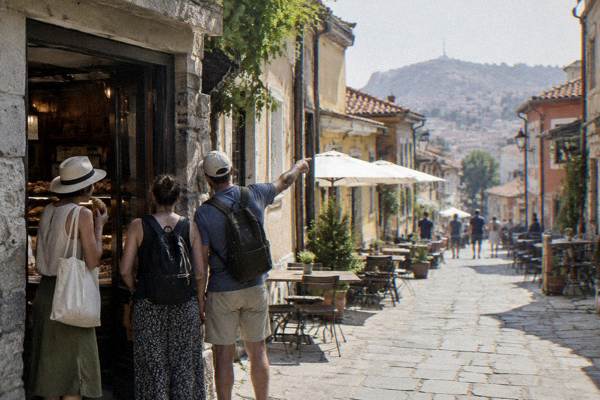
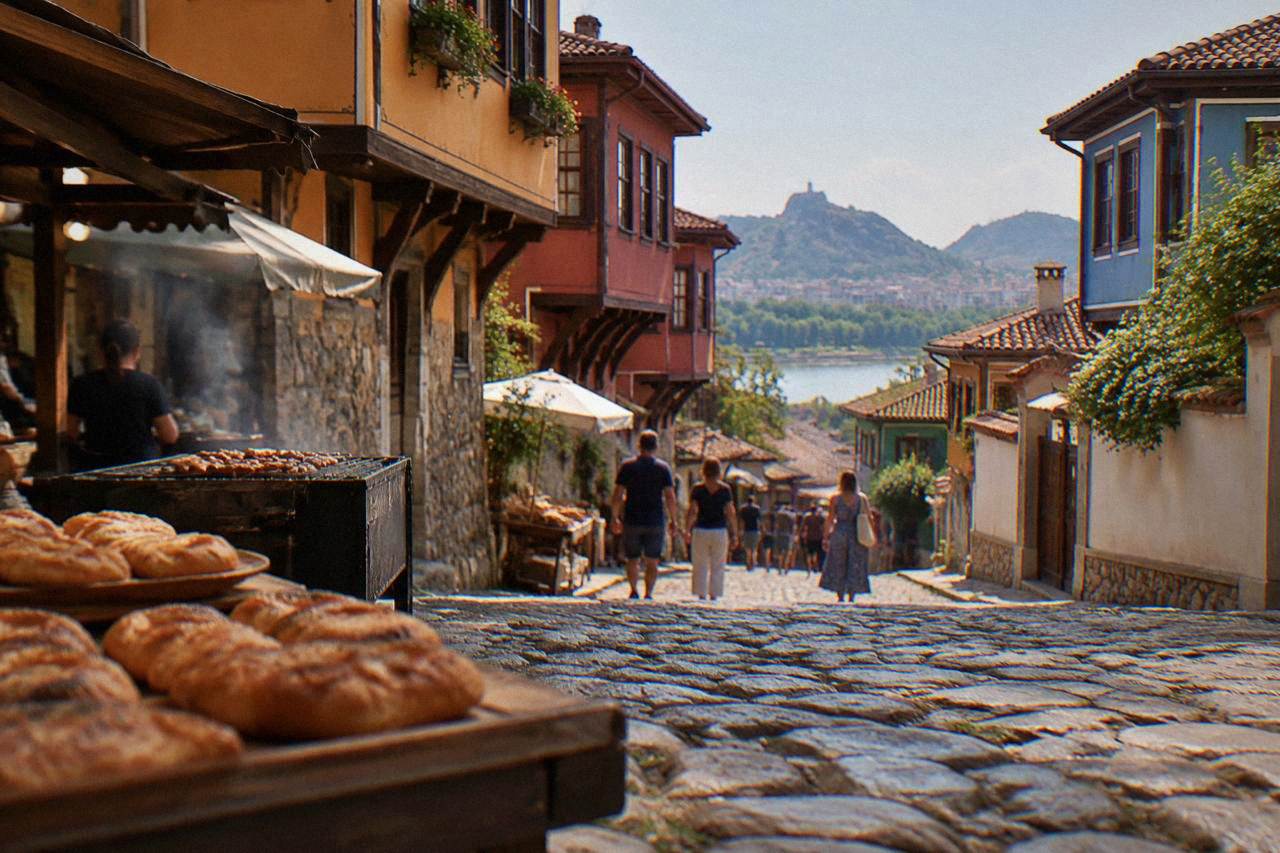
Plovdiv is a walking city of six hills, and its street food follows that shape: bakery windows on Main Street, grill smoke drifting through Kapana, and quick bites sold within a few minutes of every major sight.
Short answer
Plovdiv street food means banitsa and mekitsi from neighbourhood bakeries, kebapche and kyufte from grill counters, and snack stalls concentrated on Main Street, in the Kapana creative district and around the central squares. Nothing needs booking, most of it is eaten standing or on a bench, and the whole layer of the city sits between the Roman ruins and the Old Town houses.
Plovdiv, Bulgaria's second-largest city, is built for eating on the move: a long pedestrian Main Street, a warren of narrow lanes in Kapana, and the Three Hills rising right behind the centre all put a bakery, a grill counter or a snack window within a short walk of anywhere you are likely to be standing. This page lays out what Plovdiv street food actually consists of, where each kind of bite clusters, what it costs, and how the seasons change the picture. None of the dishes below is a Plovdiv invention; they are Bulgarian staples, and the city eats them the way the rest of the country does, quickly, cheaply and without ceremony.
For the full sit-down side of the city's food, read the broader Bulgarian food guide and the page on what to eat in Plovdiv. This one stays with the quick, standing, wrapped and paper-plated end of the spectrum.
What Is Plovdiv Street Food, And Where Do You Find It?
Plovdiv street food is a short list of Bulgarian staples sold fast and eaten faster: banitsa and mekitsi from bakeries, kebapche and kyufte from grill counters, shopska salad in cheap lunch spots, roasted seeds and chestnuts from street carts, and coffee from the bars that line Main Street. The bites cluster in three places: the pedestrian Main Street and the central squares, the Kapana creative district, and the market and station areas at the edge of the centre.
The list is short because Bulgarian quick eating is short. A bakery here sells banitsa, the filo-and-cheese pastry that doubles as the national breakfast, plus its sweeter cousins and, in the morning, mekitsi, fried dough eaten with jam or cheese. A grill counter sells kebapche, the finger-shaped minced-meat roll, and kyufte, its flatter, rounder relative, usually with bread and a side of lyutenitsa, the roasted-pepper-and-tomato relish. That is the core. Everything else, flatbreads, pizza slices, döner, burgers, sits around that core in the same way it does in any European city.
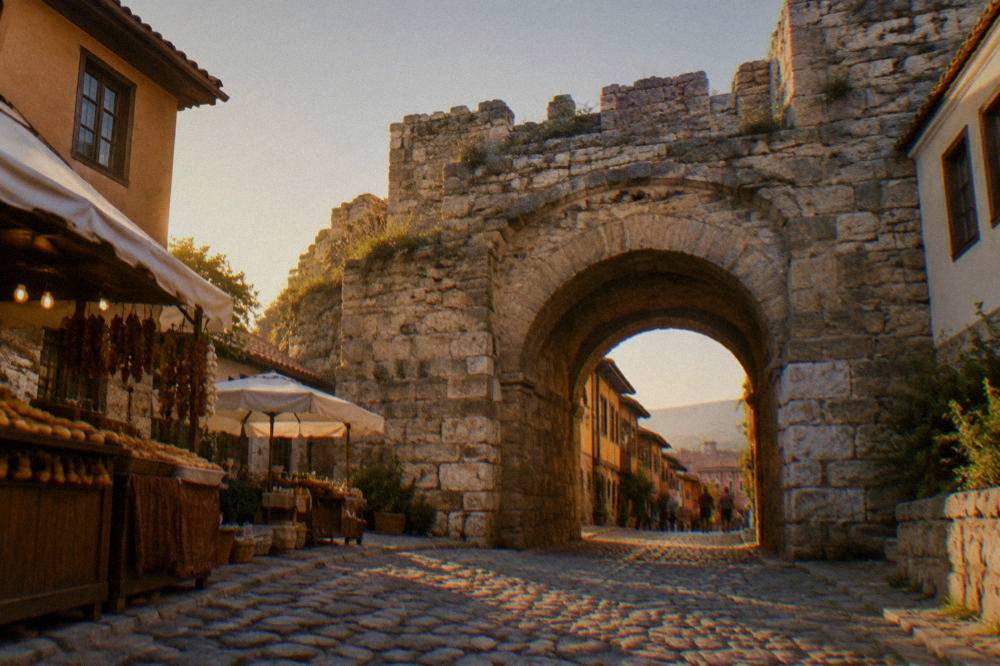
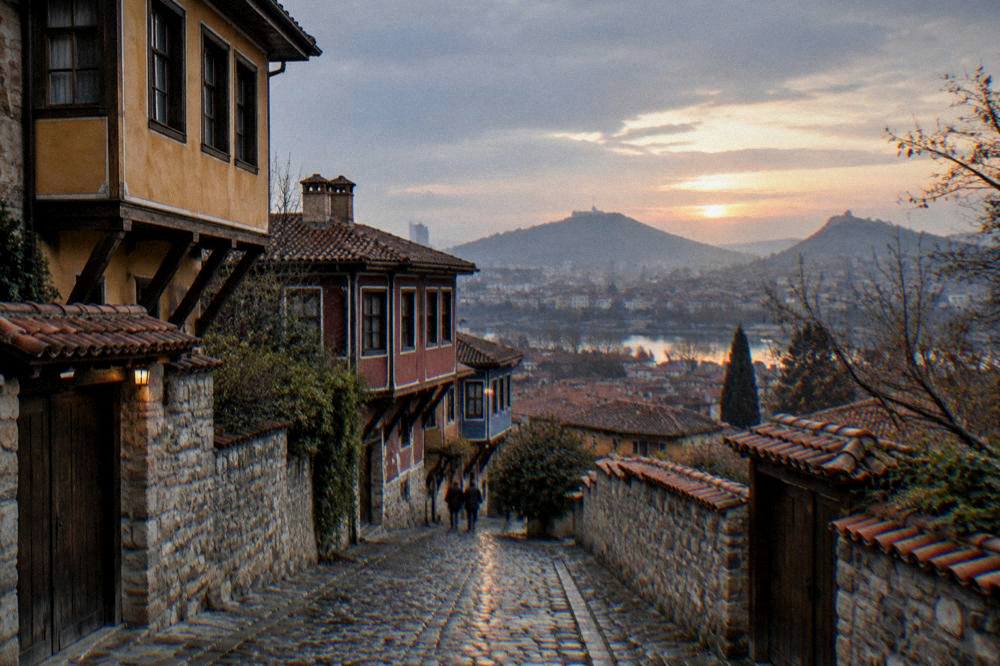
Geographically, the centre does the work. Main Street, the long pedestrian spine described in the guide to Main Street and the center, carries bakery windows and snack bars along almost its whole length. Kapana, whose name literally means "The Trap" in a maze of narrow streets, adds grill smoke and late-evening options. The Old Town itself, up on the hill, is thin on quick food; the smart move is to buy in Kapana or on Main Street and eat on a bench with the view.
Which Quick Bites Should You Actually Order In Plovdiv?
Order banitsa in the morning, kebapche or kyufte from a grill counter at lunch, mekitsi as a sweet afternoon stop, and roasted chestnuts or seeds from a cart in the colder months; shopska salad and tarator are the sit-down staples that round the same cuisine out at low cost. Each of these is standard Bulgarian fare, found in Plovdiv exactly as it is found across the country, and none of it needs translation or haggling.
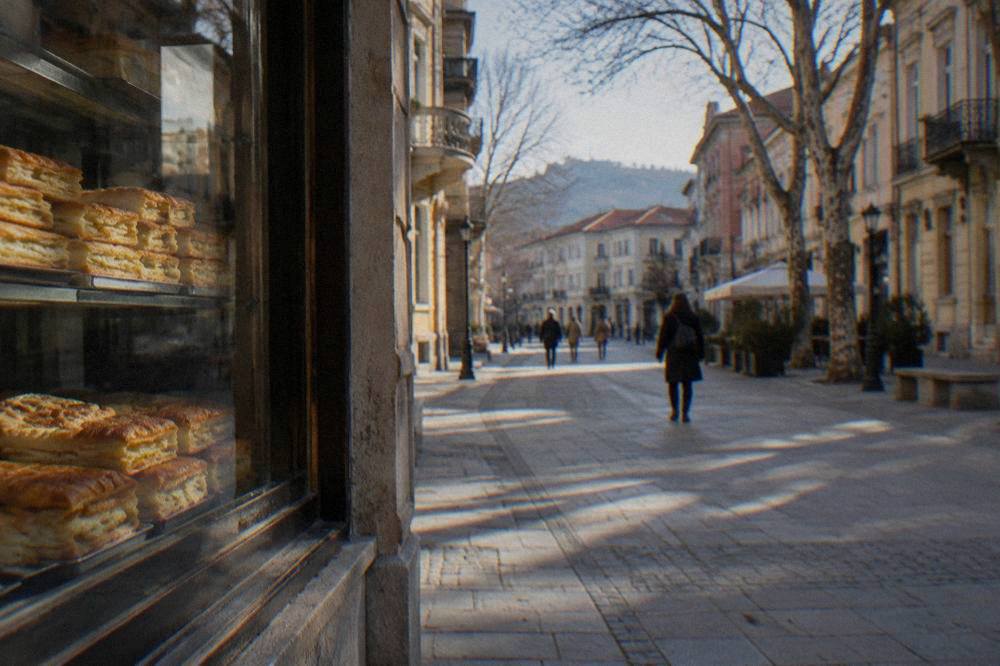
Banitsa first, because it is the backbone. Filo pastry, sirene (the brined white cheese), and sometimes spinach, pumpkin or leeks, baked in a tray and cut into slabs. Bulgarians eat it for breakfast, often with the sour boza drink, and a piece from a bakery is the cheapest warm food you will find in the city. Mekitsi, strips of fried dough dusted with sugar or served with jam, are the sweet version of the same stop.
The grill is the other half. Kebapche is seasoned minced meat rolled into a cylinder and grilled; kyufte is the same mixture shaped into a patty, often with onion. Ordering is by the piece, bread and relish usually come alongside, and a plate of two or three with a salad is a full lunch. Kavarma, meat and vegetables stewed in a clay pot, belongs to the restaurant side of the cuisine rather than the street, but it appears on cheap lunch menus everywhere. Tarator, the cold yogurt and cucumber soup, is the summer companion to any of it.
| Bite | What It Is | When Locals Eat It |
|---|---|---|
| Banitsa | Filo pastry filled with sirene cheese, spinach or pumpkin | Breakfast, mid-morning |
| Mekitsi | Fried dough strips with sugar, jam or cheese | Breakfast, afternoon |
| Kebapche | Grilled minced-meat roll, seasoned with spices | Lunch, evening |
| Kyufte | Grilled minced-meat patty, often with onion | Lunch, evening |
| Lyutenitsa | Roasted pepper and tomato relish, served with bread | Accompaniment |
| Roasted chestnuts and seeds | Street-cart snacks, sold by the paper cone | Autumn and winter |
They are the shared table of Bulgarian cooking, described in the country's food tradition without dates or folklore. If a stall tells you a story about a dish, enjoy it as a story.
For travellers who want the same food handed over with context, the Food Walk: Bulgarian Food and Culture Tour in Plovdiv moves through the city's food traditions with a guide, covering classic dishes and the culture around them. Check availability, or read the site's dedicated Plovdiv food tour page first.
Where Do Kapana And Main Street Serve Plovdiv Street Food?
Kapana and Main Street are the two poles of quick eating in Plovdiv: Main Street runs the long, fast corridor of bakeries, slice shops and coffee bars between the central squares, while Kapana, the maze of narrow creative-district streets just west of it, concentrates grills, small bars and snack counters in a five-minute walk of space. The two areas sit side by side, so a single snack crawl can cover both.
Start on Main Street, the pedestrian spine of the city centre. It is the artery that connects the Central Square, under which part of the Roman Stadium lies, to the Kapana gates and the Old Town stairs, and its edges carry the bakery and takeaway layer. The street's Roman heritage is documented in the guide to Roman Plovdiv, and the rhythm is simple: walk, buy, keep walking.
Kapana is different in texture. The district's name means "The Trap", and the tourism site explains it by the tangled narrow streets that catch a visitor wandering through. In practice those streets hold small venues packed closely together, which makes Kapana the natural evening stop: grills, rakia and wine counters, and the street-life that comes with them. The district also carries much of the city's public art, covered separately in the Plovdiv street art guide, so a snack walk here doubles as a murals walk.
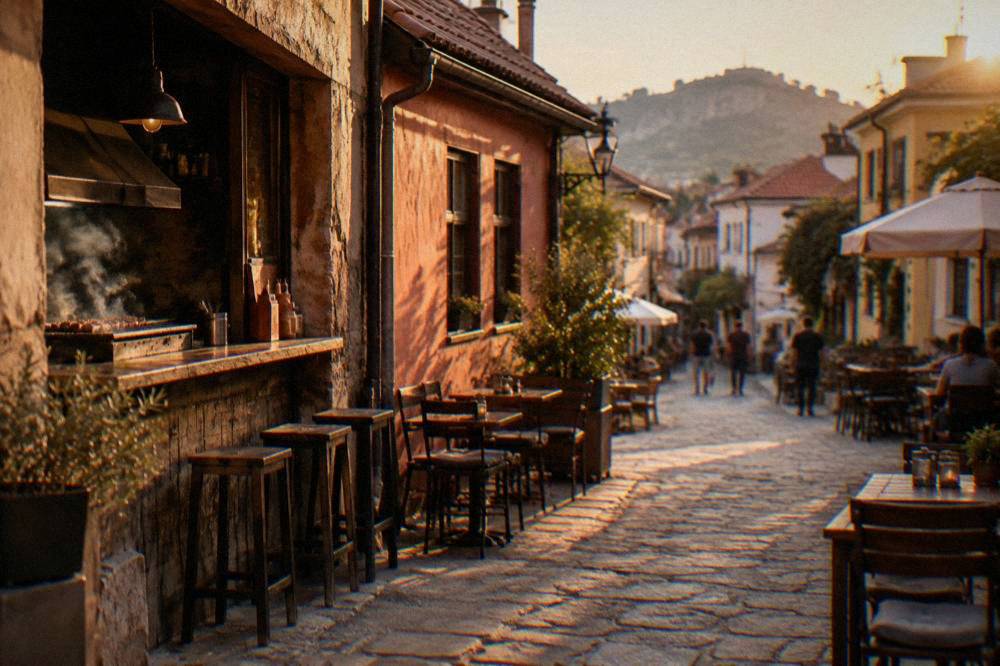
Pick by queue and by smell, the two honest signals of a grill counter, and confirm anything specific locally. For the evenings that follow the snacking, the Plovdiv nightlife guide picks up where the kebapche ends.
The Old Town and the hills add one more layer. There is little quick food up there, but Nebet Tepe and the Three Hills viewpoint make a fine place to carry a bakery bag to, and the walk back down lands you in Kapana again.
What Does Street Food Cost In Plovdiv?
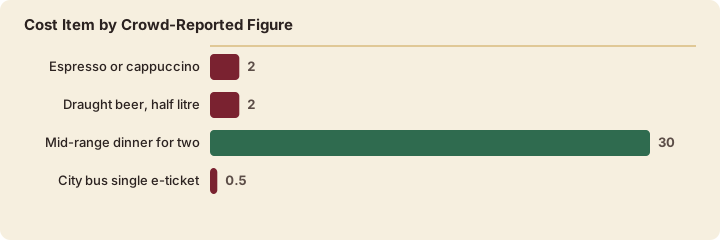
There is no reliable price list for Plovdiv street food, because no bakery or grill counter in the city had its prices checked for this site, so treat every figure you see online as approximate; the only cost data this page can quote is crowd-reported, and it puts an espresso and a half-litre of beer at around 2 euro each, which signals how inexpensive the whole food layer is. Anything more specific than that should be confirmed at the counter.
That crowd data, from Numbeo's Plovdiv cost-of-living page, is a broad signal rather than a menu. What it tells you is the order of magnitude: this is one of the cheaper food cities in the European Union.
| Cost Item | Crowd-Reported Figure | How To Treat It |
|---|---|---|
| Espresso or cappuccino | Around 2 euro | Numbeo crowd data, approximate |
| Draught beer, half litre | Around 2 euro | Numbeo crowd data, approximate |
| Mid-range dinner for two | Roughly 30 to 40 euro | Crowd data, sit-down meal |
| City bus single e-ticket | 0.50 euro | Official municipal figure |
The honest answer on bakery and grill prices is that they move and no official list exists. A rough planning approach: the espresso number is the anchor. If coffee sits near 2 euro, the pastry next to it sits below that, and a grill lunch sits a step above. Confirm in person, and skip any guide that prints a precise pastry price without saying where it came from.
For the money question across the whole trip, including hotels and transport, the wider planning pages on this site take over; the food layer, on its own, is rarely the line that decides a budget.
Which Markets And Bakeries Sell Plovdiv Street Food?
The street-food shopping layer in Plovdiv runs through neighbourhood bakeries, which open early and sell banitsa and mekitsi by the piece, and through the Sunday antique and flea market near the central bus station plus the weekend artisan market in Kapana, both of which add a snack-and-street-food fringe to the browsing; the weekly rhythm matters more here than any single address.
The bakery is the everyday institution. Bulgarian cities run on them, and Plovdiv is no exception: one per neighbourhood, opening early, selling the morning's banitsa in slabs from a tray, and going quiet by early afternoon. If you are staying in an apartment, this is the breakfast solution, and the guide to where to stay in Plovdiv explains which central areas put you within a short walk of both the bakeries and the sights.
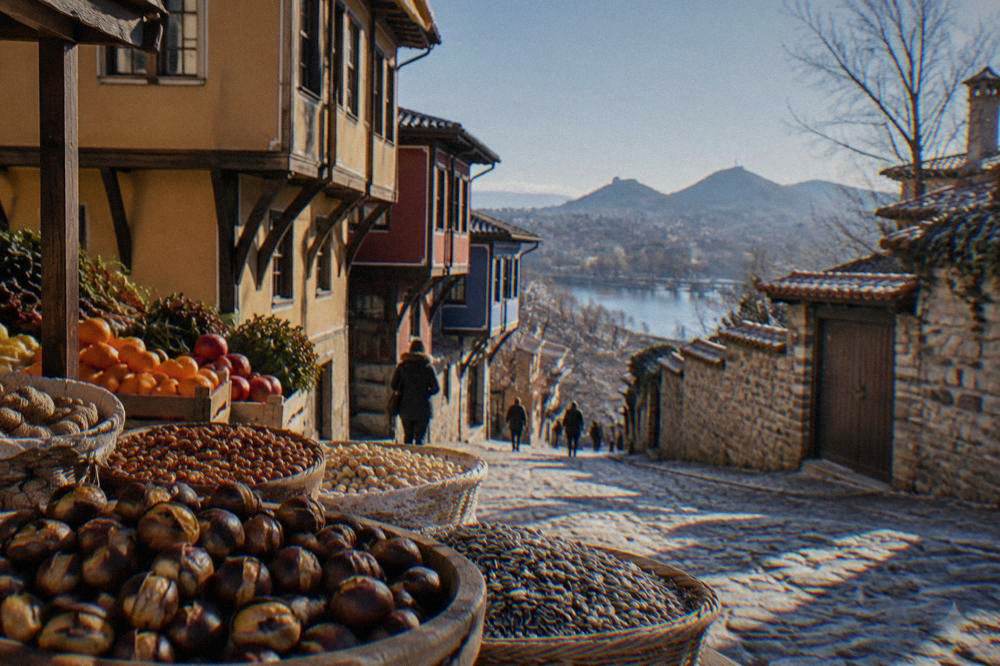
The markets run on the weekend. A Sunday flea and antique market gathers near the central bus station in the early-to-afternoon hours, and the Kapana artisan market sets up on weekends with handmade goods and street food around it.
Coffee deserves its own word. The café bars along Main Street and in Kapana are where the espresso-and-bench ritual happens, and the crowd-data figure of around 2 euro makes it an easy habit. The Plovdiv coffee and cafes guide on this site's food section covers the sit-down side, and the Bulgarian wine guide takes over when the evening turns from coffee to Thracian Valley reds.
A practical note on timing: bakery banitsa is a morning product, and by early afternoon the trays are often thin. The grill counters, by contrast, run into the evening. Plan the day forward, pastries early, grills late, and the two never compete.
How Do The Seasons Change Plovdiv Street Food?
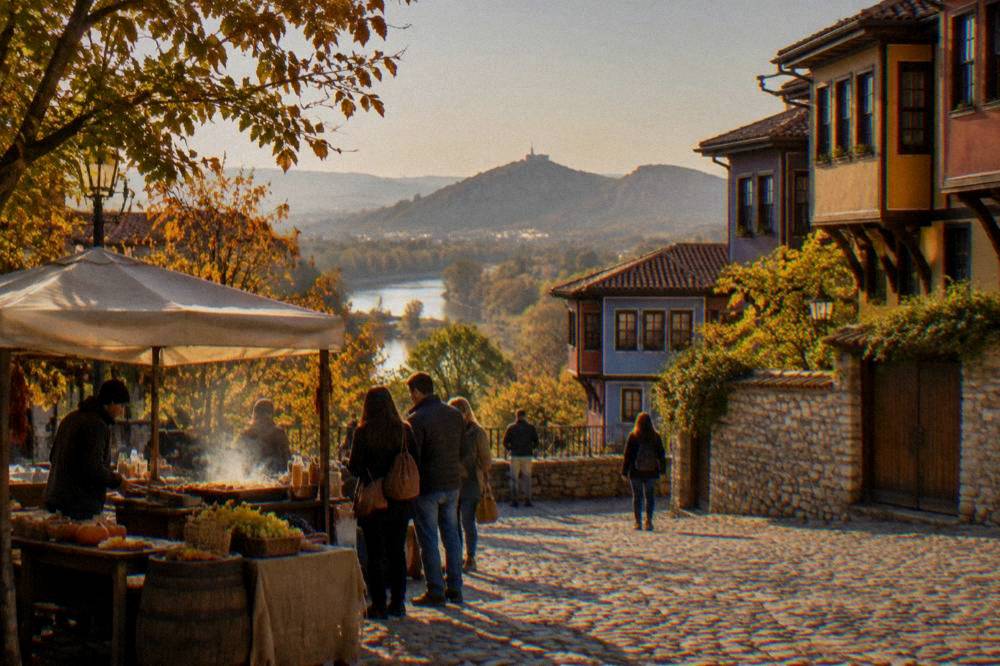
The seasons split Plovdiv street food cleanly in two: from late spring to early autumn the eating moves outdoors, with grill counters serving open-air, ice cream and cold tarator in season, while from autumn through winter the carts switch to roasted chestnuts and seeds, bakeries do their biggest trade, and the Christmas market adds its own snack layer from late November into January.
The climate numbers behind this are modelled rather than remembered: the ERA5 reanalysis for Plovdiv, 1991 to 2020, puts the mean daily high at 28.6 C in August against 5.9 C in January, with rain peaking in May at 56.8 mm and falling lowest in August at 25.2 mm. In practice that means a long, dry, grill-friendly summer and a cold winter in which hot pastry and roast chestnuts carry the street-food scene. The full month-by-month picture is in the Plovdiv weather guide, and the timing trade-offs are in the best time to visit Plovdiv.
| Season | ERA5 Mean Daily High | What The Street Sells |
|---|---|---|
| Spring (Mar to May) | 12.1 to 21.9 C | Bakeries, first outdoor grills, weekend markets |
| Summer (Jun to Aug) | 25.9 to 28.6 C | Grills outdoors, ice cream, tarator, cold drinks |
| Autumn (Sep to Nov) | 23.8 falling to 12.3 C | Kapana Fest food stalls, chestnut carts starting |
| Winter (Dec to Feb) | 7.0 down to 5.9 C | Banitsa, mekitsi, chestnuts, Christmas market |
Two calendar anchors sharpen the autumn and winter picture. The Kapana Fest autumn edition ran across two weekends, 2 to 4 and 9 to 11 October 2026, at the bridge over Gladstone Street and Central Square, and festival weekends in Kapana mean food stalls on top of the usual district. The Christmas market, in its 2026/27 edition billed as "Soul of Christmas", is listed for 1 December 2026 to 7 January 2027 around Kapana and Central Square. Neither date belongs to the street-food layer permanently, but both briefly turn the city centre into an open-air buffet.
Can A Tour Replace Hunting Plovdiv Street Food On Your Own?
A food tour does not replace hunting Plovdiv street food on your own, but it front-loads it: a guided food walk introduces the classic dishes, where they come from and how they are eaten, in one organised pass, and the solo bakery-and-grill crawl then fills the rest of your days; the two work as a sequence, with the tour first and the independent eating after.
The self-guided crawl needs nothing but shoes and small change. Plovdiv's core is compact: Main Street runs flat and pedestrian, Kapana sits immediately west of it, and the whole circuit between the Central Square, Kapana and the Old Town gates takes an unhurried hour of walking, with the Three Hills trails adding climb if you want a bench with a view. The site's self-guided planning pages cover the wider circuit for the rest of the visit.
A guided walk adds the layer a bakery window cannot: what the dish is, why it is eaten that way, and which traditions sit behind it. The food walk listed below covers Bulgarian dishes and food culture across the centre, and for travellers who want the Old Town explained alongside a taste of rakia, a walking tour with a rakia tasting does both halves in one outing.
For a day that swaps the city entirely for the mountains, a private trip to Bachkovo Monastery and Asen's Fortress heads into the Rhodopes, where the Rhodope kitchen, its own grill and pastry tradition, runs along the monastery road. It is a different food region, and it makes a strong single-day contrast with the Plovdiv bakery circuit.
How Does Plovdiv Street Food Fit A One-Day Visit?
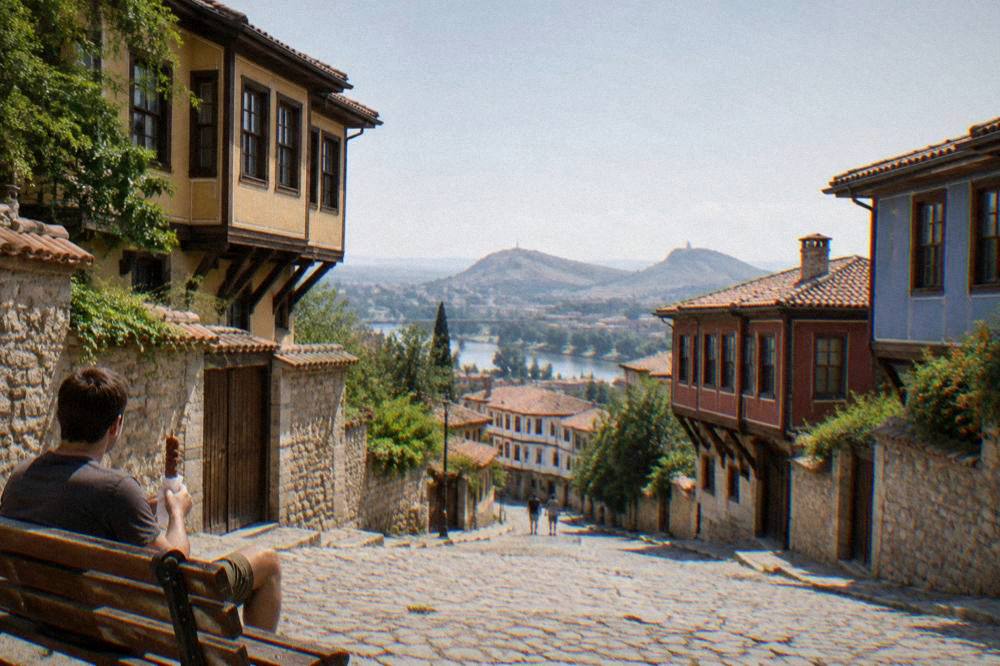
For a one-day visit, Plovdiv street food slots around the sights rather than replacing them: buy banitsa and coffee near the Central Square in the morning before the Roman Stadium and the Ancient Theatre, eat a grill lunch in Kapana between the Old Town and the afternoon walking, and finish with mekitsi or a chestnut cone during the evening stroll; the compactness of the centre makes food a five-minute detour at any point in the day.
The sequencing works because of geography. The Ancient Theatre sits at the top of the Old Town, Nebet Tepe beside it, and the descent lands at Hisar Kapia, the old gate, whose surroundings are covered in the site's Old Town materials. From Hisar Kapia it is a few minutes down into Kapana for lunch, and from Kapana back onto Main Street for the flat walk to the Central Square and the Bishop's Basilica mosaics. Nothing in that loop is more than a quarter hour from a bakery.
Ticket prices for the sights along that loop are published by the Old Plovdiv institute: a single site costs 3.58 euro for an adult, and the Ancient Theatre is open daily, 9:30 to 18:00 from April to October and 9:00 to 17:30 from November to March, with a lunch break at 12:30. Plan the morning pastry around that 12:30 gap, since it is the one moment in the day when a sight closes on you.
Common Questions About Plovdiv Street Food
Is Plovdiv street food cheap?
Crowd-reported cost data puts an espresso and a half-litre draught beer at around 2 euro each, which indicates how inexpensive the food layer is; confirm actual prices at the counter.
What is the most typical street food snack in Plovdiv?
Banitsa, the filo pastry filled with sirene cheese, is the standard quick bite, sold by the piece from bakeries in the morning. Kebapche and kyufte from grill counters are the savoury equivalents later in the day.
Where is the best area for street food in Plovdiv?
The pedestrian Main Street and the central squares carry bakeries and takeaway counters, while Kapana concentrates grills and small food venues in its narrow lanes. The two areas sit side by side and can be covered in one walk.
Can you eat street food in Plovdiv in winter?
Yes. Winter shifts the scene to bakeries, roasted chestnuts and seed carts, and from 1 December 2026 to 7 January 2027 the Christmas market adds stalls around Kapana and Central Square.
Is tap water safe with Plovdiv street food?
The site covers the tap-water question separately; carry a bottle in summer, when the ERA5 reanalysis for Plovdiv, 1991 to 2020, puts the mean daily high at 28.6 C in August.
The short version: eat the banitsa in the morning, follow the smoke to Kapana at lunch, and let the full things to do in Plovdiv planning page handle everything that is not edible. Further coverage of the city's food, from Bulgarian wine to the wider food guide, continues across this site, including the pages of Plovdiv Travel Guide devoted to itineraries and day trips.
Curious about the country's wines beyond the grill counters? Book a Bulgarian wine tasting here.