Plovdiv Souvenirs And Shopping: What Is Actually Made Here
Plovdiv shopping is really two things: the artisan studios of the Kapana quarter and a handful of genuinely local products, rose oil, wine, ceramics, textiles, that Bulgaria actually produces. This guide separates what is made here from what is shipped in.
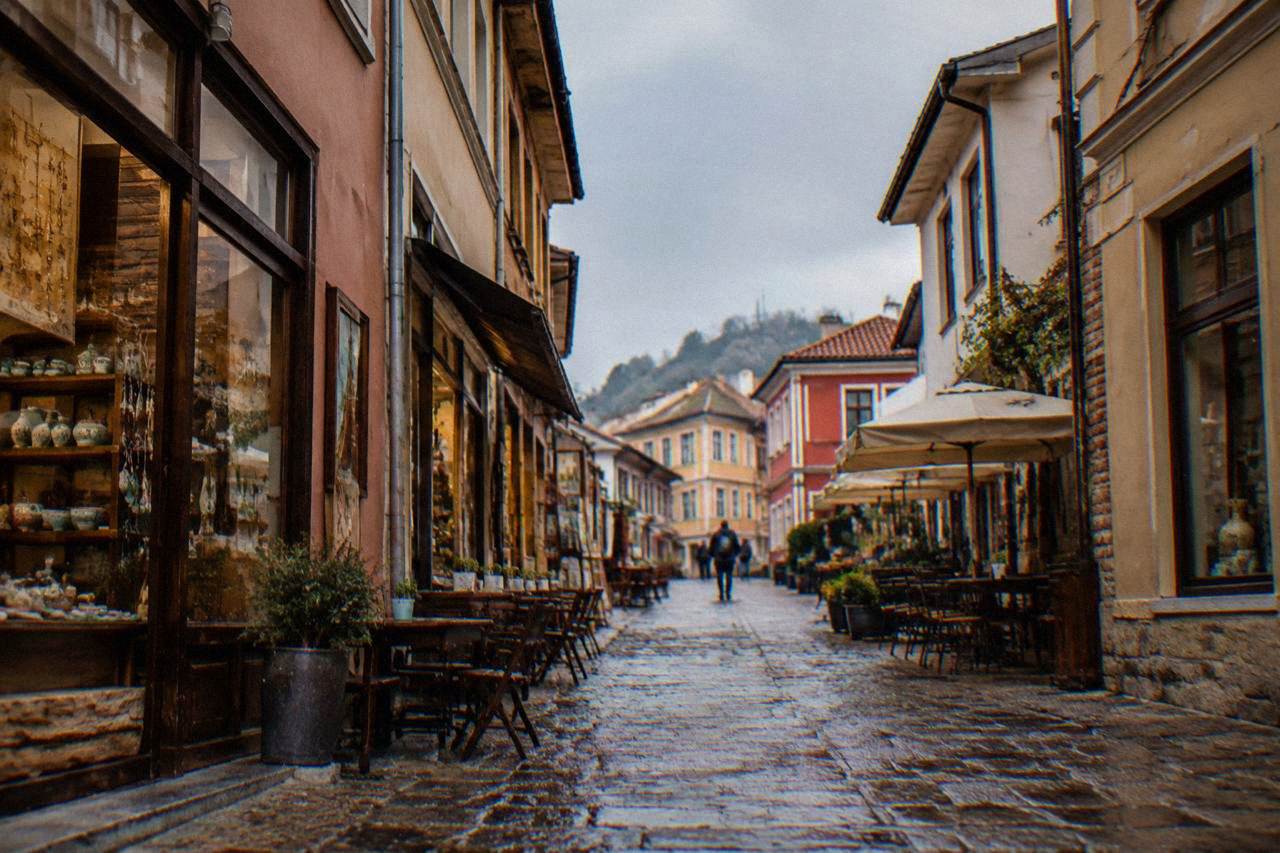
Short answer
Shop in Kapana for artisan goods, use the Sunday antique market near the central bus station for vintage finds, and buy Bulgarian-made rose products, wine, rakia and ceramics as souvenirs. Bulgaria has used the euro since 1 January 2026, and cards are widely accepted in central Plovdiv.
Plovdiv, in southern Bulgaria, is an inland city built around six hills, and its shopping reflects that: no seaside resort tat, no cruise-ship strips, just an artisan quarter, a long pedestrian main street and a region that genuinely produces rose oil, wine, ceramics and textiles. The name Kapana means "The Trap", a maze of narrow streets in the creative district where small studios and workshops cluster, and it is the heart of Plovdiv shopping. This guide sets out what is actually made here, where to buy it, and what everyday purchases cost now that Bulgaria uses the euro.
What Souvenirs Are Actually Made In Plovdiv?
The souvenirs genuinely made in Bulgaria are rose-oil cosmetics from the Rose Valley, wine and rakia from the Thracian Valley, pottery and ceramics in traditional Bulgarian patterns, woven textiles and embroidery, and icons and woodcarving in the Orthodox style. Plovdiv is the natural place to buy all of them, because the Rose Valley and the wine region sit within easy reach of the city and Kapana's studios sell work by local makers rather than imported trinkets.
Rose oil is the headline product. Bulgaria is one of the world's main producers of rose oil, distilled from Damascena roses grown in the Rose Valley around Kazanlak, and cosmetics based on it, soaps, creams, perfumes, are sold across Plovdiv. The oil itself is expensive by weight, which is why small vials are the classic souvenir. Our Bulgarian Roses And Rose Oil overview sits alongside the drinks guides below, and the Kazanlak day-trip region is covered in the site's day-trip section.
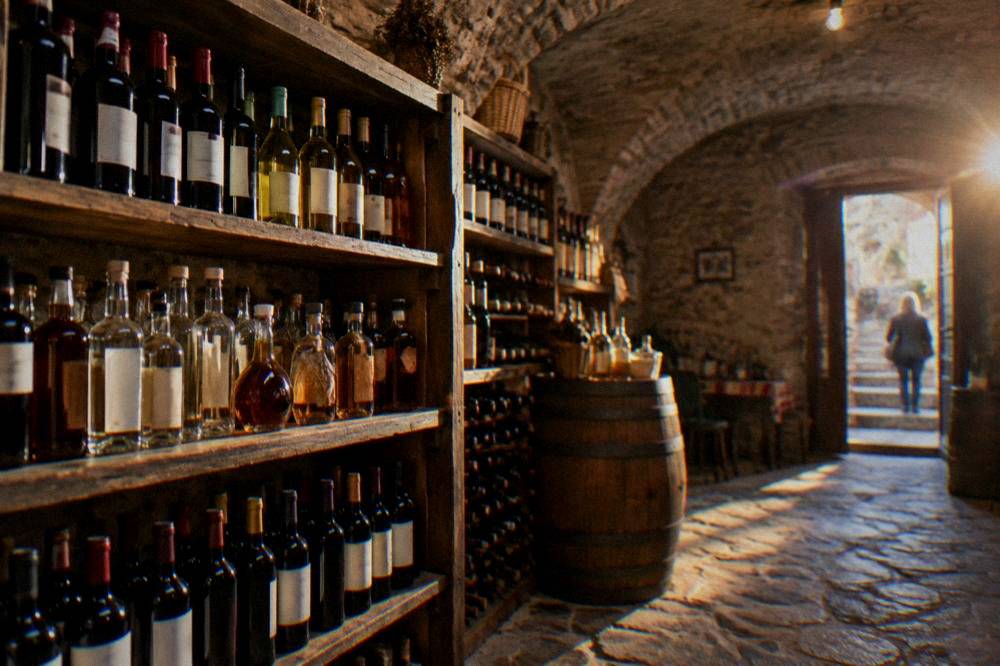
Wine and rakia travel well if packed properly. The Thracian Valley south of Plovdiv grows the local Mavrud and Rubin grapes, and bottles from estates in the Brestovitsa area are sold in the city. Rakia, the fruit brandy that is Bulgaria's national drink, comes in glass bottles that need careful packing or a suitcase middle. Neither should go in hand luggage on the flight home.
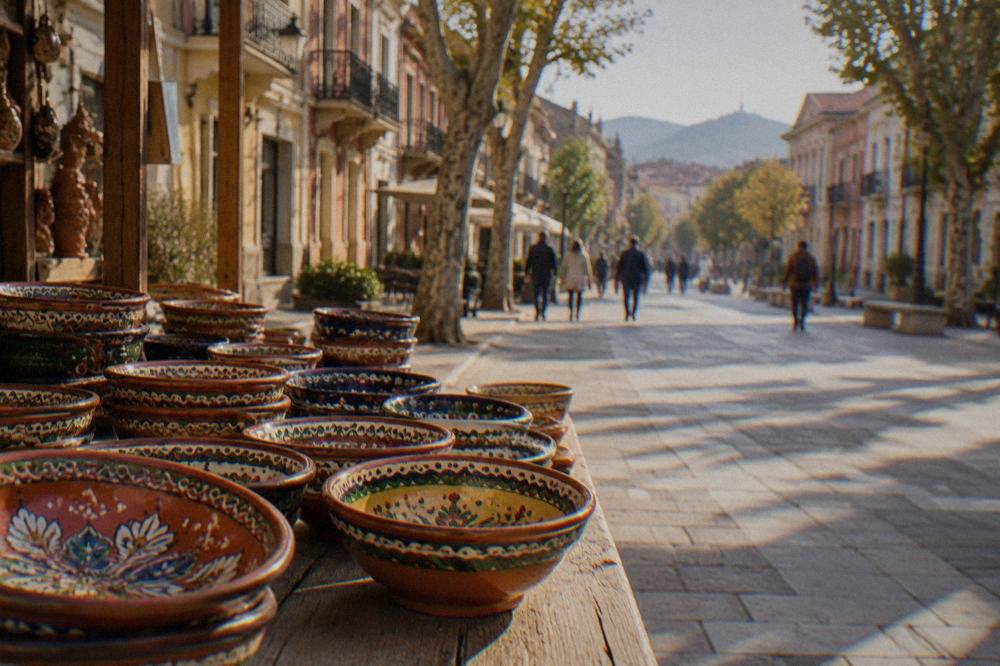
Ceramics and textiles are the third local block. Bulgarian pottery has distinctive colour patterns, and Kapana's studios sell both tableware and decorative pieces. Woven rugs, tablecloths and embroidered linen appear in antique shops and market stalls, and older pieces are often genuinely local rather than made for tourists.
| Souvenir | Made in Bulgaria | Where to buy it in Plovdiv | Packing note |
|---|---|---|---|
| Rose-oil cosmetics | Yes, Rose Valley | Pharmacies, gift shops, Kapana | Light, no restrictions |
| Wine (Mavrud, Rubin) | Yes, Thracian Valley | Wine shops, cellars | Checked luggage only |
| Rakia | Yes, fruit brandy | Wine shops, groceries | Checked luggage only |
| Ceramics and pottery | Yes, widely | Kapana studios, markets | Wrap well, fragile |
| Woven textiles | Yes, often older pieces | Antique market, Kapana | Folds flat |
| Mass-market magnets and T-shirts | Usually imported | Main Street stalls | Check the label |
The honest split is simple: if the item involves roses, grapes, clay or wool, it is very likely Bulgarian. If it is printed plastic with a city name, it is probably imported, and the label usually says so.
Where Do You Actually Go Shopping In Plovdiv?
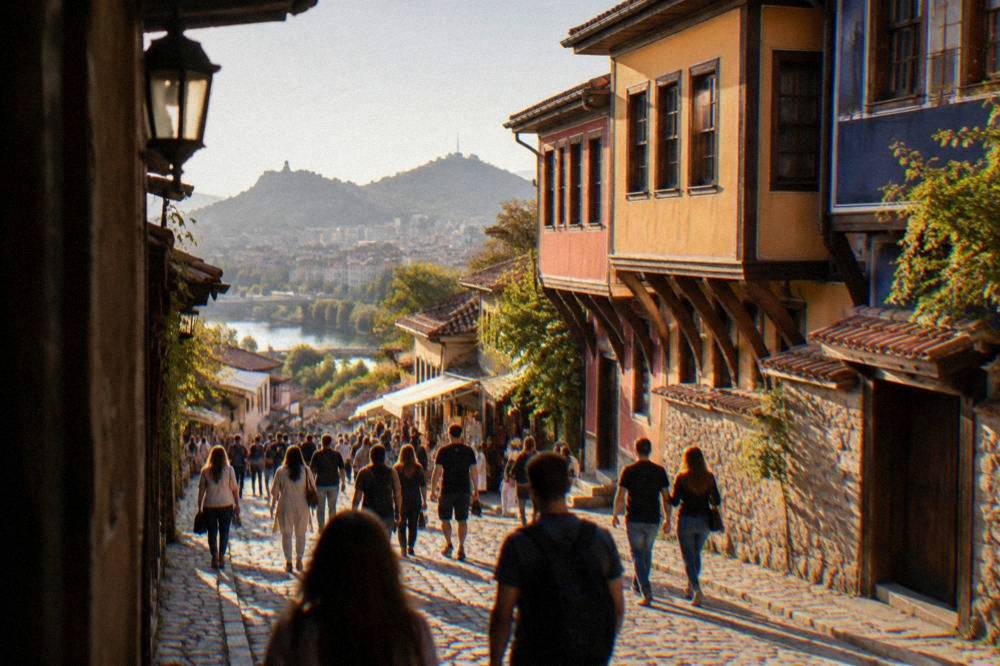
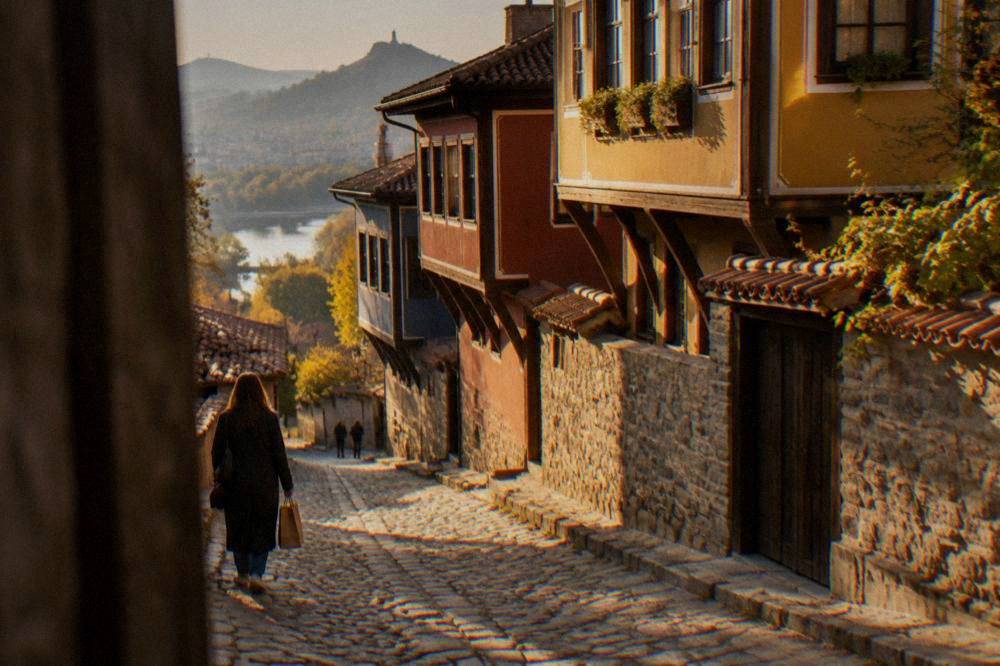
The four shopping areas that matter are Kapana for artisan studios, the pedestrian Main Street for brand retail and bookshops, the Sunday antique market reported near the central bus station, and the Old Town for small galleries and gift shops inside the revival-era houses. Kapana is free, open and public, its streets are open at all hours, and individual studios set their own hours.
Kapana is the reason shoppers come here. The quarter's name literally means "The Trap", earned from the tangled street plan that made visitors lose their way, and since the city's 2019 European Capital of Culture year it has been the creative district, with studios, galleries and small shops. A craft market is reported to run there on weekends, roughly 10:00 to 18:00, with handmade goods and street food, though market days change with the season and it is worth confirming locally.
The Main Street, the long pedestrian axis of the centre, carries the standard retail: clothing chains, bookshops with English titles, and the stalls that sell the imported souvenirs. It is also where the Roman Stadium sits partially underneath, so a shopping walk doubles as an archaeology walk. The Old Town adds galleries and gift shops set inside the revival-era houses, and the one-site museum tickets there cost 3.58 euro on the Old Plovdiv price list.
A guided walk is a sensible first move if you do not know the quarters yet, because the shopping streets of Kapana, the Main Street and the Old Town sit close together but are easy to misjudge in time. The Jewish Walking Tour of Plovdiv covers the historic core around the synagogue quarter near the heart of the shopping district, a part of the centre that shoppers walk through constantly without noticing. Tip-based walks also run locally; confirm the meeting point and the terms directly with the guide.
The Sunday antique market is the wildcard. It is reported to run early to mid afternoon on Sundays near the central bus station, with vintage items, coins, books and textiles, but it is an informal market: days and size vary, so treat it as a maybe rather than a plan. Our Getting Around Plovdiv guide explains the bus stations and the city e-ticket if you are combining the market with other errands.
| Area | What it is best for | Setting | Cost to browse |
|---|---|---|---|
| Kapana | Artisan studios, galleries, craft market | Narrow cobbled streets, open public space | Free |
| Main Street | Brand retail, books, everyday items | Long pedestrian mall | Free |
| Old Town | Galleries, gift shops, museum shops | Revival-era houses, cobbles | Free to walk, museums ticketed |
| Sunday antique market | Vintage, coins, textiles | Informal stalls near the central bus station | Free |
How Much Does Shopping In Plovdiv Cost In Euro?
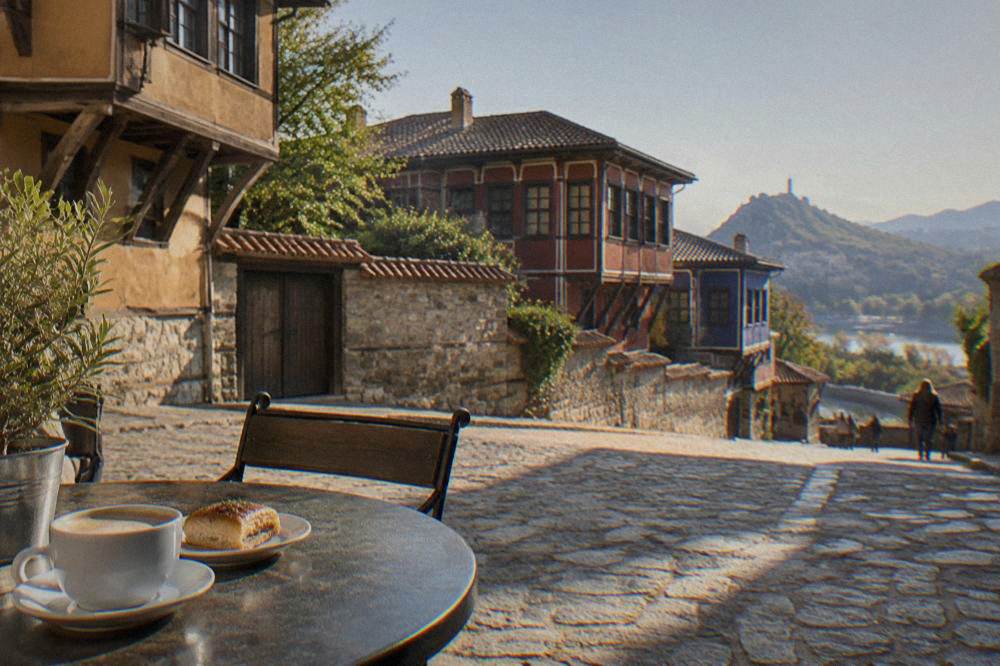
Everyday Plovdiv prices are low by western European standards: crowd-reported data puts an espresso or cappuccino around 2 euro, a half-litre of draught beer around 2 euro, and a three-course mid-range meal for two around 30 to 40 euro. Souvenir prices are not officially published anywhere, so treat any figure a shop quotes as the only real figure and compare two or three studios in Kapana before buying.
Our Money In Plovdiv guide covers the changeover in detail.
For shopping-specific costs, think in ranges and read the labels. A small vial of rose oil costs more than a soap bar, because the oil itself is one of the world's more expensive raw materials by weight. Ceramics scale with size and whether they are studio pieces or factory runs. Wine bottles from the local region sit in the ordinary European bottle-price band rather than anywhere exotic. None of these has an official published price, and a shop that will not state one clearly is a shop to walk out of.
| Everyday item | Typical price (crowd data, 2026) |
|---|---|
| Espresso or cappuccino | Around 2 euro |
| Draught beer, 0.5 l | Around 2 euro |
| Mid-range dinner for two, three courses | Around 30 to 40 euro |
| City bus single e-ticket | 0.50 euro |
| Taxi start fare | Around 1.10 euro |
These everyday figures come from crowd-reported cost-of-living data, not from an official tariff, so read them as planning ranges. The museum prices, by contrast, are official: the Old Plovdiv one-site ticket is 3.58 euro and the combined five-site ticket is 10.74 euro, and the free and discounted days are listed on the ticket page. Souvenir shopping sits on top of this base, and the How Expensive Is Plovdiv guide puts the whole city budget in context.
What Should You Buy In Plovdiv Instead Of Generic Souvenirs?
The buys worth making are rose-oil cosmetics from the Rose Valley, a bottle of local Mavrud or Rubin wine, a studio ceramic piece from Kapana, an older woven textile from the antique market, and a bottle of rakia if you drink spirits. Each of these is a product the region actually makes, each travels reasonably well, and none of them exists in a cheaper identical form at an airport.
Start with the rose products, because they are the most Bulgarian thing on any shelf. The Rose Valley around Kazanlak supplies the global perfume industry, and the cosmetics sold in Plovdiv are the consumer end of that supply chain. Small sizes are the smart buy: light, cheap to carry and easy to give.
Wine needs a bit of knowledge, and our Bulgarian Wine guide supplies it. The local grape to look for is Mavrud, a red variety native to the Thracian Valley, with Rubin as the other regional name worth knowing. A wine tasting in the city centre is the efficient way to choose a bottle without guessing, and the tastings listed below let you try before you commit suitcase space.
Rakia divides opinion but makes an authentic gift. It is a fruit brandy, usually grape, apricot or plum, and it is what Bulgarian households pour for guests. Buy it from a wine shop rather than a souvenir stall, and check the seal if you plan to carry it in checked luggage.
Ceramics and textiles reward a slow look. Kapana studios sell work you can often watch being made or discuss with the maker, which is the difference between a souvenir and an object. At the antique market, older embroidered tablecloths and woven rugs appear regularly, and their age is usually visible in the stitching.
| Product | Why it is worth it | What to check |
|---|---|---|
| Rose-oil cosmetics | Genuinely Bulgarian, light to carry | Ingredient list, not just the word rose |
| Mavrud or Rubin wine | Native regional grapes | Vintage and cellar on the label |
| Rakia | National drink, traditional gift | Sealed bottle, shop purchase |
| Studio ceramics | Local makers, unique pieces | Maker's mark, safe packing |
| Antique textiles | Often genuinely old, hand-stitched | Condition, stains, honest price |
Food souvenirs round it out: honey, herbs and spice mixes such as sharena sol appear in markets and groceries, and our What To Eat In Plovdiv guide covers the foods behind them. Check your home country's rules on meat and dairy before packing food.
Can You Pay By Card In Plovdiv Shops?
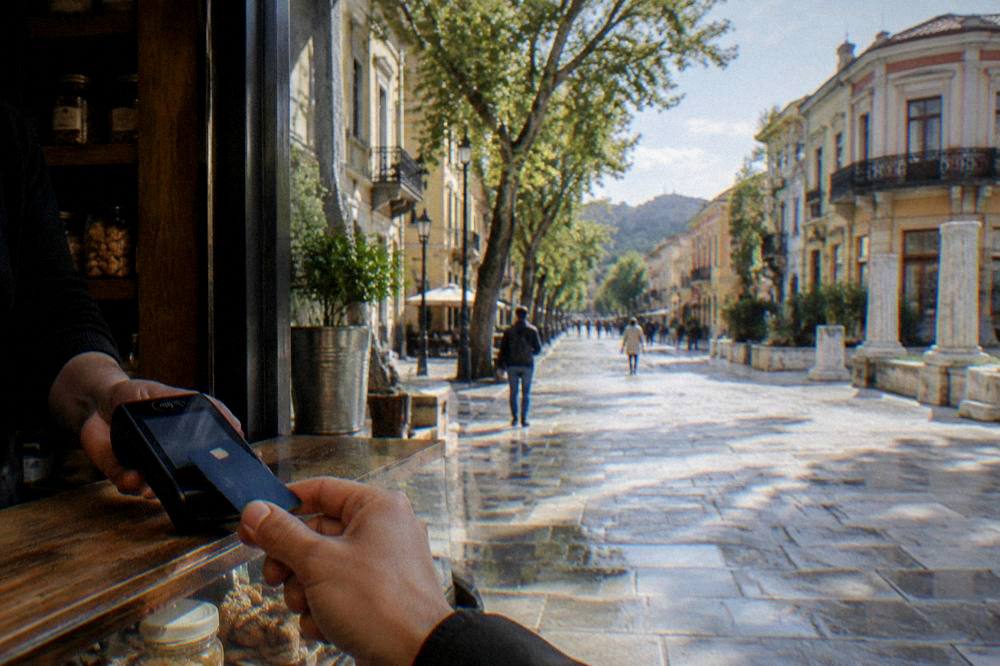
Yes, cards are widely accepted in central Plovdiv, in shops, restaurants and the museums, and contactless payment is normal, but small market stalls and the Sunday antique market operate in cash, so carry some euro notes in small denominations for those. Bulgaria has used the euro since 1 January 2026, so there is no currency exchange to plan for if your account is in euro.
The practical pattern is simple: cards on the Main Street and in Kapana studios, cash at informal markets. For market cash, withdraw euro rather than exchanging, and keep the amounts small since the finds are small. Tipping follows the local norm of around 10 percent in cafes and restaurants for good service, or simply rounding up.
One caution applies to any transaction labelled as artisan: at a market stall the price is often a starting point for a short, polite negotiation, while in a studio with a marked price it usually is not. Knowing which setting you are in avoids paying market-trader prices for studio goods or haggling where it is not the custom.
When Is The Best Time To Shop In Plovdiv?
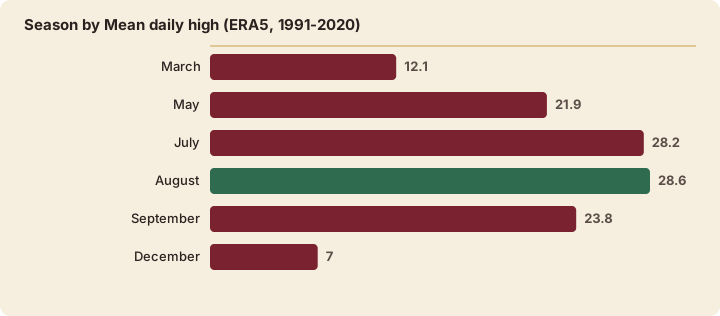
The best shopping months in Plovdiv are May, June and September, when the ERA5 reanalysis for 1991-2020 shows mean daily highs of 21.9 C, 25.9 C and 23.8 C, comfortably warm for walking the cobbled quarters, and July and August, with highs of 28.2 C and 28.6 C, are workable if you shop in the morning and take the afternoon shade. Winter shopping is an indoor, cafe-hopping affair with the Christmas market as its highlight.
The logic is the street plan. Kapana and the Old Town are cobbled and, in the Old Town's case, steep, so shopping there is a walking activity, and summer afternoons on stone are slow going. A morning in Kapana, lunch inside, and the Main Street's shade in the afternoon is the comfortable summer pattern. Spring and autumn need no such choreography.
The event calendar changes what the shops feel like. Kapana Fest ran two autumn weekends, 2 to 4 and 9 to 11 October 2026, filling the quarter around the bridge over Gladstone Street, and the Christmas market's 2026/27 edition is set for 1 December 2026 to 7 January 2027 across Kapana and Central Square. During festival weekends the quarter is at its liveliest and its most crowded at once. The Best Time To Visit Plovdiv guide and the Plovdiv Weather guide cover the seasons month by month.
| Season | Mean daily high (ERA5, 1991-2020) | Shopping character |
|---|---|---|
| March | 12.1 C | Cool, quiet studios |
| May | 21.9 C | Comfortable walking, active terraces |
| July | 28.2 C | Shop mornings, long evenings |
| August | 28.6 C | Warm and dry, 25.2 mm rain |
| September | 23.8 C | Festival season begins |
| December | 7.0 C | Christmas market, indoor shops |
Is Shopping In Plovdiv Different From Shopping In Sofia?
Yes, in scale and character: Plovdiv's shopping is concentrated in one walkable core, Kapana plus the Main Street plus the Old Town, all within fifteen minutes on foot of each other, whereas Sofia is a capital with malls and dispersed districts. In Plovdiv you buy artisan work and local products; Sofia adds international retail that Plovdiv simply does not have. Neither city is "better", they suit different trips.
The comparison matters because the two cities are linked by a fast train line, direct trains taking about 2 h 40 to 3 h 05, and day trips between them are easy. If your souvenir list is artisan-focused, Plovdiv is the better base, because everything on it is in one compact quarter. If your list includes particular brands or a big mall afternoon, that is a Sofia errand. The Sofia To Plovdiv guide covers the connection.
Price differences between the two cities are small and not worth planning around. The crowd-data everyday prices in Plovdiv sit at the low end of the European range, and Sofia's are broadly similar. What differs is what is on offer, not what it costs.
A final word on combining shopping with sightseeing, because in Plovdiv the two overlap. The shopping streets contain Roman ruins, the museums sell their own tickets at 3.58 euro a site, and the walk between studios passes the Ancient Theatre and the sphendone of the Roman Stadium. Shoppers who budget a full day for Kapana, the Old Town and the Main Street together get the whole centre in one loop, and the Things To Do In Plovdiv overview shows how the pieces connect.
For anyone who wants the region's products at their source rather than in a city shop, the day trips do it directly: the Rose Valley around Kazanlak for rose products, the Brestovitsa area for wine, and the monasteries and fortresses of the Rhodopes for woodcarving and icons. A fortress and monastery excursion, like the small-group option below, brings back the same crafts with the landscape attached.
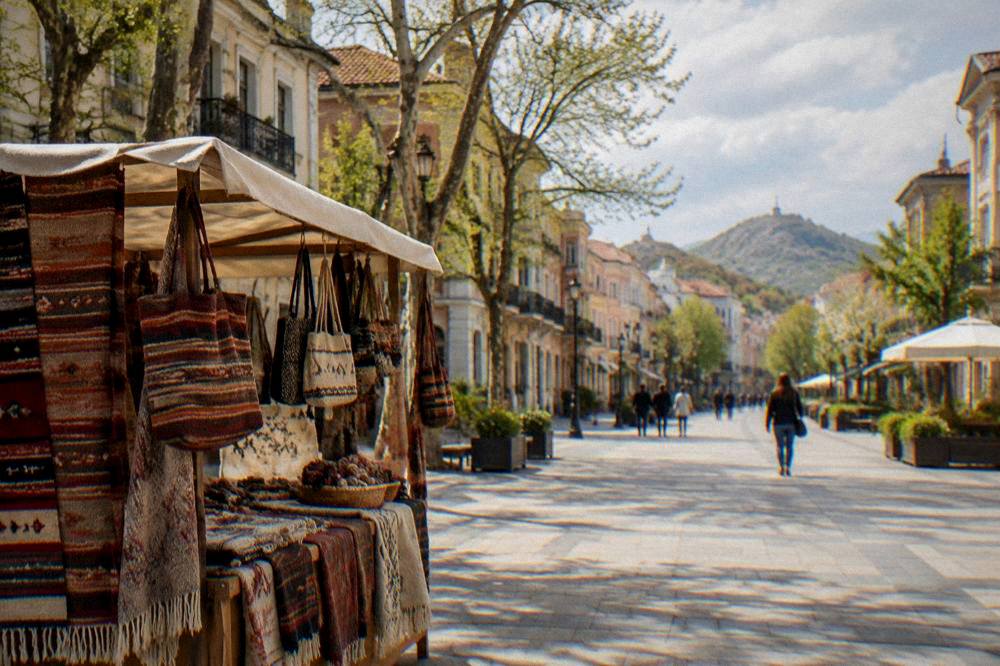
Whatever you buy, keep the receipts for anything over your customs allowance on the way home, pack bottles in the middle of the suitcase wrapped in the textiles you bought, and remember that the best of the Plovdiv shopping list, rose oil, wine, clay and wool, is made within a couple of hours of the city that sells it.
Common Questions About Plovdiv Shopping
What souvenirs is Plovdiv known for?
Rose-oil cosmetics, local Mavrud and Rubin wine, rakia, ceramics and woven textiles are the products genuinely made in Bulgaria and sold across Plovdiv, with Kapana's studios the main place to find artisan versions rather than imports.
Is shopping in Plovdiv cheap?
Everyday costs are low by western European standards: crowd-reported data puts an espresso around 2 euro and a mid-range dinner for two around 30 to 40 euro. Souvenir prices are set by individual shops and have no published tariff, so compare a few studios before buying.
What is Kapana in Plovdiv?
Kapana is the city's creative district, and its name means "The Trap", a reference to the maze of narrow streets. It is free, open and public, and it holds the studios, galleries and weekend craft market that anchor shopping in Plovdiv.
Can I pay by card in Plovdiv?
Yes, cards and contactless are widely accepted in shops, restaurants and museums in central Plovdiv. Informal markets, including the reported Sunday antique market, run on cash, so carry small euro notes for those.
When is the Sunday antique market in Plovdiv?
A flea and antique market is reported to run on Sundays, early to mid afternoon, near the central bus station. It is informal, so days and size vary: confirm locally before making it the centrepiece of a day.
