Plovdiv In Spring: Blossom And Rose Season
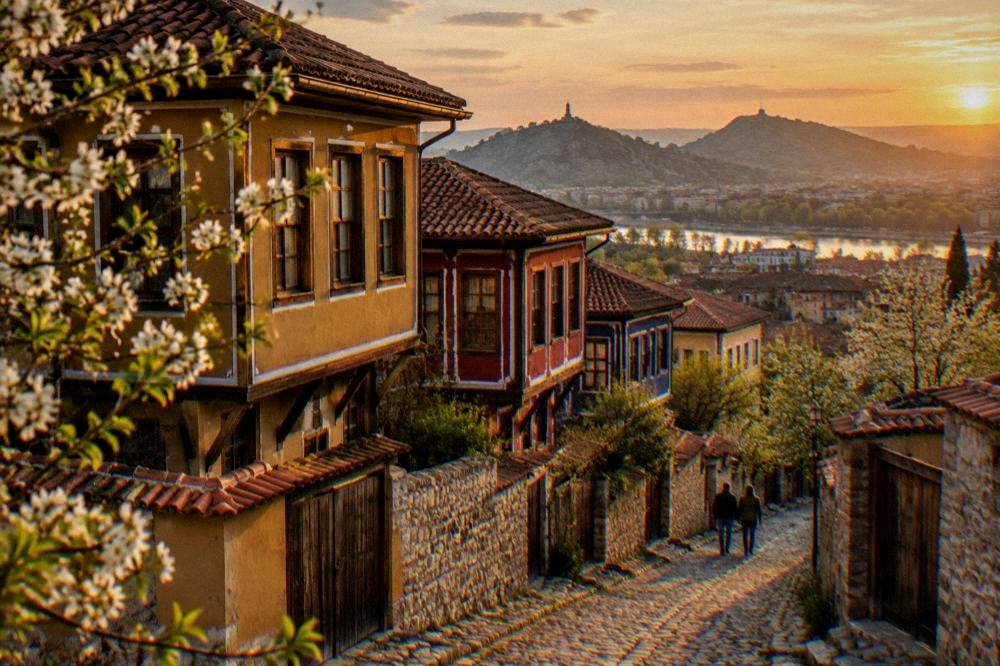
Spring is the season when Plovdiv, an inland city built around six hills in southern Bulgaria, trades its winter grey for blossom, festival weekends and the rose harvest in the nearby valley. Here is what to know about weather, tickets, events and day trips from March to May.
Short answer
Spring in Plovdiv runs from cool, showery March through mild April to warm, green May, with modelled mean daily highs of 12.1 C, 17.1 C and 21.9 C. Key sites switch to summer hours in April, Opera Open returns to the Ancient Theatre from late June, and rose season peaks in the valley around Kazanlak in late May and early June.
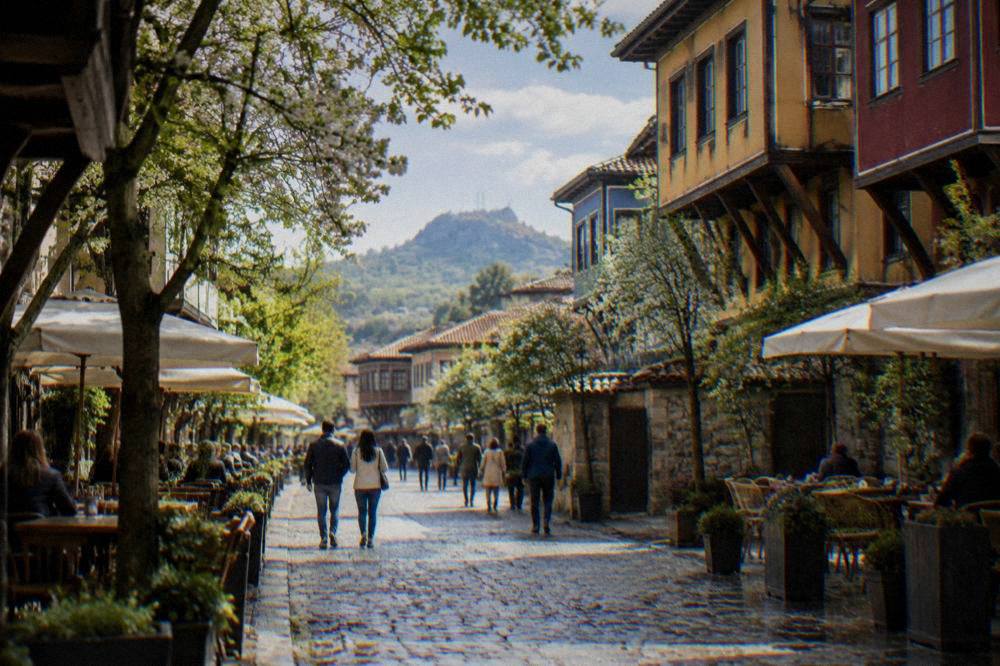
Spring is the season that Plovdiv, Bulgaria's second-largest city, an inland place of six hills in the south of the country, arguably does best. The winter lunchtime closures at the Old Town sites give way to longer April hours, the Kapana creative district fills with weekend markets, and the Thracian valley south and east of the city turns green ahead of the rose harvest.
What Is Spring Weather Like In Plovdiv?
Spring weather in Plovdiv is continental and warming fast: the ERA5 reanalysis, 1991-2020, puts the mean daily high at 12.1 C in March, 17.1 C in April and 21.9 C in May, with mean nightly lows of 2.1 C, 6.4 C and 11.5 C. Rain is a real part of the season, and May is the modelled month with the highest rainfall of the whole year at 56.8 mm, just ahead of March at 55.0 mm.
These are modelled normals from a reanalysis grid cell, not a station record.
Reanalysis smooths urban heat, so a real afternoon on Main Street can feel warmer than the model suggests, and the hills funnel breezes that cool the evenings well into May. Layers are the practical answer: a jacket for March mornings, something lighter by late April.
| Month | Mean daily high | Mean daily low | Rainfall |
|---|---|---|---|
| March | 12.1 C | 2.1 C | 55.0 mm |
| April | 17.1 C | 6.4 C | 47.7 mm |
| May | 21.9 C | 11.5 C | 56.8 mm |
March can still produce frosts at night, and the mean low sits just above freezing. By May, daytime readings have warmed to the modelled norm and the city's cafe tables move outside for good. Rain falls throughout the season in fairly even amounts, so a compact umbrella earns its place in a daypack every month. For a broader picture of the year, the Plovdiv weather guide carries the full monthly table, and the best time to visit Plovdiv compares spring against summer and winter.
Which Plovdiv Sights Change Their Hours In Spring?
Every major Old Plovdiv site switches to its summer schedule on 1 April: from April to October the Ancient Theatre, the Roman Stadium's 3D hall and the Old Town houses open daily 9:30 to 18:00, with a lunch break from 12:30 to 13:00, and the one-site adult ticket costs 3.58 euro. The Bishop's Basilica keeps daily 9:00 to 18:00 hours year round at 7.57 euro. Winter hours, 9:00 to 17:30, run through the end of March.
The date the clocks change matters for sightseeing because it is also the date the price list's seasons change. The Old Plovdiv ticket page publishes both seasons for each site, and April visitors get an extra half hour each evening. The Ancient Theatre of Philippopolis, built in the 90s of the 1st century AD with 28 concentric rows of marble seats, is the headline site, and the Roman Stadium's sphendone, the only excavated northern part, is free to view in the open air at any hour.
| Site | Spring hours (from 1 April) | Adult ticket |
|---|---|---|
| Ancient Theatre of Philippopolis | Daily 9:30 to 18:00, lunch 12:30 to 13:00 | 3.58 euro |
| Roman Stadium 3D hall | Daily 9:30 to 18:00, lunch 12:30 to 13:00 | 3.68 euro |
| Bishop's Basilica | Daily 9:00 to 18:00 year round | 7.57 euro |
| Old Town houses (Balabanov, Nedkovich and others) | Tue to Sun, around 9:30 to 18:00 | 3.58 euro one site |
| Regional Ethnographic Museum | Tue to Sun 9:00 to 18:00, closed Monday | about 3.07 euro |
| Nebet Tepe, Kapana, Hisar Kapia | Open air, unrestricted, free | free |
Monday is the day to plan around: the Regional Ethnographic Museum and the Regional Archaeological Museum are both closed, though several Old Town houses have moved toward daily opening, with a 2026 report noting Hindliyan House opening every day. The Regional History Museum is free the first Thursday of the month, and students and seniors get free entry at Old Plovdiv sites on the same first Thursday. The combined ticket covering up to five sites, at 10.74 euro for adults, excludes the two basilicas, and the validity period is not stated on the official page, so confirm it at the desk before buying. Deeper detail on individual sites sits in the Old Town guide and the Roman Plovdiv guide.
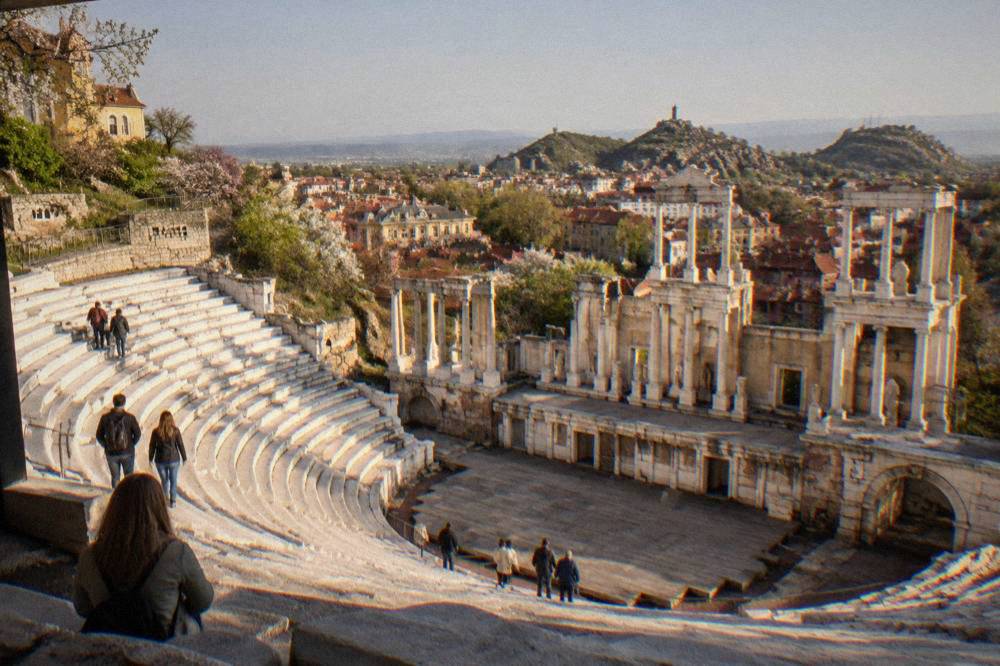
A guided walk strings the sites together without the guesswork. A tip-based walk runs locally year round, and readers should confirm meeting points with the guide. Two structured options worth comparing for a spring visit:
To see Plovdiv's sites with a local guide, book a guided walking tour here.
What Spring Events Fill The Plovdiv Calendar?
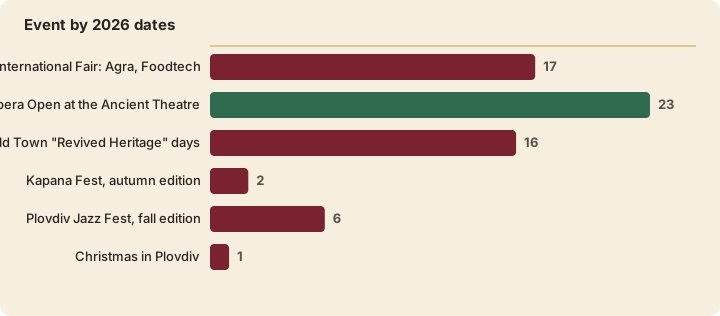
Plovdiv's own spring calendar is anchored by the Kapana Fest autumn edition's spring counterpart and the International Fair, while the city's headline summer series, Opera Open at the Ancient Theatre, ran 23 June to 9 September in 2026, so its first performances land at the very end of spring. The Jazz Fest fall edition runs 6 to 8 November 2026. For rose events in the Kazanlak valley, no 2027 dates had been announced, so confirm before booking around them.
The word "spring" needs a caveat here: Plovdiv's biggest festival weekends cluster in early summer and autumn, and spring itself is quieter, which suits travellers who prefer museums without queues. The Old Town "Revived Heritage" festival days ran 16 to 23 September 2026 as an autumn event. The International Fair Plovdiv opened its year with Agra, Foodtech and Vinaria from 17 to 21 February 2026, with the spring consumer fairs following in March, and Vinaria is the one that matters to wine travellers, a trade fair rather than a street party.
| Event | 2026 dates | Where |
|---|---|---|
| International Fair: Agra, Foodtech, Vinaria | 17 to 21 February | International Fair Plovdiv grounds |
| Opera Open at the Ancient Theatre | 23 June to 9 September | Ancient Theatre of Philippopolis |
| Old Town "Revived Heritage" days | 16 to 23 September | Old Town |
| Kapana Fest, autumn edition | 2 to 4 and 9 to 11 October | Kapana and Central Square |
| Plovdiv Jazz Fest, fall edition | 6 to 8 November | Boris Hristov House of Culture |
| Christmas in Plovdiv | 1 December 2026 to 7 January 2027 | Kapana and Central Square |
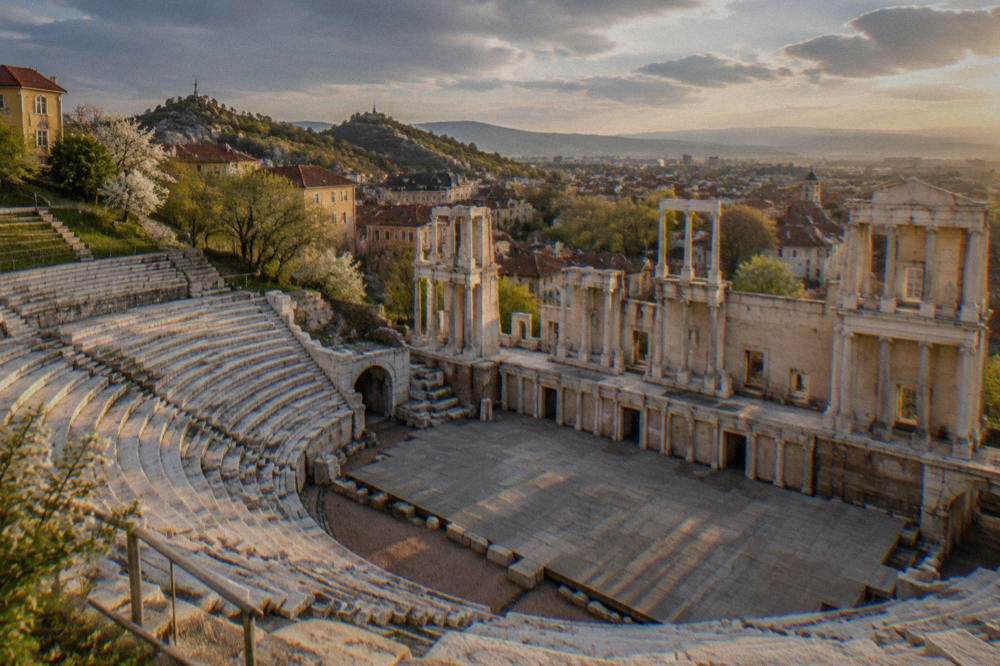
The Ancient Theatre doubles as a concert venue through the Opera Open season, which means an evening performance under the arches is a realistic late-spring plan; the theatre remains open to daytime visitors around the schedule, and specific show dates are listed by the municipal tourism site. The full year of dates, including what had not been announced for Night of Museums and One Dance Week, is tracked in the Plovdiv festivals and events guide, and the city's 2019 European Capital of Culture year, which it shared with Matera, is the reason so much of this infrastructure exists at all.
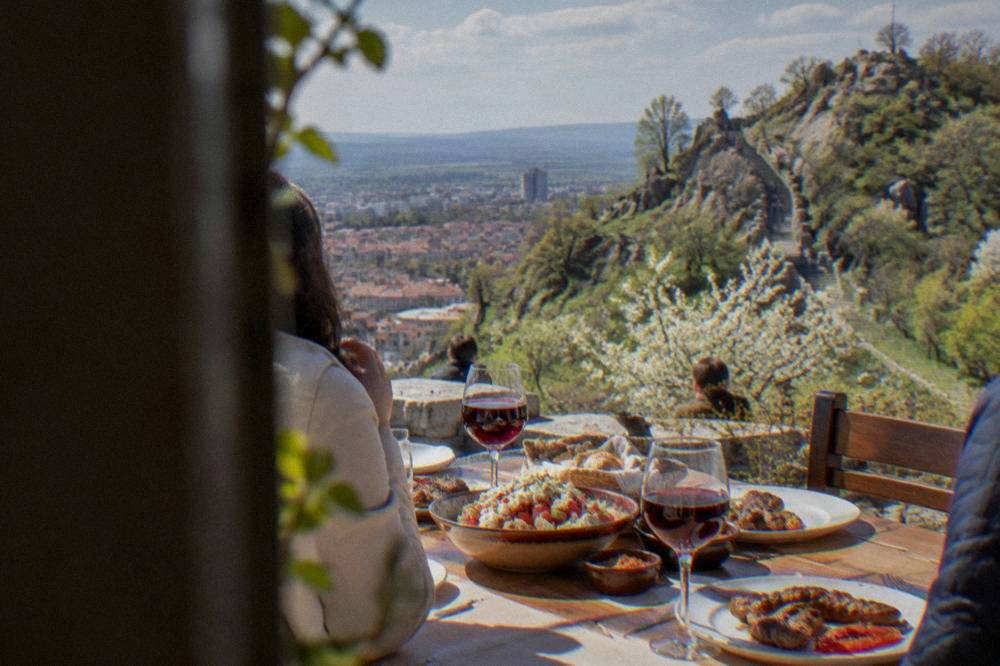
A spring evening in Kapana, the district whose name means "The Trap" for its maze of narrow streets, pairs naturally with a tasting of local wine and mezze. The Thracian valley around Plovdiv is one of Bulgaria's wine regions, and a seated tasting in the centre covers Mavrud, Rubin and other local varieties without leaving the city. The related tour for this page is that tasting: wine with cheese and cured meats in central Plovdiv, with Check availability on the operator's live listing.
What To Eat And Drink In Plovdiv In Spring?
Spring eating in Plovdiv follows the general Bulgarian table: shopska salad with tomatoes, cucumbers and sirene cheese as the starter, banitsa as the breakfast standard, kebapche and kyufte from the grill, and tarator, a cold yogurt and cucumber soup, once the weather warms. Rakia is the traditional spirit and Thracian-valley wines, including the local Mavrud and Rubin varieties, are the pour. Crowd data puts an espresso and a half-litre of draught beer at around 2 euro each.
For food, the best restaurants in Plovdiv guide and the what to eat in Plovdiv guide carry the fuller food picture. What can be described is custom: spring is when the first local greens arrive, when banitsa stays the default breakfast, and when grill smoke returns to the streets of Kapana in the evenings.
| Dish or drink | What it is | When it suits spring |
|---|---|---|
| Shopska salad | Tomatoes, cucumbers, peppers, onion, sirene | Late April onward, with the first good tomatoes |
| Banitsa | Cheese filo pastry, the breakfast staple | Any morning, from bakeries citywide |
| Tarator | Cold yogurt and cucumber soup | Warm May days |
| Kebapche and kyufte | Grilled minced meat rolls and patties | Evenings in Kapana |
| Rakia | Fruit brandy, the traditional aperitif | With mezze before dinner |
| Thracian valley wine | Local varieties including Mavrud and Rubin | Tastings in the centre or at wineries nearby |
Wine is the spring thread that runs from the city to the countryside. The Thracian valley holds wineries within a short drive of Plovdiv, and tastings of local varieties are bookable both in the centre and as day trips. Background on grapes and styles is in the Bulgarian wine guide, and rakia's place at the table is covered in the general Bulgarian food guide. Prices for any bookable tasting render on the operator's listing and are not quoted here.
Which Spring Day Trips Work From Plovdiv?
The strongest spring day trips from Plovdiv are the rose valley and the Thracian kings around Kazanlak, reached in about an hour's drive, Bachkovo Monastery with Asen's Fortress in the Rhodopes foothills about 30 km south, and the Starosel Thracian temple complex. Rose season peaks around the end of May into early June in the Kazanlak valley, which makes late spring the one window when that trip changes character entirely. No 2027 Rose Festival dates had been announced, so check locally.
Bachkovo Monastery is a working monastery with free entry, reached by minibus from the Rodopi bus station in 35 to 45 minutes, a route the transport listings put at about 30 km from the city. Asen's Fortress sits above Asenovgrad on the same road; the entry fee figure is unclear across sources, so confirm on arrival. The Rhodopes beyond, toward Smolyan, Pamporovo and the Trigrad gorge, are a full-day undertaking better suited to a dedicated tour or a rental car, and the Rhodopes day tour guide covers those options.
| Day trip | Distance and time from Plovdiv | Spring notes |
|---|---|---|
| Bachkovo Monastery | About 30 km, 35 to 45 min by minibus from Rodopi station | Free entry, working monastery |
| Asen's Fortress | Above Asenovgrad, on the Bachkovo road | Fee unclear across sources, confirm on site |
| Starosel Thracian temple | Thracian complex within an hour's drive | Pre-euro fee figure in sources, confirm on site |
| Kazanlak and the Rose Valley | About an hour's drive north | Rose harvest late May into early June |
| Koprivshtitsa | Revival-era town, house museums combined ticket about 10 euro | Full-day trip; the Koprivshtitsa guide has detail |
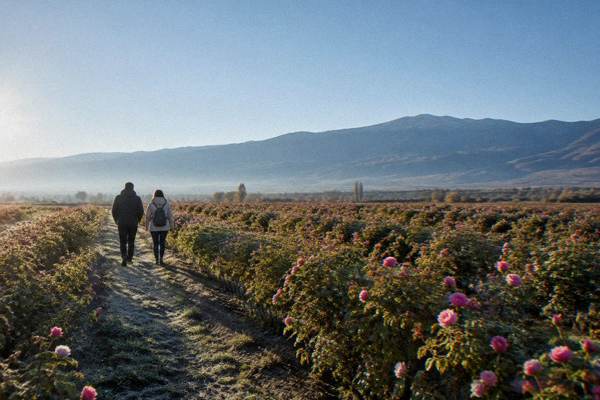
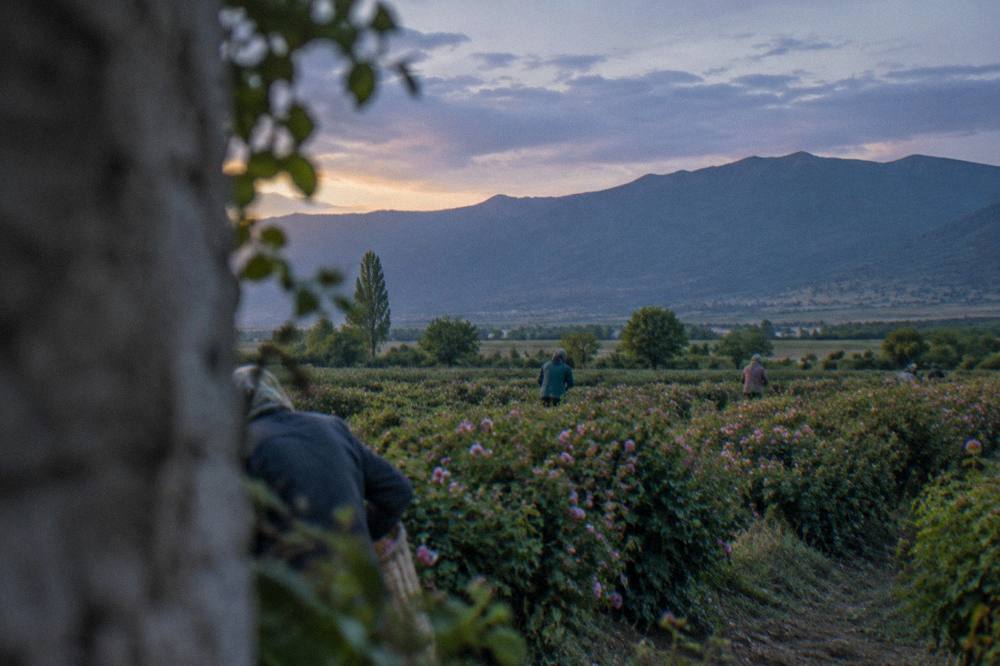
Rose season deserves its own paragraph. The valley of the roses around Kazanlak is where Bulgarian rose oil comes from, and the harvest window in late May and early June is the whole point of timing a trip around it; the background is in the Bulgarian roses and rose oil guide and the trip itself in the Kazanlak and the Rose Valley guide. A private tour that bundles the rose valley with the Thracian kings' tombs is the structured way to do it:
How Do You Plan A Month-By-Month Spring Trip To Plovdiv?
March is cool and quiet with winter site hours until the end of the month, April brings summer hours, longer evenings and the first reliably warm days at a modelled 17.1 C mean high, and May combines the warmest spring temperatures, 21.9 C mean high, with the year's modelled highest rainfall at 56.8 mm, ending in the rose harvest window at the very end of the month. Each month suits a different traveller: March for museums, April for walking, May for the valley.
A short month-by-month table keeps the choice honest:
| Month | Modelled mean high | What it suits |
|---|---|---|
| March | 12.1 C | Museums, Old Town houses, fewer crowds, winter ticket hours to 31 March |
| April | 12.1 to 17.1 C across the month | Walking the six hills, Main Street, Kapana terraces, summer hours from 1 April |
| May | 21.9 C | Park days in Tsar Simeon Garden, wine tastings, rose valley at month's end |
Two full days in the city cover the Ancient Theatre, the Roman Stadium, one or two Old Town houses, Nebet Tepe and Kapana, with the Bishop's Basilica's mosaics as a half-day anchor; the Plovdiv in two days guide lays out the sequence. Rain days have their own playbook in the Plovdiv in the rain guide, and free options, from Nebet Tepe to the sphendone and the whole of Kapana, are listed in the free things to do in Plovdiv guide. If the trip is really a Bulgaria loop, the Bulgaria itinerary guide places Plovdiv in a wider route.
What Practical Things Should A Spring Visitor Know About Plovdiv?
Spring visitors to Plovdiv pay in euro, since Bulgaria adopted the currency on 1 January 2026 at a fixed rate of 1.95583 lev per euro, and travel inside a fully functioning Schengen area, of which Bulgaria has been a full member since 1 January 2025. The city bus e-ticket costs 0.50 euro. A tourist tax may be charged by accommodation but its 2026 euro rate is unverified, so confirm it at booking, and the emergency number is 112.
Getting in is straightforward. Direct trains from Sofia take about 2 h 40 to 3 h 05, and buses run about 1 h 45 to 2 h 20; the Sofia to Plovdiv guide and how to get to Plovdiv guide carry the detail, along with the small route list at Plovdiv Airport. The central railway station has been through a modernisation programme due to finish in 2026, so allow extra time there and follow station signage. Once in the city, everything spring-related is walkable or a 0.50 euro bus ride, per the getting around Plovdiv guide.
A few closing specifics. Plugs are type C and F at 230 V. The time zone is Eastern European Time, two hours ahead of UTC. Lunch breaks at 12:30 to 13:00 at municipal sites are real, so build them into the day rather than arriving at 12:35. Where to sleep is covered in the where to stay in Plovdiv guide, and this whole season sits inside the comparison in the Plovdiv Travel Guide's best-time-to-visit overview.
Common Questions About Plovdiv In Spring
Is spring a good time to visit Plovdiv?
Yes, for most trip styles. April and May bring modelled mean highs of 17.1 C and 21.9 C, sites switch to longer summer hours on 1 April, and the rose harvest window opens at the end of May. March is cooler and quieter, with a 12.1 C mean high and winter ticket hours until the end of the month.
Does it rain a lot in Plovdiv in spring?
Rainfall is fairly even through the season. The ERA5 reanalysis, 1991-2020, gives 55.0 mm in March, 47.7 mm in April and 56.8 mm in May, and May is the modelled month with the year's highest total. A compact umbrella is a sensible pack item all spring.
When do Plovdiv's sights switch to summer hours?
On 1 April. From April to October the Ancient Theatre, the Roman Stadium's 3D hall and the Old Town houses open 9:30 to 18:00 with a 12:30 to 13:00 lunch break. Through the end of March they run 9:00 to 17:30. The Bishop's Basilica keeps 9:00 to 18:00 hours year round.
When is rose season near Plovdiv?
The rose harvest in the valley around Kazanlak, roughly an hour's drive north, peaks in late May and early June, so late spring is the window. No 2027 Rose Festival dates had been announced, so check with local sources or your tour operator before planning around the festival itself.
What should I pack for Plovdiv in spring?
Layers. March nights average a modelled 2.1 C low, so a warm jacket matters early and late in the day, while May days reach a 21.9 C mean high. Comfortable shoes for cobbles and hills, rain cover for any month, and modest dress if you plan to enter the Dzhumaya Mosque, where entry is free outside prayer times.
Is Plovdiv expensive in spring?
Crowd data puts an espresso and a half-litre of draught beer at around 2 euro each, the city bus e-ticket is 0.50 euro, and the main Old Town ticket is 3.58 euro per site with a 10.74 euro combined option. A tourist tax may apply at your accommodation; its 2026 euro rate is unverified, so confirm at booking.