Plovdiv Street Art: Murals In Kapana And Karshiyaka
Plovdiv, in southern Bulgaria, keeps its contemporary art on its walls: the creative district of Kapana, the residential slopes of Karshiyaka and the edges of the Old Town carry murals, festival leftovers and painted facades that sit a few minutes' walk from Roman ruins. This guide maps where the street art actually is, what it costs to see it, and how to fold it into a visit.
Short answer
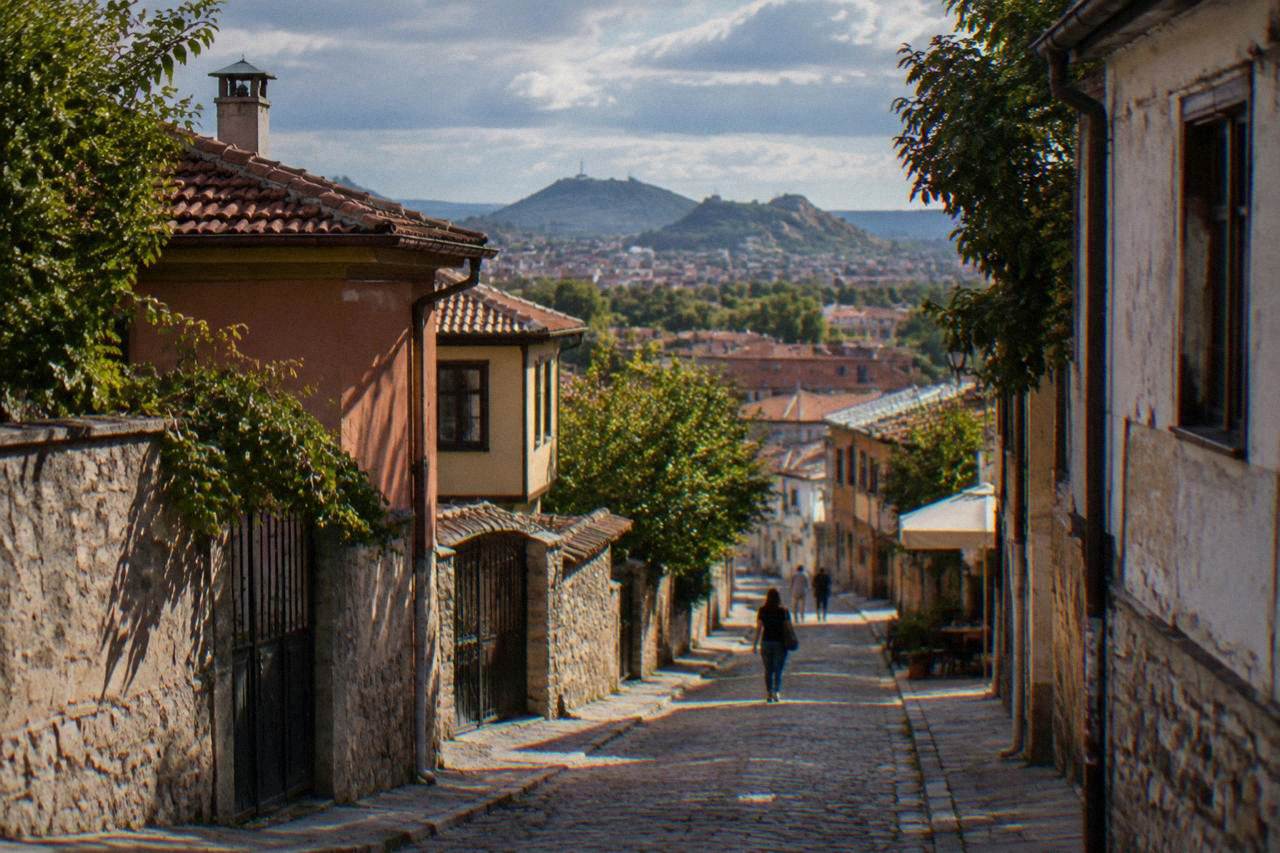
Plovdiv's street art concentrates in Kapana, the creative district whose name means The Trap, and in Karshiyaka across the Maritsa river, with more pieces on the edges of the Old Town and around the Three Hills. Almost all of it sits on free, open public streets, so a self-guided walk costs nothing.
Plovdiv, in southern Bulgaria, is an inland city built around six hills, and its contemporary art lives in the open: murals across the walls of Kapana, painted facades in Karshiyaka, festival pieces that survive long after the stages come down. The municipal tourism site presents Kapana as a creative district of free, open streets, and the name itself, "The Trap", refers to the maze of narrow lanes where the art is found. None of it needs a ticket. The Ancient Theatre, the Roman Stadium sphendone and Nebet Tepe sit minutes away, so a street-art walk in Plovdiv runs straight through the same grid as the ancient city, a combination few European cities offer at this scale. This Plovdiv Travel Guide page maps the walls, the districts and the practical frame around them.
Where Is Plovdiv Street Art Concentrated?
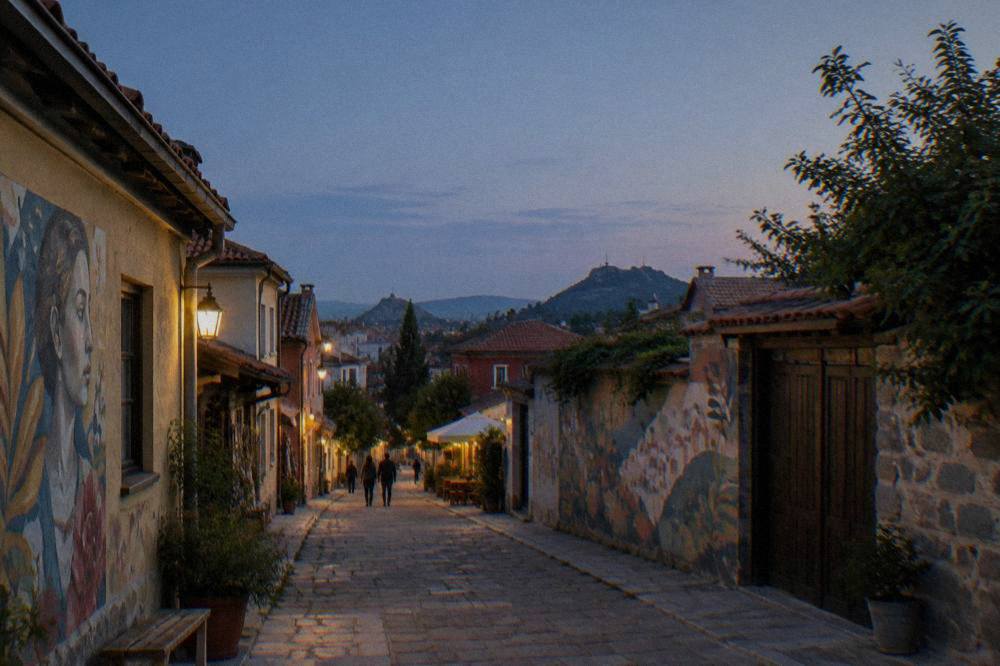
Plovdiv street art concentrates in three zones: Kapana, the creative district of narrow streets whose name means The Trap; Karshiyaka, the district on the north bank of the Maritsa river; and the edges of the Old Town and the Three Hills, where painted walls meet the restored Bulgarian-revival houses. All three zones are free, open public space, reachable on foot from the central pedestrian street.
Kapana is the anchor. The municipal tourism site describes it as a maze of narrow streets, and the translation of the name is honest: the grid genuinely disorients, which is part of the point. Its walls carry the densest layer of murals, stencils and festival commissions in the city, and because the streets are public, there is no opening hour and no ticket. The dedicated Kapana district guide covers the ground in detail.
Karshiyaka, across the river, works differently. The district guide at Karshiyaka describes a residential quarter with its own character, and the murals there are larger, spread out and often attached to panel blocks and end walls rather than boutique lanes. It is a longer, looser walk than Kapana.
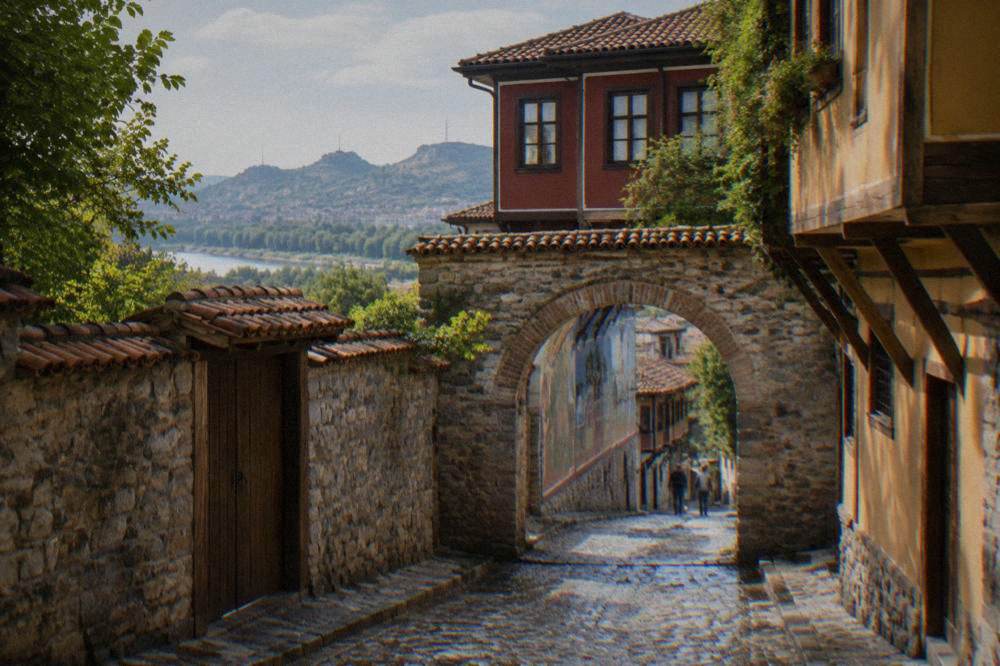
The Old Town edges come third. Around Hisar Kapia and the lanes climbing toward Nebet Tepe, painted walls sit beside revival houses and Roman foundations. The pieces are fewer but the setting compresses eight millennia of city into a few hundred metres of walking.
The Three Street-Art Zones At A Glance
| Zone | Character | Access | Cost |
|---|---|---|---|
| Kapana | Dense murals in a maze of narrow streets, galleries and cafes | Open public streets, central | Free |
| Karshiyaka | Large-scale murals on residential blocks, north bank of the Maritsa | Open public streets, walk or short ride from centre | Free |
| Old Town edges | Scattered pieces beside revival houses and Roman walls around Hisar Kapia | Open public lanes; museum houses ticketed separately | Free for the streets |
A guided walk is one way to anchor the route. The Old Town walk with rakia tasting covers the lanes the murals spill into, and the booking page shows the current price and dates: Check availability.
Why Did Kapana Become Plovdiv's Creative District?
Kapana became Plovdiv's creative district through deliberate municipal repositioning of a neglected crafts quarter as a cultural zone, a shift that culminated around Plovdiv's year as European Capital of Culture in 2019, shared with Matera in Italy. The streets were already public and free; the policy added festivals, studios and murals to them.
The historical layer matters. Kapana was the city's crafts and trading quarter for centuries, and the street pattern that traps visitors today is the pattern merchants walked. The tourism site's own page on the district gives the name's meaning and presents the area as a creative district rather than a museum piece: nothing behind a gate, nothing fenced.
The 2019 European Capital of Culture year is the documented pivot. Plovdiv's programme put contemporary art into public space across the city, and Kapana inherited the largest share of permanent results: commissioned walls, festival infrastructure and the critical mass of studios and venues that keeps the district producing new work. Pieces from that period still stand alongside newer ones, so the walls read as a layered archive rather than a single campaign.
Festivals continue the layering. The autumn 2026 edition of Kapana Fest ran 2 to 11 October across two weekends, based around the bridge over Gladstone Street and Central Square, per the municipal events calendar. Events of this kind routinely leave murals and installations behind.
Public Art Zones And What Frames Them
| Zone Or Event | Details | Status |
|---|---|---|
| Kapana streets | Name means "The Trap", maze of narrow streets, creative district, free and open | Stated by the municipal tourism site |
| European Capital of Culture 2019 | Shared with Matera; foundation "Plovdiv 2019" | Documented designation |
| Kapana Fest, autumn 2026 | 2 to 4 and 9 to 11 October 2026, bridge over Gladstone Street and Central Square | Listed on the events calendar |
| Old Town festivals | "Revived Heritage" days ran 16 to 23 September 2026, free events | Listed by the Old Plovdiv institute |
What Does A Street-Art Walk In Plovdiv Cost?
A self-guided Plovdiv street-art walk costs nothing: Kapana, Karshiyaka, the Old Town lanes, Hisar Kapia, Nebet Tepe and the Roman Stadium sphendone are all free, open public space with no ticket. The only costs come from the optional add-ons, and the Old Plovdiv ticket page prices those in euro, for example 3.58 euro for any single museum site and 7.57 euro for the Bishop's Basilica.
The free list is long and specific. Nebet Tepe, the hill where the first settlement traces date to the 4th millennium BC per the city tourism site, reopened after restoration in March 2025 as a free open-air complex. Hisar Kapia, the medieval gate at the edge of the Old Town, is a public landmark with no ticket and no closing time. The sphendone, the accessible northern curve of the Roman Stadium, is visible in the open air without paying, and the Dzhumaya Mosque is free to visit outside prayer times with modest dress.
The paid layer is separate from the street art itself. Anyone extending a wall-walk into the museum houses of the Old Town pays the Old Plovdiv tariff: the official ticket page lists a single-site adult ticket at 3.58 euro, the five-site combined ticket at 10.74 euro, and the Bishop's Basilica separately at 7.57 euro. The combined-ticket validity period is not stated on the page, so confirm at the desk.
Free And Paid: What A Wall-Walk Actually Costs
| Sight On The Route | Ticket | Notes From The Ticket Page |
|---|---|---|
| Kapana streets | Free | Open public streets, no hours |
| Karshiyaka murals | Free | Open public streets |
| Nebet Tepe | Free | Open-air complex, restoration opened March 2025 |
| Hisar Kapia | Free | Public landmark, open at all hours |
| Roman Stadium sphendone | Free to view | Open-air northern curve; 3D hall 3.68 euro |
| One Old Plovdiv museum site | 3.58 euro adult | Student 1.53 euro, family 7.16 euro |
| Bishop's Basilica | 7.57 euro adult | Priced separately from the combined ticket |
The pairing is what makes the walk unusual. A single morning can take in a 1st-century theatre and a festival mural inside the same ten minutes of walking, one at 3.58 euro and one on a free wall. The one-day itinerary shows how the two layers sequence in practice.
Can You See Kapana's Murals And The Roman Sights On The Same Walk?
Yes, and that combination is the practical core of a Plovdiv visit: Kapana, the Roman Stadium sphendone, the Dzhumaya Mosque, Hisar Kapia and the Ancient Theatre all sit within a compact central strip, so a single walking loop covers murals and antiquity without transport.
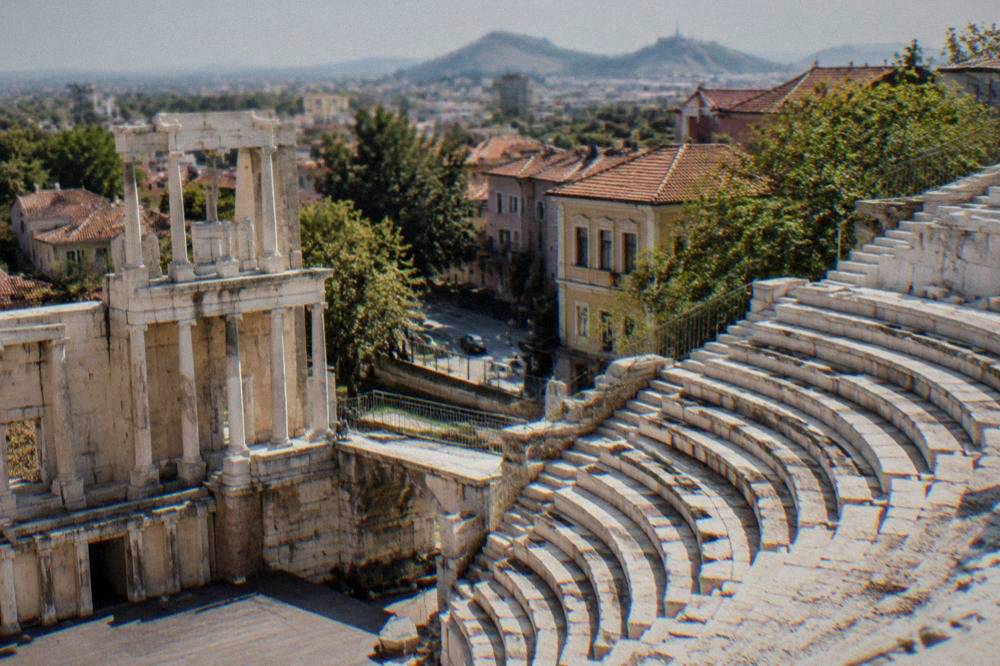
The geometry is simple. The main pedestrian street, covered in the Main Street and the center guide, runs north to south through the middle. The Roman Stadium sphendone breaks through its surface partway down. Kapana hangs off the southern end. Hisar Kapia and the Old Town climb east from there, and the Ancient Theatre sits inside that slope, open April to October from 9:30 to 18:00 and November to March from 9:00 to 17:30, with a lunch break at 12:30, per the Old Plovdiv site.
The mix of eras is the point. Walking from a Kapana mural to a 2nd-century stadium built on the model of the Stadium at Delphi takes minutes. The stadium once held up to 30,000 spectators, and only its northern part is accessible today; the rest lies under the modern street, so the sphendone is the visible fragment.
When Is The Best Time Of Year For Photographing Plovdiv's Walls?
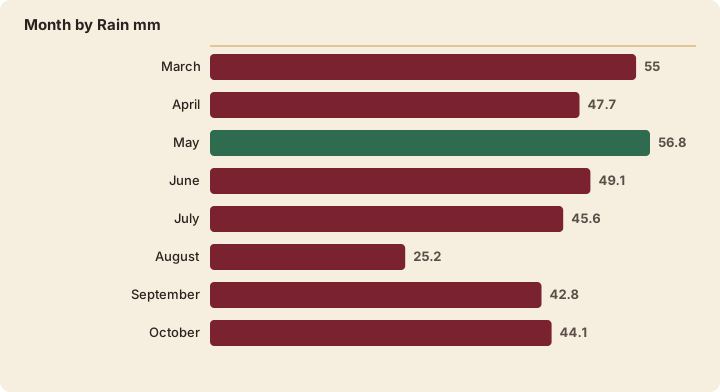
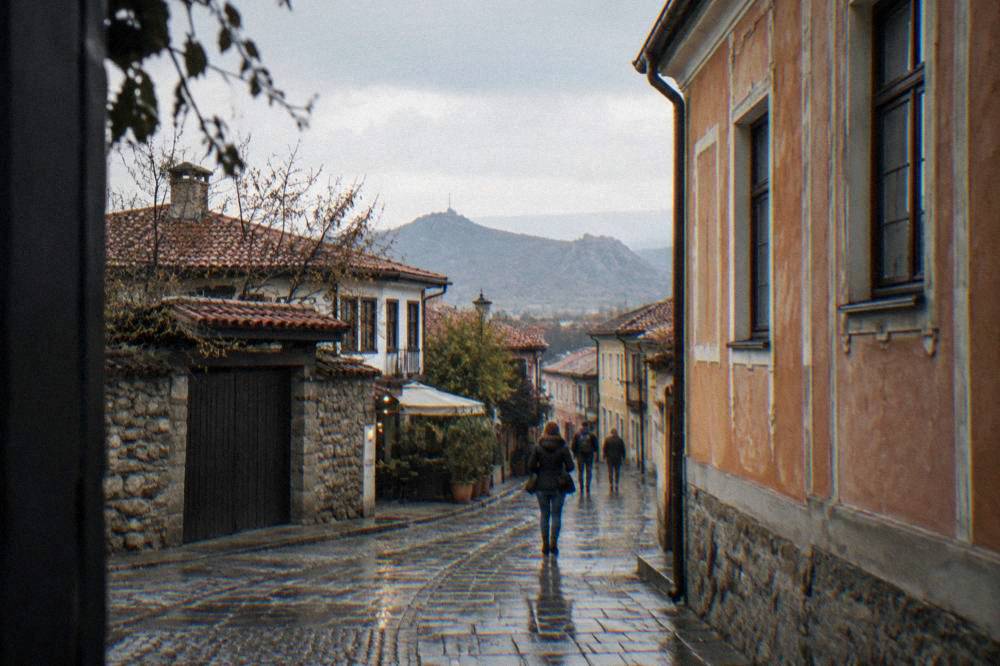
Late spring and early autumn give the best conditions for photographing Plovdiv street art: the ERA5 reanalysis for 1991 to 2020 puts the mean daily high at 21.9 C in May and 23.8 C in September, against 28.6 C in August, while rainfall peaks in May at 56.8 mm and drops to its annual low of 25.2 mm in August. Winter light works too, with a 5.9 C mean high in January.
The numbers deserve a close read rather than a single verdict. May has the highest monthly rainfall total in the normals, 56.8 mm, so the mildest month is not the driest. August is the driest but also carries the highest mean daily high. September balances the two, and the mural season around the Kapana Fest weekends in early October adds fresh walls to shoot just as the heat drops.
For framing, the narrow streets of Kapana shade walls for much of the day, which softens contrast in summer but deepens shadows in winter. The open end-walls of Karshiyaka face long stretches of direct light, where morning or late afternoon gives the cleanest result. The best time to visit and weather pages carry the full breakdown.
Plovdiv Climate Normals For Planning A Shoot (ERA5 Reanalysis, 1991-2020)
| Month | Mean Daily High C | Mean Daily Low C | Rain mm |
|---|---|---|---|
| March | 12.1 | 2.1 | 55.0 |
| April | 17.1 | 6.4 | 47.7 |
| May | 21.9 | 11.5 | 56.8 |
| June | 25.9 | 15.4 | 49.1 |
| July | 28.2 | 17.9 | 45.6 |
| August | 28.6 | 18.1 | 25.2 |
| September | 23.8 | 13.8 | 42.8 |
| October | 18.1 | 8.8 | 44.1 |
These are modelled grid-cell values, not a station record, and reanalysis smooths urban heat, so read them as a planning baseline rather than a forecast. The wettest month in the table is May and the driest is August.
How Do You Reach Karshiyaka And The Other Mural Zones?
Everything worth photographing in central Plovdiv is walkable, and Karshiyaka across the Maritsa is a straightforward walk or a short ride from the centre; the city bus e-ticket costs 0.50 euro, and the Rodopi bus station handles southbound routes while the Yug station sits beside the central railway station on Hristo Botev Boulevard. No mural zone requires a car.
The practical spine is the pair of stations: the central railway station and the Yug bus station stand side by side on Hristo Botev Boulevard, so arrivals from Sofia, whether by direct train of roughly 2 h 40 to 3 h 05 or by bus, land in the same place. From there the centre, Kapana and the Old Town are a walk or a 0.50 euro e-ticket away. The getting around page carries the detail.
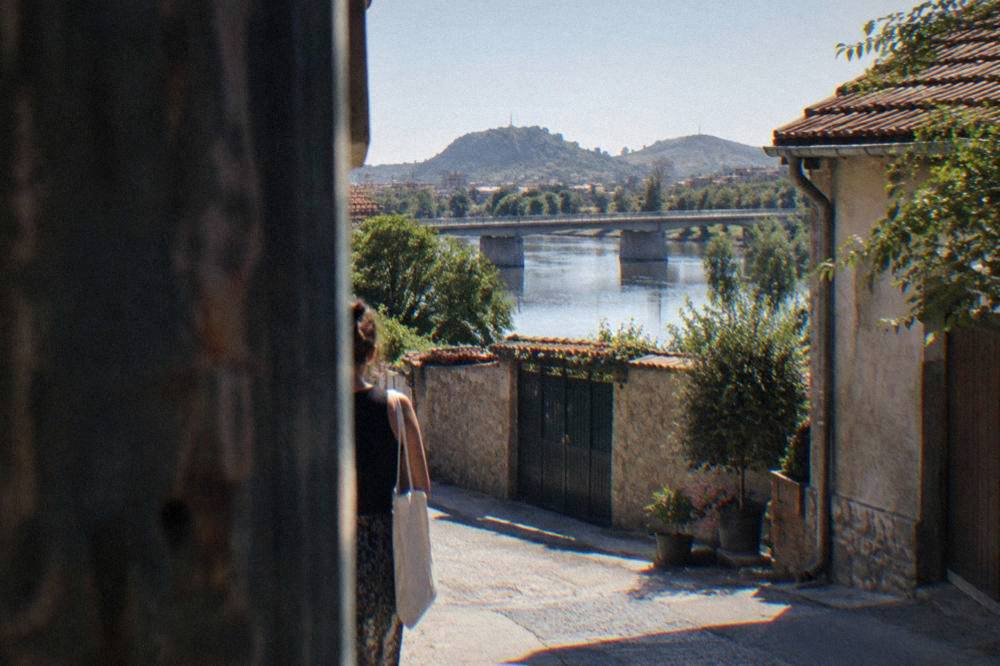
Karshiyaka sits on the opposite bank. The bridges across the Maritsa connect it to the centre directly, and the district's murals sit on a looser grid that rewards wandering rather than a fixed route. For anyone arriving from the capital, the Sofia to Plovdiv guide covers trains and buses, and the Plovdiv Airport page covers the small Krumovo route list.
A guided option removes the navigation entirely. Tip-based walks also run locally; confirm the meeting point and terms with the guide directly, since no platform listing is carried on this page. For a self-directed version, the self-guided walk page maps the same lanes.
Getting Around The Mural Zones
| Journey | Details |
|---|---|
| Central stations to the Old Town | Walkable; stations side by side on Hristo Botev Boulevard |
| City bus single, e-ticket | 0.50 euro |
| Sofia to Plovdiv, direct train | About 2 h 40 to 3 h 05 per the BDZ timetable |
| Sofia to Plovdiv, bus | About 1 h 45 to 2 h 20 (reported) |
| Karshiyaka from the centre | Across the Maritsa by bridge, walk or short bus ride |
What Else Sits Beside The Murals In Kapana?
Kapana's streets hold cafes, bars, galleries and studios alongside the murals, all free to enter as public space, though hours and prices at any gallery, bar or shop are worth confirming locally. The district also anchors the city's food and nightlife scene, covered in the dedicated guides on this site.
The honest position on specifics: this site names no Kapana venue with an address or a price, because none was confirmed. The district's role as the city's creative and culinary hub is well established. The street food, nightlife and restaurants pages carry the food side, and the what to eat guide covers the dishes: shopska salad, banitsa, kavarma, kebapche and tarator are the canonical five.
Bulgarian wine and rakia thread through the district too, and a tasting is the natural rest stop on a wall-walk. The Bulgarian wine and rakia pages give the background, with Mavrud and Rubin as the local Thracian Valley grapes to look for.
Dishes And Drinks To Pair With A Kapana Walk
| Item | What It Is |
|---|---|
| Shopska salad | Tomatoes, cucumbers, peppers, onion and sirene cheese |
| Banitsa | Cheese filo pastry, a breakfast staple |
| Kavarma | Clay-pot meat and vegetable stew |
| Kebapche and kyufte | Grilled minced meat, shaped or round |
| Tarator | Cold yogurt and cucumber soup |
| Rakia | Bulgarian fruit brandy, the traditional pour |
How Does Plovdiv Street Art Fit Into A Longer Trip?
Plovdiv street art works as one thread of a two- or three-day city stay, with the ancient sites, the Three Hills and the Kapana food scene filling the rest, and the city itself serving as a base for the Rhodopes, Bachkovo Monastery and the Thracian Valley beyond. The itineraries on this site sequence the full stay, and the mural zones slot into every version.
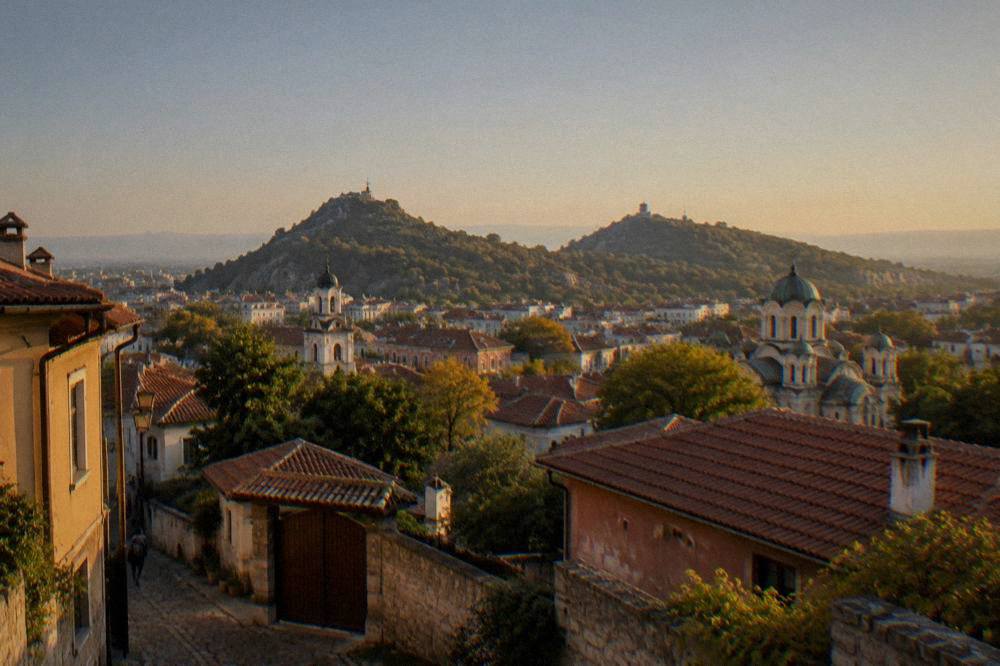
The frame is documented. Plovdiv is often described as one of the oldest continuously inhabited cities in Europe, and the city tourism site dates the first settlement on Nebet Tepe to the 4th millennium BC. Around that core sit six hills (there were seven until Markovo Tepe was partly quarried away), the 2019 European Capital of Culture legacy, and a contemporary art scene that grew from it. The two-day and three-day itineraries, plus the Roman Plovdiv and history pages, cover the deep context.
Beyond the city, day trips fan out south and west: Bachkovo Monastery, free to enter as a working monastery about 30 km away; Asen's Fortress above Asenovgrad; the Wonderful Bridges and the Trigrad gorge in the Rhodopes; and the Thracian Valley wine country around Brestovitsa. The day trips from Plovdiv index and the where to stay guide handle the planning.
For travellers combining the capital and the second city, the Bulgaria itinerary and Sofia pages link the two, and the how to get to Plovdiv guide covers every arrival route into the centre. Practical notes for American and other long-haul visitors, from the euro changeover on 1 January 2026 to Schengen entry rules, sit on the travel tips page.
Common Questions About Plovdiv Street Art
Is Plovdiv street art free to see?
Yes. Kapana, Karshiyaka and the Old Town edges are free, open public streets with no ticket and no set hours, per the municipal tourism site's description of the districts.
Where is the best street art in Plovdiv?
Kapana carries the densest concentration of murals in its maze of narrow streets, with larger-scale pieces across the Maritsa in Karshiyaka and scattered works around Hisar Kapia on the Old Town edges.
Can you combine Plovdiv street art with the Roman sites?
Yes, easily. Kapana, the Roman Stadium sphendone, the Dzhumaya Mosque and the Ancient Theatre sit within a compact central strip, so one walking loop covers both layers; the Ancient Theatre ticket is 3.58 euro per the Old Plovdiv ticket page.
When did Kapana become a creative district?
The municipal repositioning of the old crafts quarter built up ahead of Plovdiv's year as European Capital of Culture in 2019, shared with Matera, which left commissioned walls and festival infrastructure in place.
Are there guided tours of Plovdiv's street art?
Guided city walks cover Kapana and the Old Town lanes the murals spill into, and tip-based walks run locally; confirm meeting points and terms with the guide directly.
