The Hills Of Plovdiv: Which One Gets The View
Plovdiv, in southern Bulgaria, is an inland city built around six hills. This guide sets out what the municipal tourism site and the Old Plovdiv institute say about each one: heights, what stands on top, which viewpoint to pick and what it costs.
Short answer
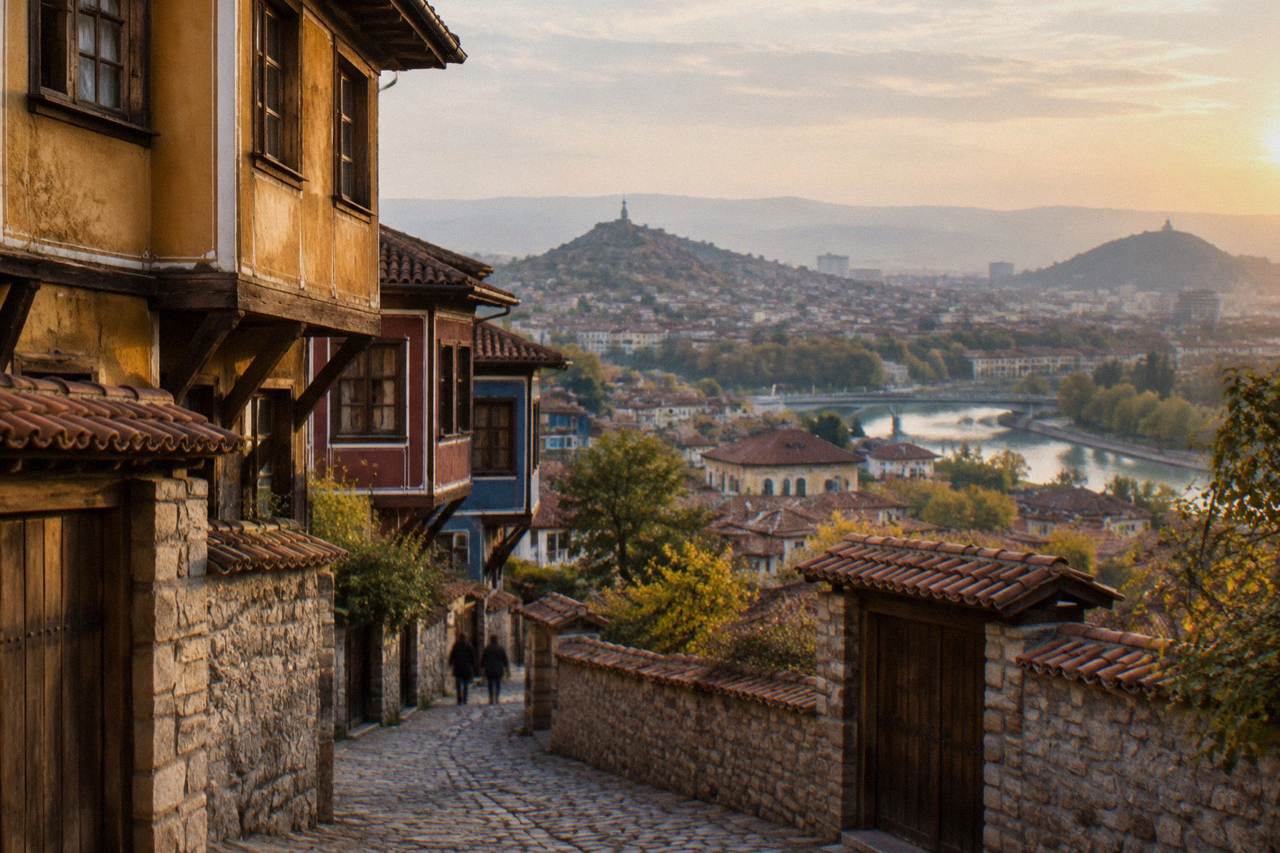
Plovdiv has six hills, not seven. Markovo Tepe was partly quarried away in the 1930s. Nebet Tepe (207 m) is the archaeological hill, Bunardzhika (265 m) carries the Alyosha monument and a wide city panorama, and Youth Hill (285.5 m) is the highest. Nebet Tepe is free to enter after its 2025 restoration.
Plovdiv, in southern Bulgaria, is an inland city of six hills, and the hills are the reason the city looks the way it does: the Old Town climbs three of them, the modern centre wraps around the rest, and every walk in the city ends on a slope. The city's tourism site counts six today and explains why the count is not the famous seven often quoted elsewhere. This page sets out what is known about each hill, which one carries the monument, which one carries the archaeology, and which one simply gets the view.
How Many Hills Does Plovdiv Actually Have?
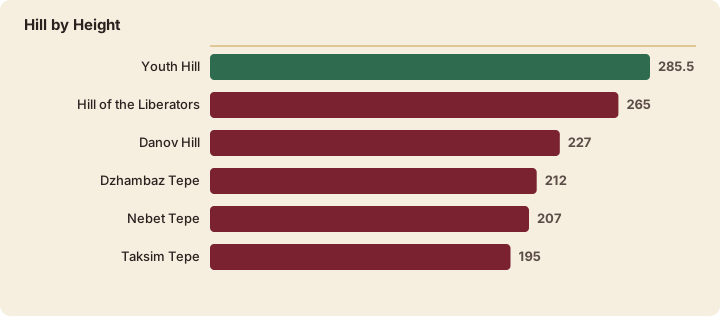
Plovdiv has six hills today, not the seven the city is famous for. There were seven until the 20th century, but Markovo Tepe was partly destroyed by quarrying in the 1930s, and the city's official relief page now lists six intact hills. The same page gives a measured height for each, from Youth Hill at 285.5 m down to Taksim Tepe at 195 m.
The seven-hill story dies slowly. It travels in older guidebooks and in casual online references, and it was true for centuries: the ancient city was Trimontium, the city of three hills, and the wider settlement spread across seven. The municipal tourism site's relief page is the page to trust on the current count, because it names Markovo Tepe and states plainly that quarrying in the 1930s removed part of it. No trace on the ground today earns it a place on the list.
The six that remain group naturally. Three of them, Nebet Tepe, Dzhambaz Tepe and Taksim Tepe, form the Trimontium massif that the Old Town sits on, and a walk through the Old Town crosses all three without a map ever telling you so. The other three stand apart: Bunardzhika with the Alyosha monument, Sahat Tepe with its clock tower above the Kapana quarter, and Youth Hill on the southwest edge of the centre. Together they explain the city's layout better than any street plan does, and the overview on things to do in Plovdiv is built around them.
What Are The Six Hills Of Plovdiv, And How High Is Each One?
The six hills of Plovdiv, with heights from the city tourism site's relief page, are Youth Hill (Dzhendem Tepe) at 285.5 m, Hill of the Liberators (Bunardzhika) at 265 m, Danov Hill (Sahat Tepe) at 227 m, Dzhambaz Tepe at 212 m, Nebet Tepe at 207 m and Taksim Tepe at 195 m. Three of the six form the Old Town's Trimontium massif.
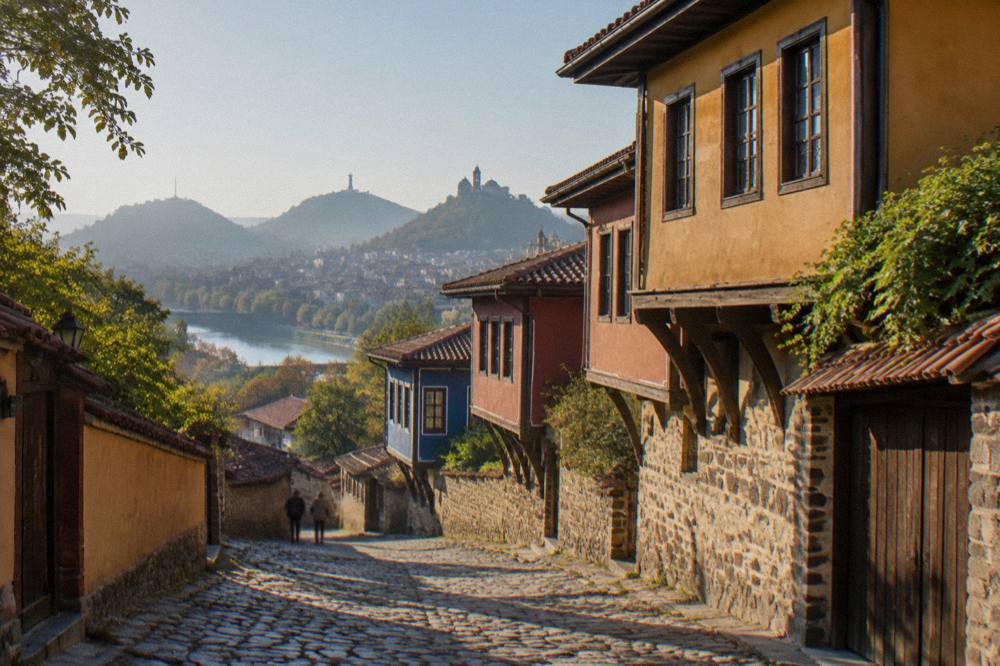
The relief page gives both the modern Bulgarian names and the older ones, and the pairing is worth reading once because maps and bus stops still use both. The heights are absolute elevations above sea level, not climb distances: Nebet Tepe stands only 207 m high, but you reach it from the Maritsa plain at roughly 180 m, so the climb is short by mountain standards and still enough to put the whole Old Town roofline under your feet.
| Hill | Bulgarian name | Height | What stands on top |
|---|---|---|---|
| Youth Hill | Dzhendem Tepe | 285.5 m | Open parkland, city panorama |
| Hill of the Liberators | Bunardzhika | 265 m | Alyosha monument, park |
| Danov Hill | Sahat Tepe | 227 m | Historic clock tower above Kapana |
| Dzhambaz Tepe | Dzhambaz Tepe | 212 m | Old Town houses, viewpoints |
| Nebet Tepe | Nebet Tepe | 207 m | Fortified archaeological complex |
| Taksim Tepe | Taksim Tepe | 195 m | Old Town edge, residential streets |
For travellers whose time is short, the practical division is this: the Old Town trio can be done in one connected walk, and the Old Town area guide maps that walk in detail. Bunardzhika and Sahat Tepe are each a short detour from the centre, and Youth Hill is a longer stroll that suits a spare afternoon. A guided walk is one way to compress the trio into a single loop: the Old Town and Roman Theatre walking tour covers the Old Town hills and the Roman landmarks around them, and you can also Check availability directly with the operator.
Which Plovdiv Hill Has The Best View Over The City?
There is no single official answer, but the practical one splits by what you want to look at: Bunardzhika gives the widest panorama, taking in the Rodopi mountains to the south and the whole city bowl, while Nebet Tepe gives the most atmospheric view, over the Old Town roofs toward the Ancient Theatre and the plain beyond.
Bunardzhika, the Hill of the Liberators, is the hill locals mean when they say they are going up for the view. Its park is open at all hours, free, and its monument terrace faces south across the entire city toward the mountains. Photographers plotting shots often start here because the field of view is the broadest of the six: the three Old Town hills line up in one direction and the modern centre fills the other. The terrace also catches the evening light late, since nothing taller stands between it and the horizon, which makes it the reliable choice when a day's timing slips.
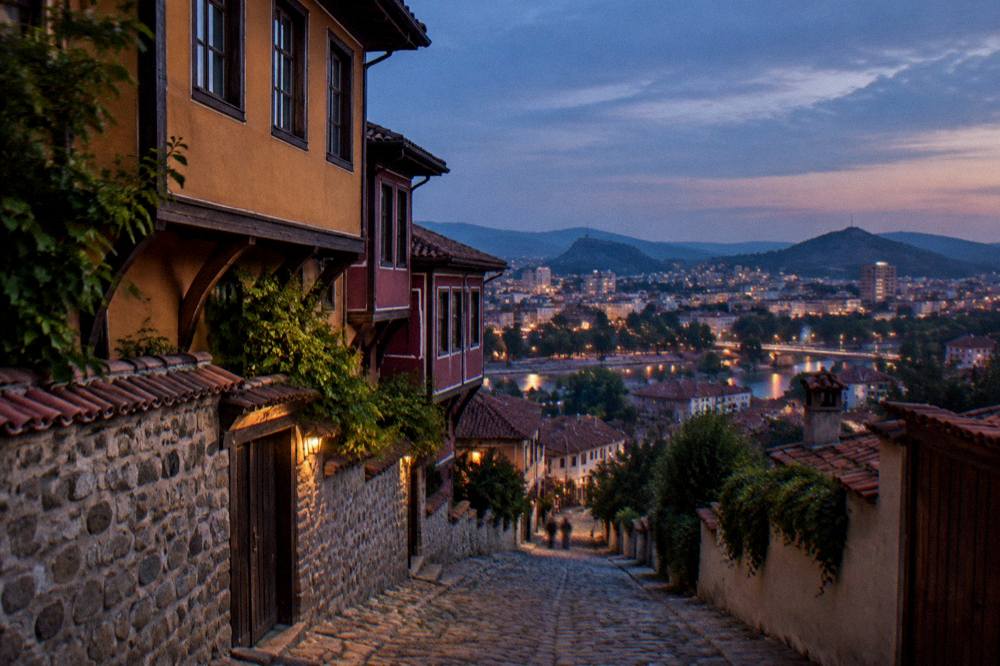
Nebet Tepe rewards a different instinct. Its terrace sits at the edge of the Old Town, so what fills the frame is red-tiled roofs, church domes and the plain stretching north. After the conservation project that officially opened in March 2025, the complex is a landscaped open-air site rather than a rough dig, and the tourism site describes free, unrestricted public access to it. The dedicated Nebet Tepe guide covers the archaeology in depth, and the Ancient Theatre page covers the monument you will be looking down at.
The middle ground is Dzhambaz Tepe, the least celebrated of the three Old Town hills. Its lanes pass the restored Revival houses of the Old Town, including Balabanov House, and open onto terraces where the view arrives between rooftops rather than across a cleared platform. For a structured route that strings all three Old Town hills together with the Roman sites at their feet, the Plovdiv walking tour overview lists the options.
What Does Nebet Tepe Cost, And When Can You Visit?
Nebet Tepe costs nothing to enter. The complex is an open-air archaeological site with free, unrestricted public access following the restoration project that officially opened in March 2025, and no ticket booth operates at the site. The guided tours that the museum offers on the hill run on limited hours, but general access is not tied to them.
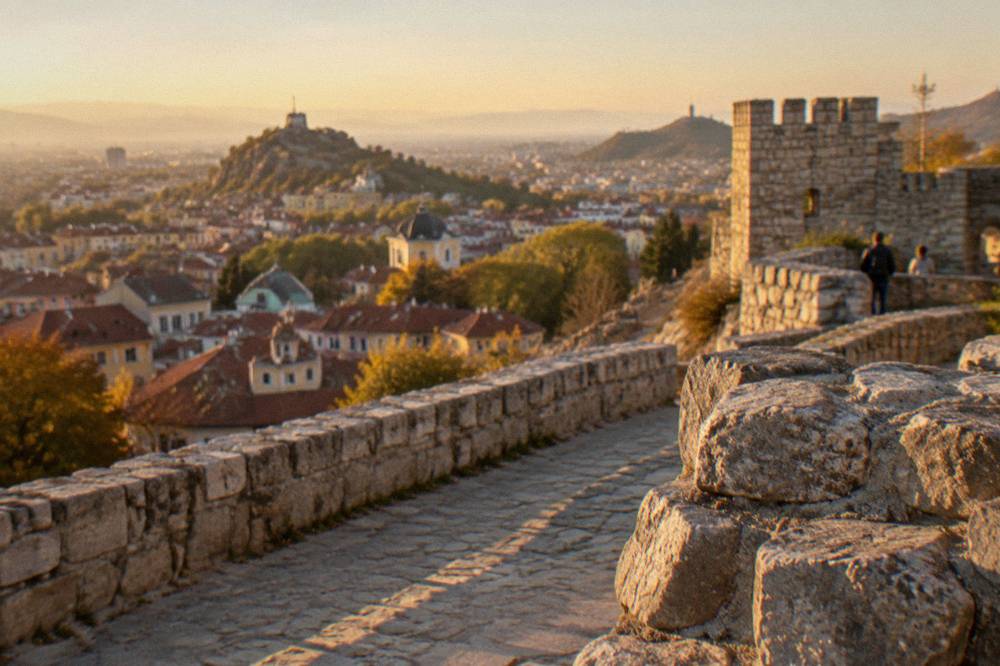
The free access is not a gap in the ticketing but a condition of the project. Reporting on the restoration notes that free public access forms part of the European funding conditions, expected to hold for roughly five years. The hill carries the earliest settlement layers the city claims: the municipal tourism site dates the first settlement on Nebet Tepe to the 4th millennium BC, which is the basis for Plovdiv's description as one of the oldest continuously inhabited cities in Europe. Walk the walls and the signage and you are standing on the reason the city exists at this spot at all. More of these guides are collected on Plovdiv Travel Guide.
Practicalities are simple. Daylight is the sensible window; the surface is a mix of stone paths and terraces, so ordinary city shoes serve. The rest of the Old Town sites around the hill are ticketed, and the prices below are the euro figures from the Old Plovdiv institute's ticket page.
| Old Plovdiv ticket | Adult | Student | Family |
|---|---|---|---|
| Any one site, except the Bishop's Basilica | 3.58 EUR | 1.53 EUR | 7.16 EUR |
| Combined, up to 5 sites | 10.74 EUR | 4.09 EUR | 21.47 EUR |
| Bishop's Basilica, single site | 7.57 EUR | 3.58 EUR | 15.34 EUR |
| Roman Stadium 3D hall | 3.68 EUR | 1.23 EUR | not listed |
Children under 7 enter free, as do visitors with more than 50% disability, and the ticket page lists a group rate for parties over ten. The validity period of the combined ticket is not stated on the page, so confirm at the desk when you buy.
What Is On Bunardzhika, And What Is The Alyosha Monument?
Bunardzhika, the Hill of the Liberators at 265 m, is a public park open at all hours, crowned by the Alyosha monument, a concrete figure of a Soviet soldier unveiled in 1957. The hill and monument area are free, with no ticket and no published closing, and the terrace around the monument gives the widest panorama of any Plovdiv hill.
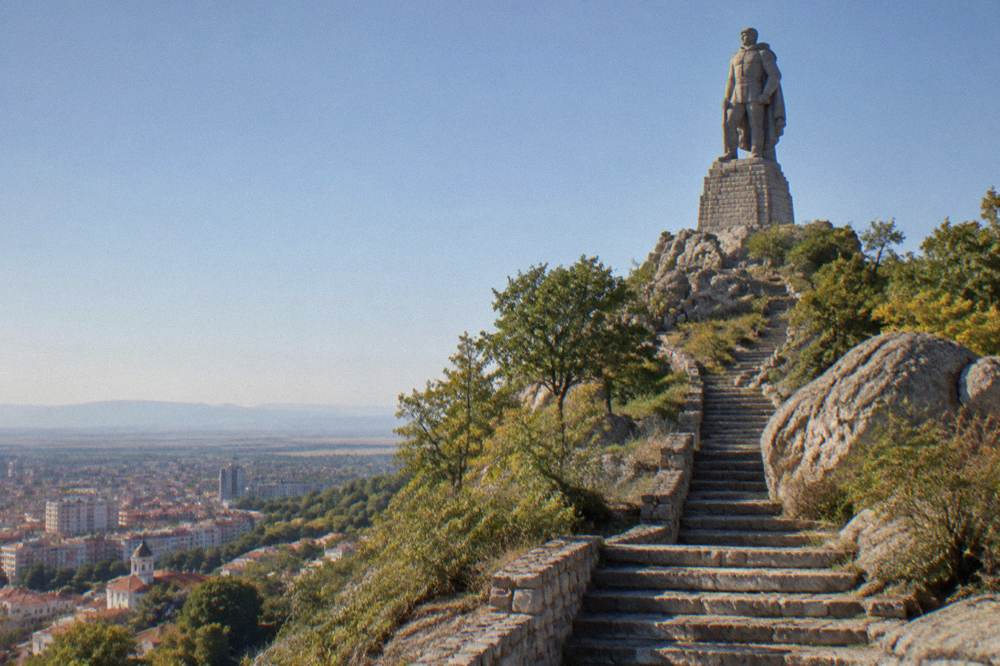
The monument's unveiling year is documented; its exact dimensions are less firmly fixed, so treat any height figure you see quoted elsewhere with caution. What is certain is the effect: the figure faces the city from a cleared terrace, and the park around it is one of the places Plovdiv residents treat as their own front garden, busy at sunset in every season. The dedicated Alyosha monument page carries the history and the political debates around the statue, which continue without affecting access.
The climb from the centre is steady rather than steep, on park paths under trees. Allow an unhurried round trip if the panorama matters to you, since the light changes fast across the bowl of the city. From the base of the hill, the Kapana creative district sits a few minutes' walk east, which makes a natural pairing: uphill for the view, downhill for coffee. The hill also works as an orientation exercise on a first day, because from the terrace you can read the whole city at once and plan the rest of your stay around what you see.
What Sits On Sahat Tepe, Youth Hill And Taksim Tepe?
Sahat Tepe (Danov Hill, 227 m) carries the historic clock tower above the Kapana quarter, Youth Hill (Dzhendem Tepe, 285.5 m) is the highest of the six and holds open parkland, and Taksim Tepe (195 m) is the lowest, folded into the Old Town's eastern edge with residential lanes and scattered viewpoints rather than a single landmark.
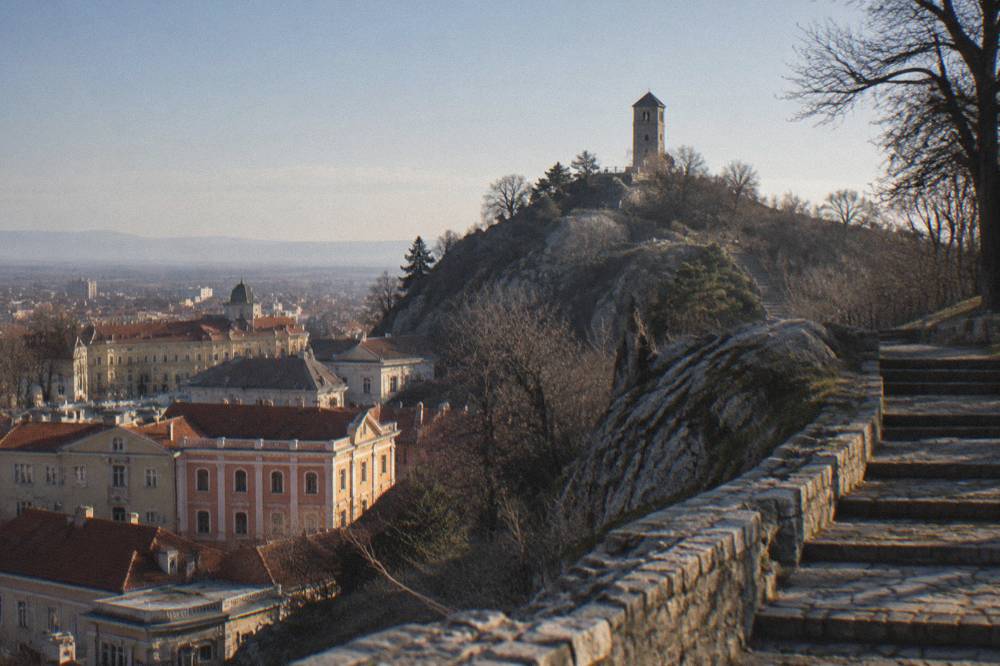
Sahat Tepe is the easiest summit in the city: a short walk from the main pedestrian street, past the tower, onto grass with a view over the Old Town's northern roofs. Because the approach starts in the centre, it fits into any pause in a shopping or museum day. The Main Street and centre guide places it in context.
Youth Hill is the one that feels like a real hill, with the ground to match its height. Its parkland sits southwest of the centre, and the reward for the longer walk is a panorama that includes the other five hills lined up across the city, a view none of the others can give you. Taksim Tepe, by contrast, asks to be stumbled across rather than climbed: its lanes thread the Old Town's quieter eastern side, and the terraces open where the houses step back.
The table below is the planning grid for the six.
| Hill | Ticket | Access | Pairs well with |
|---|---|---|---|
| Nebet Tepe | Free | Open-air complex | Old Town houses, theatre |
| Bunardzhika | Free | Park, all hours | Kapana, centre |
| Sahat Tepe | Free | Park paths | Main Street, Kapana |
| Youth Hill | Free | Park paths | Longer city walks |
| Dzhambaz Tepe | Free | Public lanes | Old Town circuit |
| Taksim Tepe | Free | Public lanes | Old Town circuit |
How Do The Hills Fit Into A Day In Plovdiv?
The workable plan is to climb the three Old Town hills in one connected morning walk, Nebet Tepe, Dzhambaz Tepe and Taksim Tepe, then cross to Bunardzhika or Sahat Tepe in the afternoon when the panorama light improves. A single day is enough for all six hills, and the ready-made one day Plovdiv itinerary sequences exactly this.
For the same loop with commentary along the way, book a self guided audio tour here.
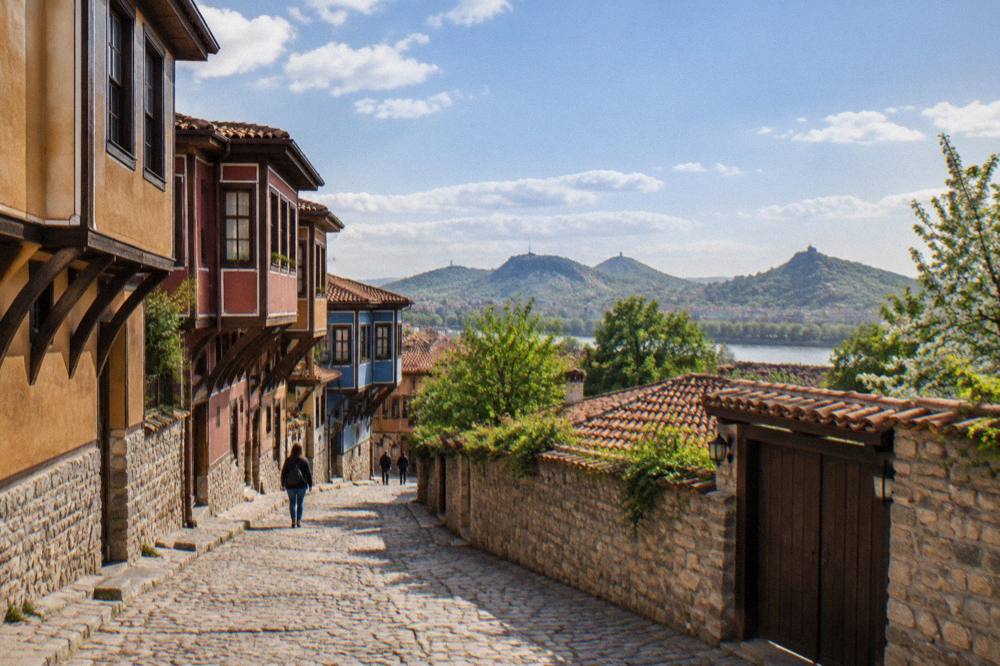
The reason the sequencing works is geography. The Old Town trio forms one massif with the Roman Stadium at its foot, so a single loop takes in the archaeology on the flat and the viewpoints on the climb, with the Dzhumaya Mosque and the pedestrian street as the hinge. Bunardzhika and Sahat Tepe sit west of the centre and can be tagged together in a second loop. Youth Hill only earns its place if the day has slack in it, or if a two or three day plan, such as the two day Plovdiv itinerary, spreads the hills out.
For visitors who want the hill context explained rather than just walked, a guided option exists: the classic guided city walk, whose details are on the Plovdiv guided walking tour page, also has a solo listing below. A themed alternative, the Jewish heritage walk, traces a different layer of the same slopes.
Museum stops slot between climbs. The Ethnographic Museum stands at the top of the Old Town slope and closes on Mondays, as does the Regional Archaeological Museum, so a Monday visit pushes the hills to the fore and the museums to another day. The Regional History Museum is free on the first Thursday of the month.
| Museum | Closed | Summer hours | Ticket page figure |
|---|---|---|---|
| Ethnographic Museum | Monday | 9:00 to 18:00 | about 3.07 EUR |
| Regional Archaeological Museum | Monday | 10:00 to 18:00 | confirm on site |
| Regional History Museum | hours vary | varies by site | 5.00 EUR |
When Is The Best Season For Walking The Plovdiv Hills?
The ERA5 reanalysis for Plovdiv, 1991 to 2020, puts the mean daily high at 28.6 C in August and 5.9 C in January, with the low rainfall month at 25.2 mm in August and the high at 56.8 mm in May, so spring and autumn give the most comfortable hill walking, summer mornings beat summer afternoons, and winter climbs are short enough to stay workable.
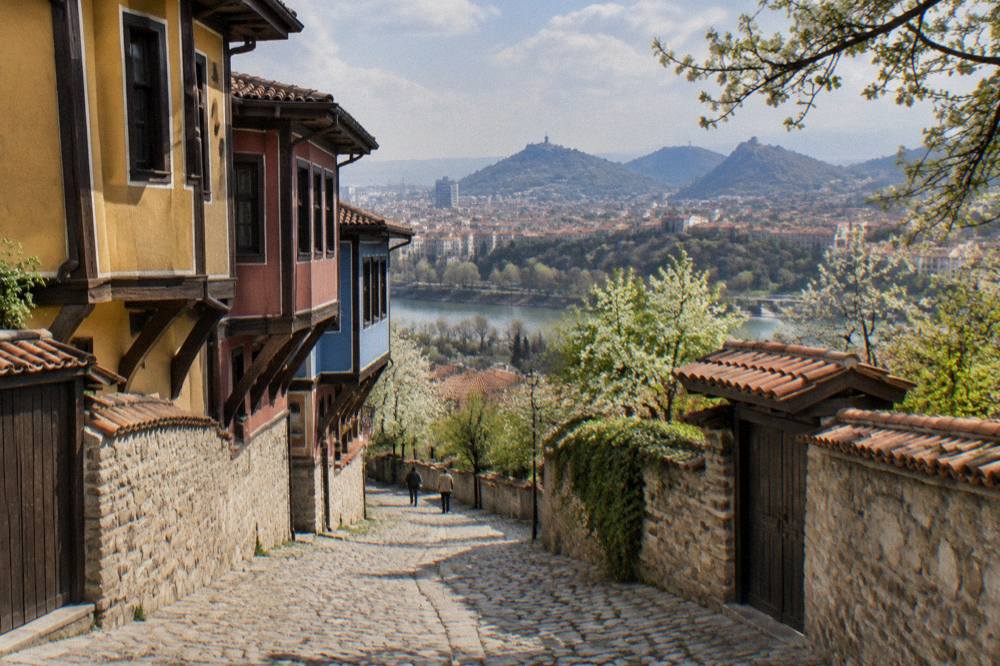
The climbs are modest, which is why winter does not rule the hills out: even the longest ascent is a city stroll, not a hike. The modelled normals below give the month-by-month picture, labelled as ERA5 reanalysis because these are grid-cell values, not a station record, and reanalysis smooths the urban heat the city itself generates.
| Month | Mean daily high | Mean daily low | Rain |
|---|---|---|---|
| January | 5.9 C | -2.6 C | 41.0 mm |
| March | 12.1 C | 2.1 C | 55.0 mm |
| May | 21.9 C | 11.5 C | 56.8 mm |
| July | 28.2 C | 17.9 C | 45.6 mm |
| August | 28.6 C | 18.1 C | 25.2 mm |
| October | 18.1 C | 8.8 C | 44.1 mm |
Events can tip the timing. Opera Open ran at the Ancient Theatre from 23 June to 9 September in 2026, and the Kapana Fest autumn edition ran 2 to 4 and 9 to 11 October 2026, both of which pair naturally with an evening on the hills. The seasonal guides, including the overview in the full Plovdiv itinerary, fold these in year by year.
Common Questions About The Plovdiv Hills
Are there seven hills in Plovdiv?
No. There were seven until the 20th century, but Markovo Tepe was partly destroyed by quarrying in the 1930s, and the city tourism site now lists six intact hills.
Which Plovdiv hill is the highest?
Youth Hill (Dzhendem Tepe), at 285.5 m according to the municipal relief page. Bunardzhika follows at 265 m.
Do you need a ticket for Nebet Tepe?
No. Access is free and unrestricted following the restoration that officially opened in March 2025; museum-run guided tours on the hill have limited hours, but they do not gate general access.
Can you walk all the Plovdiv hills in one day?
Yes. The three Old Town hills form one connected walk, and Bunardzhika plus Sahat Tepe make a short second loop; Youth Hill is the only one that asks for extra time.
Is the Alyosha monument accessible?
Yes. Bunardzhika is a public park with no ticket and no published closing hours, and the monument terrace around the 1957 statue is open to walk up to.
Are the Plovdiv hills a hard climb?
No. The heights are absolute elevations from 195 m to 285.5 m above sea level, and the city core sits near 180 m, so each ascent is a short city walk on paths or lanes rather than a hike.
For a trip that stretches beyond the city, the Bulgaria itinerary guide builds the hills into a wider route through the country, and car-based travellers can compare options on the Plovdiv car rental page. Whichever hill you pick for the panorama, pick it near the end of the day: the light across the plain is what the climb is for.
