Parking In Plovdiv: Zones, Old Town Access And Garages
Plovdiv's Old Town is cobbled, steep and built for pedestrians, which reshapes every parking decision before you arrive. This guide sets out what is known about bringing, parking and doing without a car in Bulgaria's second city.
Short answer
Confirm Plovdiv's parking zones, tariffs, fines and old-town vehicle restrictions locally before you drive in.
Plovdiv sits inland in southern Bulgaria, a city of six hills and cobbled revival lanes, and that geography answers half the parking question before any tariff table could. The Old Town core, the part travellers come for, is a dense pedestrian-friendly district of revival houses, Roman ruins and steep stone streets where a car is more burden than benefit. This page reports on driving into Plovdiv, parking near the Old Town, and the alternatives, and it is honest about the limits: the city's parking zones, tariffs, fines and old-town vehicle restrictions are not covered here, so none are printed. The bigger picture is that Plovdiv rewards arriving by train or bus and walking everywhere in the centre, with a hired car reserved for the Rhodope and Thracian-valley day trips. For the wider picture of the city itself, start with things to do in Plovdiv.
Where Can You Park When Visiting Plovdiv's Old Town?
No parking tariff, zone map or garage price for Plovdiv is published, and the practical recommendation is simple: treat the Old Town as a walk-in district and confirm parking arrangements with your accommodation before you arrive. Hotels and guesthouses in and around the Old Town are the right place to ask about where a guest car can stand, since restrictions in historic districts change.
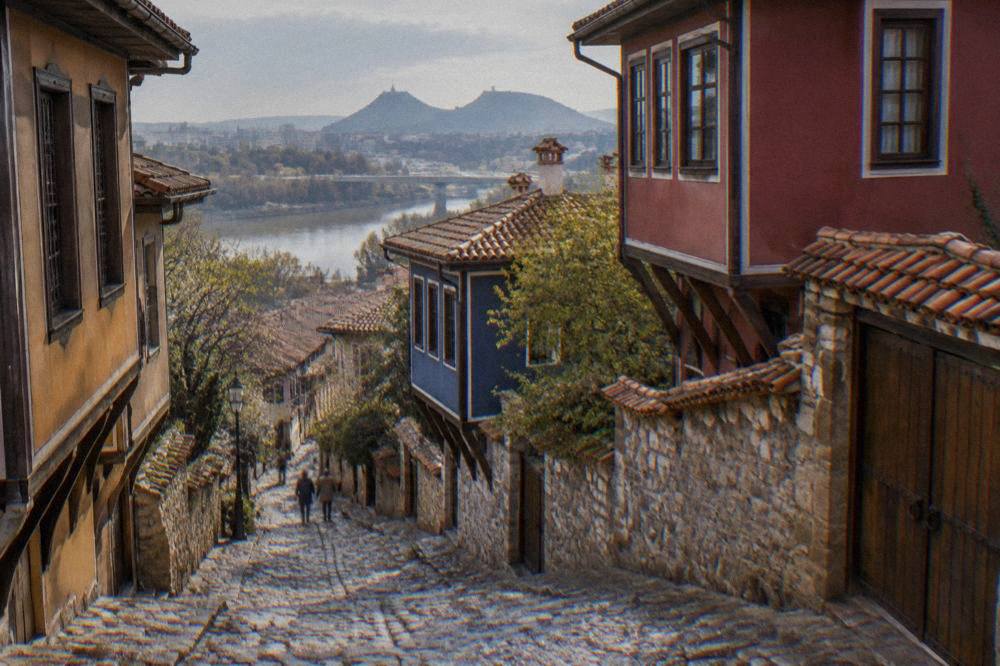
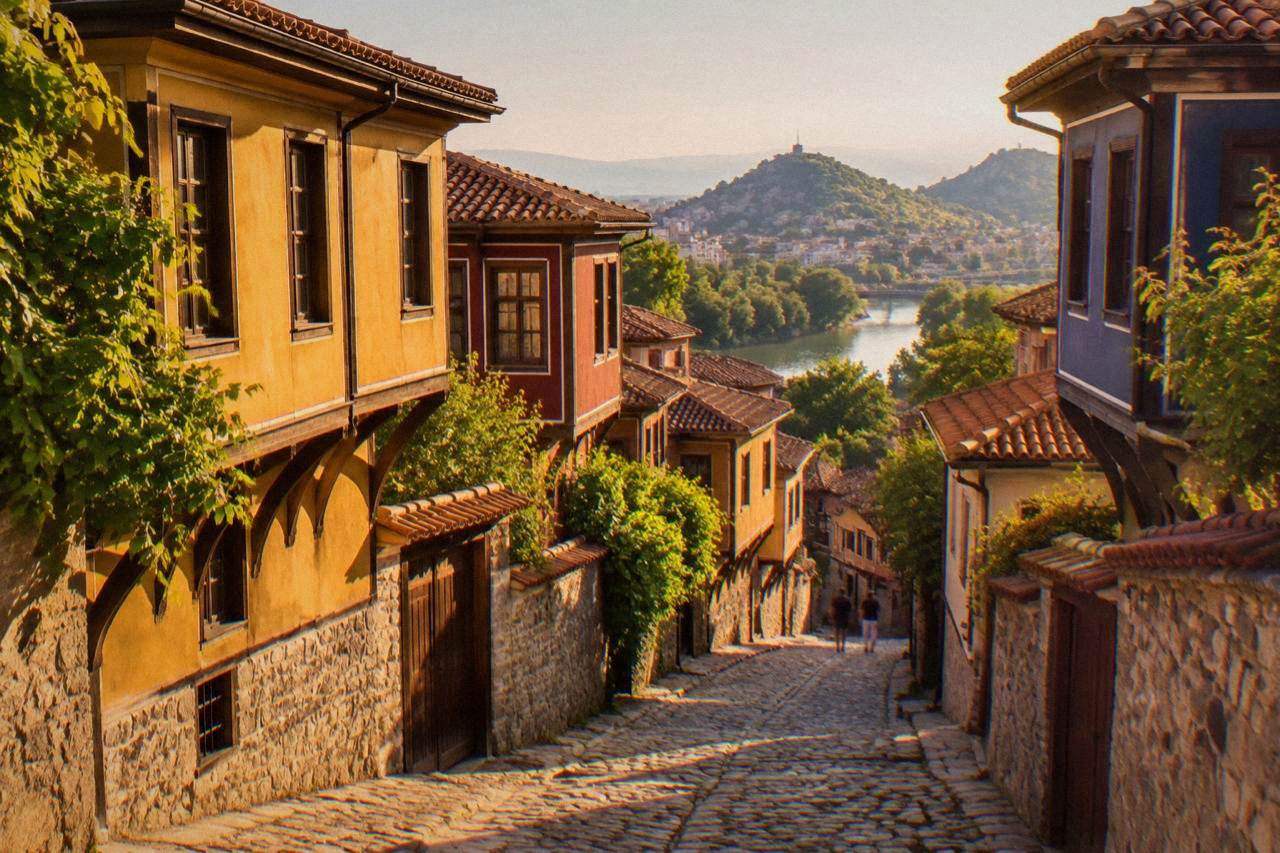
What can be said with confidence is the shape of the district. The Old Town occupies the Three Hills, the Trimontium group of Nebet Tepe, Dzhambaz Tepe and Taksim Tepe, rising to 195 to 212 metres according to the city's own relief page. Streets between those hills are cobbled and steep, which is exactly why walking tours rather than driving routes define how the area is consumed. The Ancient Theatre of Philippopolis, with its 28 concentric rows of marble seats, sits on the slope of Taksim Tepe, and the approach is on foot regardless of where a car is left.
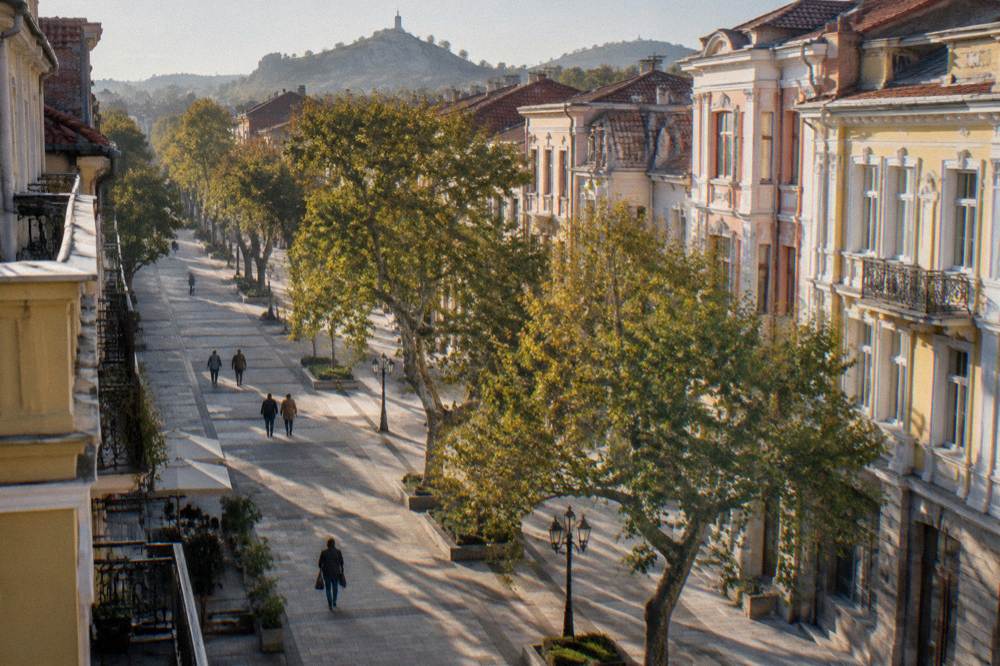
The rest of central Plovdiv is easier terrain but the same principle holds. Main Street, the long pedestrian spine of the modern centre, is closed to through traffic by design, and the Roman Stadium's visible northern sphendone lies partly beneath it. If your plan is theatre, stadium, Kapana and the fountains of Tsar Simeon Garden, you will not want the car between any of them. Read the Old Town area guide and the one-day itinerary at Plovdiv in one day to see how walkable the sequence is.
| Central Plovdiv sight | District | Vehicle access |
|---|---|---|
| Ancient Theatre of Philippopolis | Old Town, Taksim Tepe slope | Approach on foot, cobbled steep lanes |
| Nebet Tepe | Old Town, Three Hills | Open-air complex, pedestrian approach |
| Roman Stadium sphendone | Under Main Street, city centre | Main Street is the pedestrian spine |
| Kapana Creative District | Between centre and Old Town | Narrow maze streets, walking district |
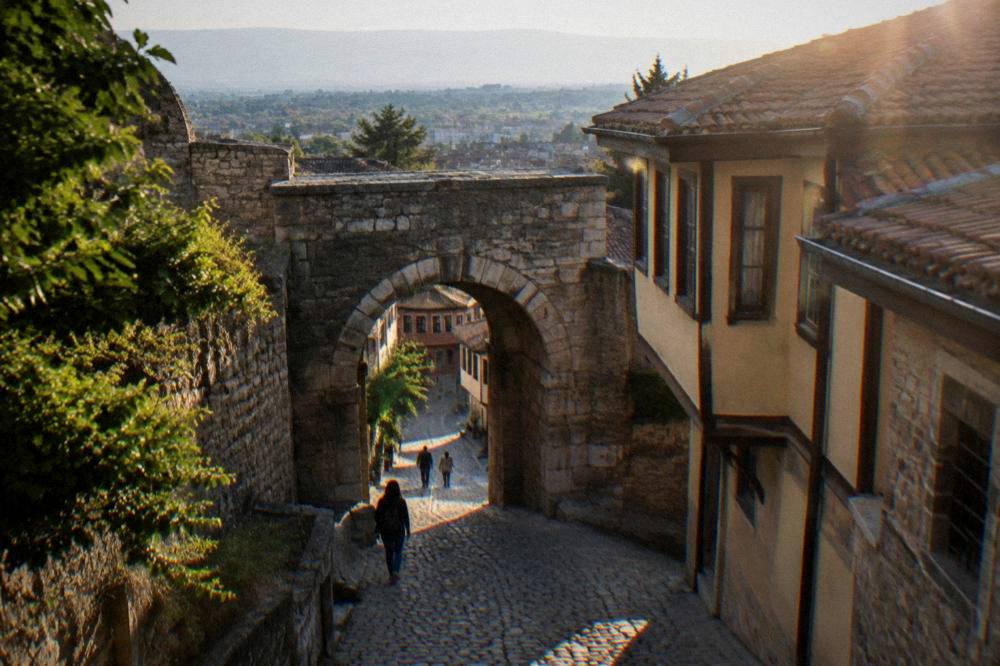
| Hisar Kapia gate | Old Town edge | Historic gate, walk through it |
| Tsar Simeon Garden | City centre, south of Main Street | Parkland, reached on foot |
A note on honesty: pages that quote exact Plovdiv parking tariffs or fine amounts without naming a source are guessing, and Bulgarian municipal parking rules have changed with the euro changeover of 1 January 2026. Confirm at your hotel, and read where to stay in Plovdiv with parking questions in mind before booking.
Is It Possible To Drive Into The Plovdiv Old Town Itself?
Driving into the Old Town itself is not how the district is meant to be used: the streets are cobbled and steep, the municipality presents the area as a pedestrian heritage district, and no published source states the exact old-town vehicle restrictions, so the practical rule is to park at your accommodation or at the edge of the district and walk in. The Old Town's character is the point. Its houses, Balabanov, Hindliyan, Nedkovich, Lamartine, are museum homes reached along stone lanes, and the Ancient Theatre's hillside position makes vehicle access pointless even where it is technically possible.
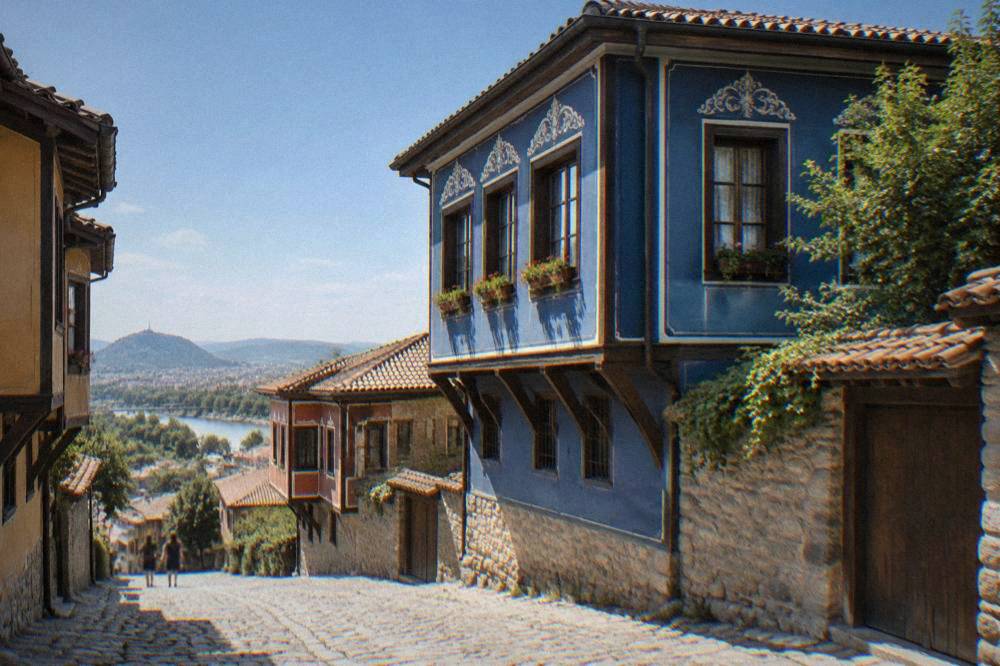
The pattern that the city's own materials support is simple: arrive, drop the car, and spend your time in the district on foot or with a guide. A guided walk is the most efficient way to cover the cobbled lanes and the Roman landmarks, because a guide solves the routing problem that the hillside streets create. The city has paid and tip-based options, and this site's featured Old Town walk pairs the lanes with a rakia tasting at the end:
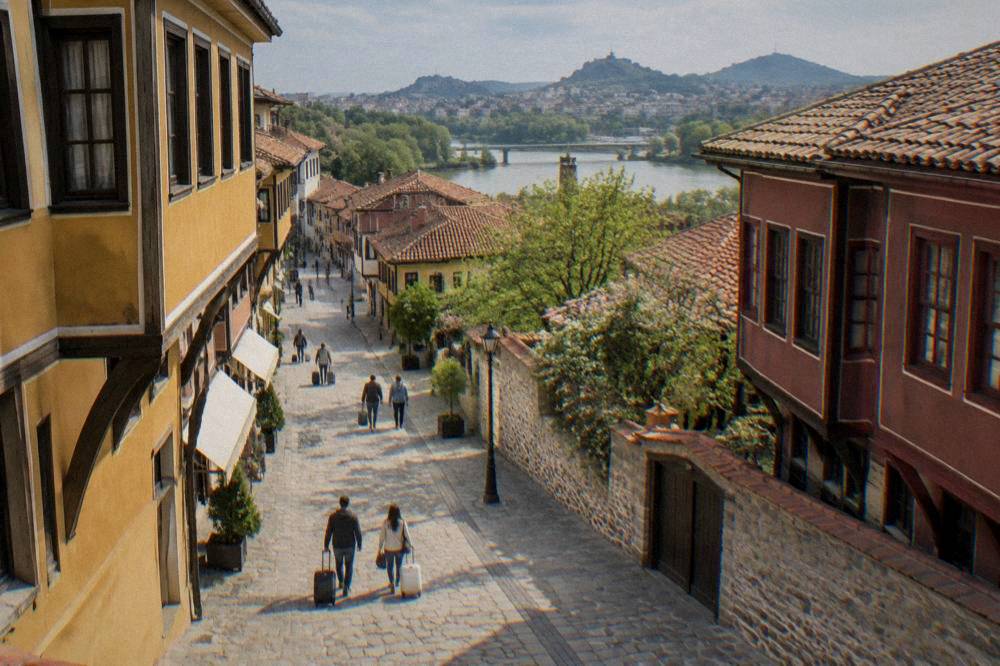
If you prefer to walk the district at your own pace, the same logic applies to parking: leave the car where you sleep. Many Old Town guesthouses occupy revival houses themselves, and a stay inside the district removes the parking question entirely for the sightseeing days. The trade-off is that you will carry luggage up cobbles once, a fair exchange given how much of the Old Town's appeal lies in its traffic-free lanes.
Should You Bring A Car To Plovdiv At All?
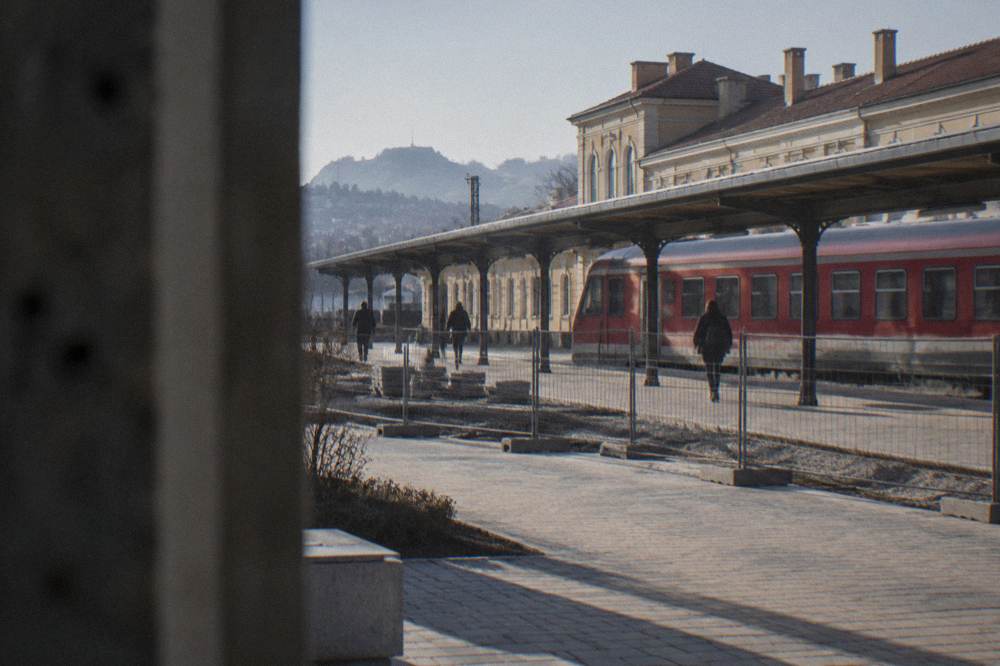
For visiting Plovdiv itself, a car is usually unnecessary: direct trains from Sofia take about 2 h 40 to 3 h 05, buses about 1 h 45 to 2 h 20, and a centre compact enough to walk end to end, so the car earns its keep only for the Rhodope and Thracian-valley day trips beyond the city. The BDZ timetable shows multiple daily direct trains between Sofia and Plovdiv, and the full detail sits on the Sofia to Plovdiv page. Trains routed via Karlovo take far longer, so the direct services are the ones to plan around.
The case for a car is the case for the region, not the city. Bachkovo Monastery, Asen's Fortress, the Wonderful Bridges and the cave systems of the Rhodopes, Starosel's Thracian complex, the Rose Valley around Kazanlak, all sit on routes where a private vehicle or an organised day trip beats public transport for a single day's outing.
| Way to reach Plovdiv | Rough time | Best for |
|---|---|---|
| Direct BDZ train from Sofia | About 2 h 40 to 3 h 05 | Centre-to-centre, no parking question at all |
| Bus from Sofia Central Bus Station | About 1 h 45 to 2 h 20 | Budget arrivals, Yug station next to the rail station |
| Hire car from Sofia | Depends on route and traffic | Only if Rhodope or Thracian day trips follow |
| Flight to Plovdiv Airport (Krumovo) | Small seasonal route list | London, Milan, Bratislava and a few others, then a short transfer |
Plovdiv Airport complicates rather than simplifies the car decision, because its route list is small and seasonal, with the airport's own flight search listing Belfast, Birmingham, Bratislava, London, Manchester, Milan and Tel Aviv. The airport sits about 12 to 14 km southeast of the centre at Krumovo. Transfers and onward options are covered on the Plovdiv Airport page.
How Do You Handle Luggage And Arrival Without A Car?
Arrival without a car is the standard pattern in Plovdiv: the central railway station and the Yug bus station stand side by side on Hristo Botev Boulevard, and from there the centre, Main Street, the Old Town and Kapana are a walk or a short taxi ride away, with the city bus e-ticket at 0.50 euro. The station-to-centre relationship is the practical heart of a car-free visit. The Plovdiv train station guide covers the facilities, and note that the Plovdiv railway junction modernisation, reported 85 percent complete in November 2025 with completion due in 2026, may mean access changes around the station during works.
Confirm the fare before getting in, or ask your accommodation to send a car. For everything else, the getting-around guide at getting around Plovdiv covers buses, walking and the e-ticket.
A car-free arrival also frees you from the check-in dance that Old Town stays impose. If your guesthouse sits high on the Three Hills, arriving by train and taxi means you step out near the base and climb once.
What About Parking And Driving For Day Trips From Plovdiv?
Day trips are where the car genuinely matters around Plovdiv: Bachkovo Monastery lies about 30 km away with minibuses from the Rodopi bus station taking 35 to 45 minutes, the Rhodope destinations sit 85 to 104 km out, and the sites themselves are monasteries, fortresses and villages where arriving early matters more than where exactly you park.
| Day-trip destination | Distance or route from Plovdiv | Notes |
|---|---|---|
| Bachkovo Monastery | About 30 km via Asenovgrad | Free entry, working monastery, minibus from Rodopi station 35 to 45 min |
| Asen's Fortress | At Asenovgrad, on the Bachkovo road | Ticket price unclear across sources, confirm on site |
| Smolyan | About 104 km | Bus 2 to 2.5 hours from Rodopi station |
| Pamporovo | Roughly 85 to 100 km range | Standard Rhodope resort route |
| Trigrad Gorge and caves | Beyond Smolyan | Limited direct public transport, car or tour recommended |
Organised day trips replace the parking question entirely, since the operator handles the vehicle. The Buzludzha monument and aviation museum route is one of the further-flung options, pairing the flying-saucer monument with a museum visit in a single outing:
The same logic applies to the wine country southwest of the city. A private wine trip removes the designated-driver problem altogether, which in Bulgarian wine country is not a trivial point. Regional context sits on the Bulgarian wine page.
Do You Even Need The Car Once You Have Parked It?
For everything inside Plovdiv the answer is no: the six hills, Main Street, Kapana and the Old Town form a compact walking city, the metro-scale distances simply do not exist, and the centre is pedestrian territory, so a parked car in Plovdiv should expect to stay parked. The relief data makes the point numerically: the hills top out at 285.5 metres at Youth Hill, and the whole tourist core threads between them over distances a healthy walker covers in minutes, not hours.
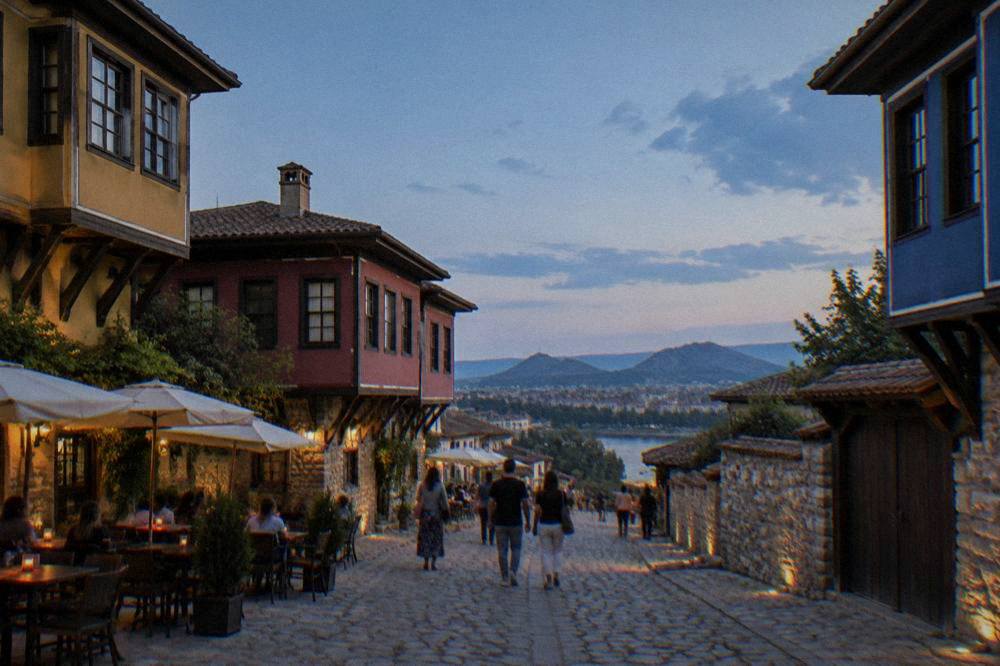
Consider the standard centre sequence. The Roman Stadium sphendone sits under Main Street's pedestrian spine, free to view in its open-air part. From there, Kapana's maze, whose name means "The Trap", wraps around the corner toward Hisar Kapia, and through the gate the Old Town climbs past the revival houses to the Ancient Theatre and Nebet Tepe. That entire chain is a walking itinerary by geography, not by preference. The sight-by-sight detail is on the Ancient Theatre of Philippopolis and Hisar Kapia pages.
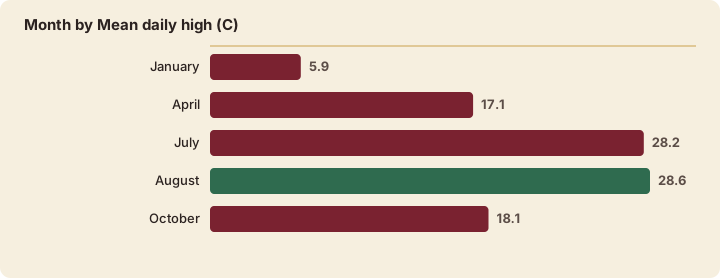
Weather barely changes the calculation, though it changes the walking. The ERA5 reanalysis, 1991-2020, puts the mean daily high at 28.6 C in August and 5.9 C in January, with May the wettest month at 56.8 mm and August the driest at 25.2 mm. Summer walks want morning starts and shade, winter walks want grip on the cobbles, but neither converts the centre into driving territory. The month-by-month detail is on Plovdiv weather and best time to visit Plovdiv.
| Month | Mean daily high (C) | Mean daily low (C) | Rain (mm) |
|---|---|---|---|
| January | 5.9 | -2.6 | 41.0 |
| April | 17.1 | 6.4 | 47.7 |
| July | 28.2 | 17.9 | 45.6 |
| August | 28.6 | 18.1 | 25.2 |
| October | 18.1 | 8.8 | 44.1 |
Figures from the ERA5 reanalysis, 1991-2020, a modelled grid cell rather than a station record, so urban heat on the cobbles can run a little higher than the numbers suggest.
What Are The Car-Free Alternatives For Seeing Plovdiv?
The alternatives are strong: walking covers the whole centre, the city bus e-ticket costs 0.50 euro, guided walks and food walks run locally, and a private bike tour exists for the flatter riverside stretches, so a visitor who arrives by train can fill several days without ever needing four wheels. The public transport basics are on the getting-around page, and the bus network's role for tourists is mainly the station-to-hotel leg and the hills' outer slopes, since the core is pedestrian.
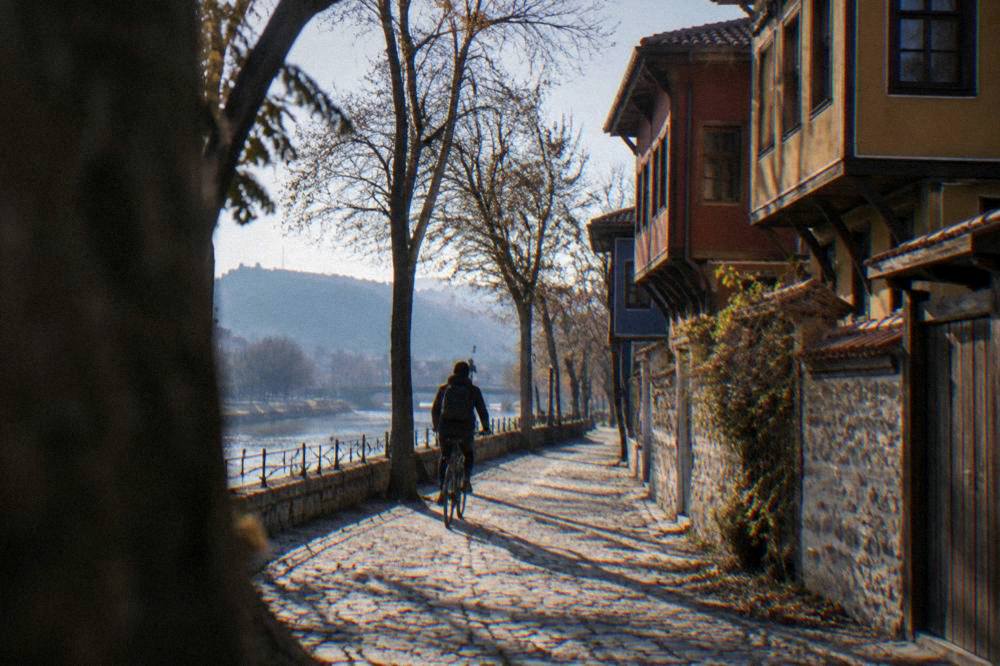
Guided options range across formats. A private bike tour covers the flat ground along the Maritsa and the wider districts that walking tours skip. Tip-based walks also run locally, on a pay-what-you-want basis, and the honest advice is to confirm the current schedule with the guide, since schedules shift seasonally. Food walks thread Kapana's lanes with tastings, pairing the walking-city logic with the district's kitchens, and the food side of the city is mapped on what to eat in Plovdiv.
The deeper point for a parking page is that every one of these alternatives subtracts a car trip. A visitor who walks the Old Town in the morning, takes a food walk at midday and rides a bike along the river in the afternoon has used exactly one parking space, at the hotel, all day. That is the efficient Plovdiv: one parked car, or none.
Common Questions About Parking In Plovdiv
Is there parking in Plovdiv Old Town?
Confirm with your accommodation where a guest car can stand, and plan to walk into the district itself.
How much does parking cost in Plovdiv?
Check with your hotel or the municipal sources at the time of travel.
Do I need a car in Plovdiv?
Not for the city itself. Direct trains from Sofia take about 2 h 40 to 3 h 05, the centre is walkable end to end, and the city bus e-ticket is 0.50 euro. A car pays off mainly for Rhodope and Thracian-valley day trips.
Can I drive from Sofia Airport to Plovdiv?
You can, but the train from Sofia's central station is the standard route, taking about 2 h 40 to 3 h 05 direct. A hire car makes sense only if day trips from Plovdiv are part of the plan.
Where do I park for day trips like Bachkovo Monastery?
Bachkovo Monastery, about 30 km from Plovdiv, is free to enter, and minibuses from the Rodopi bus station run there in 35 to 45 minutes if you would rather not drive.
The final word on Plovdiv Travel Guide is the same as the first: park at the edge, or do not park at all. The city's six hills, its pedestrian Main Street and its cobbled Old Town were shaped long before the car, and the visit still works best on that older geometry.