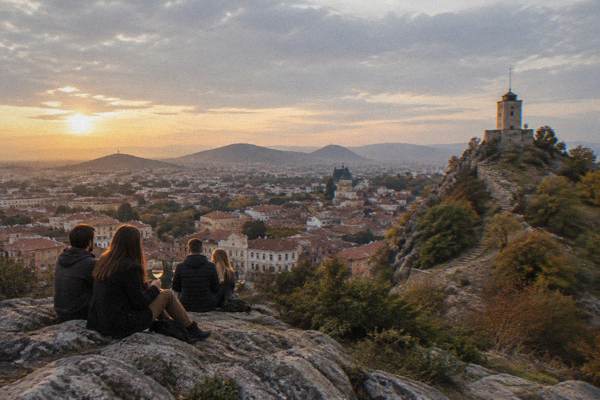
Plovdiv At Night: The Old Town And Roman Ruins After Dark
Plovdiv changes character after sunset. The Ancient Theatre, the Roman Stadium sphendone and the cobbled lanes of the Old Town sit in artificial light, and the evening version of the city costs little or nothing to walk through.
Short answer
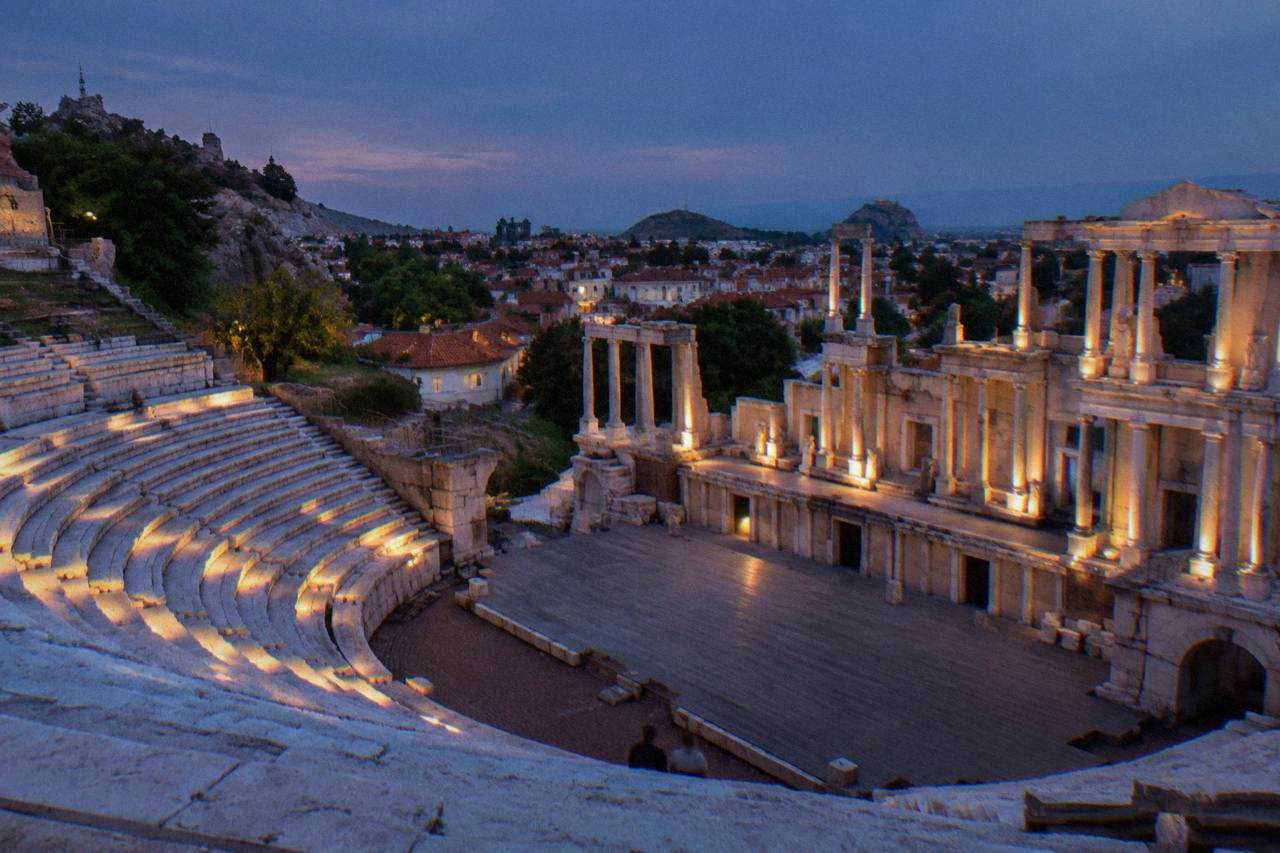
Plovdiv is a genuinely evening-friendly city. The Old Town streets, Nebet Tepe's surroundings, Kapana and the squares are free public spaces open at all hours, while the Ancient Theatre closes by 18:00 in summer but glows above the city in event lighting on performance nights. Summer brings Opera Open to the theatre, and Kapana's bars and creative streets carry the late hours.
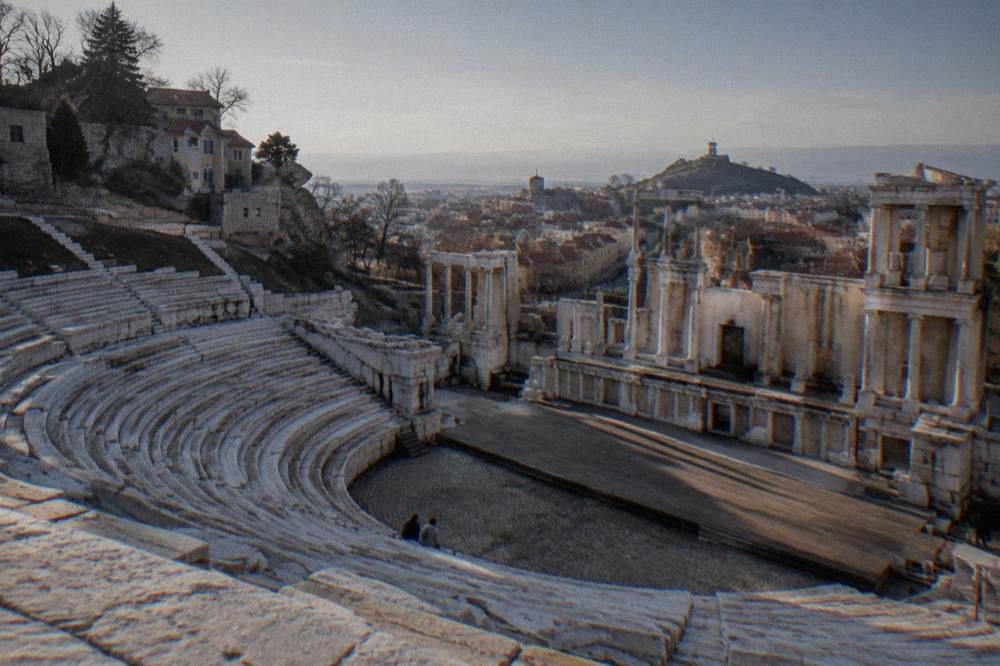
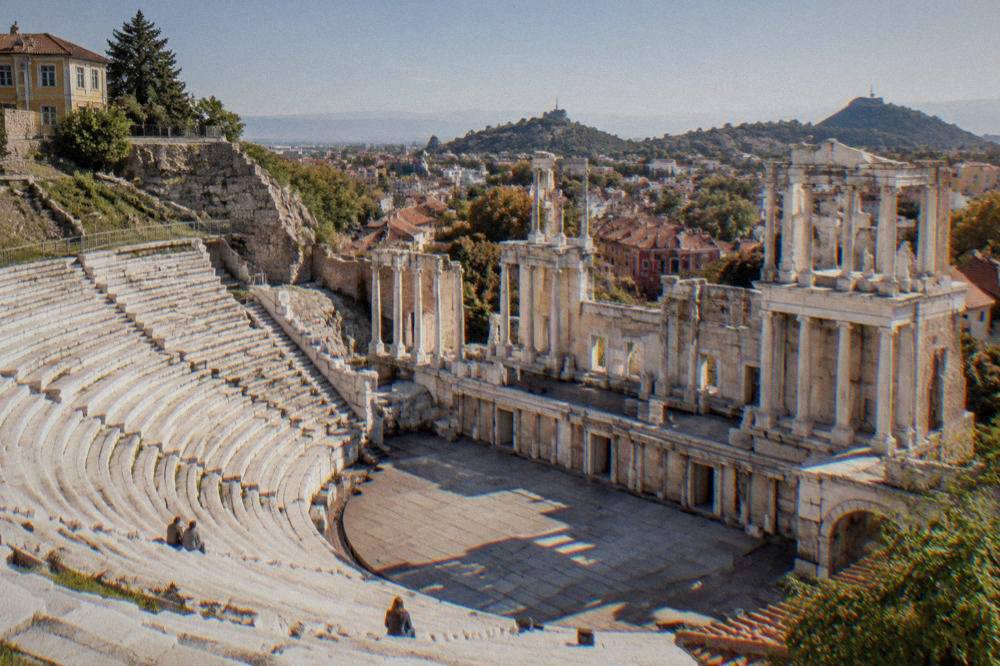
Plovdiv, in southern Bulgaria, is an inland city built around six hills, and its evening face is one of the quiet surprises of a Balkan trip. The Ancient Theatre of Philippopolis sits cut into a hillside above the plain, the Roman Stadium's northern curve hides just below the modern Main Street, and between them run the cobbled lanes of the Old Town, all lit after dark and all free to walk through. The city was European Capital of Culture in 2019, shared with Matera, and that year left Plovdiv with a habit of using its ruins as evening stages that has not stopped since.
What Is Plovdiv Like After Dark?
Plovdiv after dark is a walking city of lit ruins, cobbled lanes and busy squares rather than a single nightlife strip, and the core of the evening experience costs nothing to see. The Old Town's streets, Hisar Kapia gate, Kapana and the hilltop of Nebet Tepe are public spaces with no ticket and no closing hour, so the night is free to walk from end to end.
The Ancient Theatre closes to daytime visitors at 18:00 from April to October, but its silhouette stays lit above the city, and on performance evenings the whole structure becomes an opera stage under the sky. Bulgaria has used the euro since 1 January 2026, prices on the Old Plovdiv list are quoted in euro, and a coffee or a beer in the centre runs to around 2 euro by crowd-reported data.
The geography rewards the evening walker. The Three Hills group, Nebet, Dzhambaz and Taksim Tepe, anchors the Old Town, and from their slopes the lit city spreads north across the plain toward the Rhodopes on the horizon. Downhill sits the Roman Stadium's sphendone, the curved northern end unearthed in the 1970s, with the rest of the 30,000-spectator structure still lying beneath the pedestrian Main Street. The municipal tourism site describes the stadium as built in the 2nd century AD on the model of the stadium at Delphi, and its visible curve is floodlit in the evening.
Kapana, whose name means "The Trap" in a maze of narrow streets, is the creative quarter where the late hours concentrate. The visitplovdiv.com page for the district describes it as free, open public streets, and in the evening its small squares fill with tables, galleries and music. It sits a few minutes' walk from both the Main Street and the Old Town, which is why an evening in Plovdiv rarely needs transport at all.
Is The Old Town Of Plovdiv Open At Night?
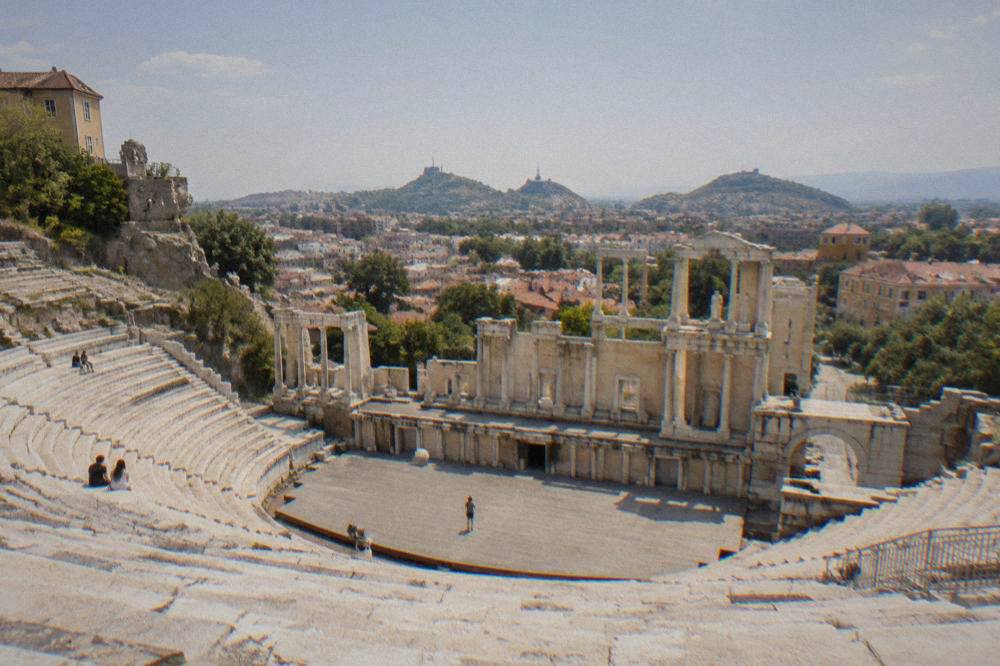
The streets, gates and viewpoints of the Old Town are public and open at all hours, free of charge, while the ticketed houses and museums inside it close in the late afternoon or early evening, generally by 17:30 in winter and 18:00 in summer. The Old Plovdiv ticket page lists the Ancient Theatre at 9:30 to 18:00 from April to October and 9:00 to 17:30 from November to March, with a lunch break at 12:30 to 13:00. The Ethnographic Museum closes on Mondays and shuts at 18:00 in summer, 17:00 in winter. So the evening Old Town is a landscape to walk through, not a museum to enter, and that is its appeal.
What that means in practice is a two-part evening. Daylight hours are for the paid interiors, the Balabanov and Hindliyan houses, the Nedkovich House and the Small Basilica, and dusk is when the cobbles, the revetment walls and Hisar Kapia become the show. Hisar Kapia, the Ottoman-era gate at the edge of the Old Town, is a public landmark with no ticket and no closing time, and it is at its best in artificial light. The Plovdiv Travel Guide pages on Hisar Kapia and the Old Town cover the daytime detail.
Two cautions come with the evening walk. The Old Town is cobbled and steep, a general description every source repeats, so shoes with grip matter more after dark. And opening times change with the season and with individual buildings, the Hindliyan House moved to daily opening in an autumn 2026 report, so the evening planner should treat the interiors as daytime business and the streets as the night's.
| Evening element of the Old Town | Access after dark | Cost |
|---|---|---|
| Cobbled streets and lanes | Public, no closing time | Free |
| Hisar Kapia gate | Public, no closing time | Free |
| Nebet Tepe hilltop | Public open-air complex, unrestricted access | Free |
| Ancient Theatre interior | Closed by 18:00 summer, 17:30 winter; lit exterior | 3.58 euro daytime ticket |
| Old Town houses (Balabanov, Nedkovich, Hindliyan) | Closed by early evening | 3.58 euro daytime ticket |
| Kapana streets | Public, no closing time | Free |
Theatre, Kapana and hilltop together make a route that several guided products cover in daylight or at sunset. The classic option is the Old Town and Roman Theatre walking tour outline on this site, and an evening-costume photo shoot is another way the lit lanes get used after hours.
Can You See The Roman Ruins Lit Up At Night In Plovdiv?
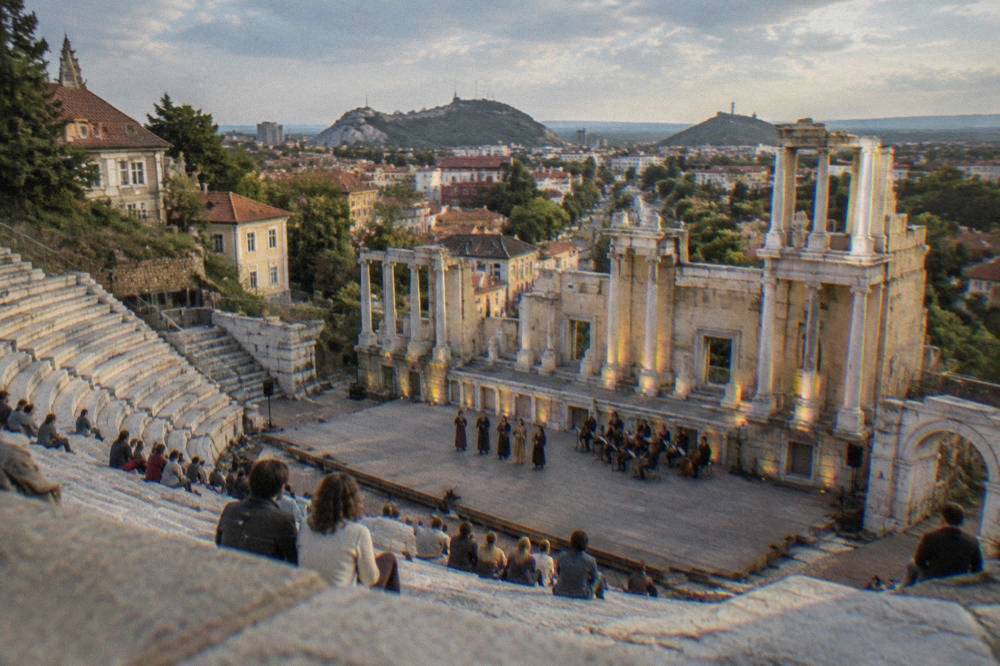
Yes, and the lighting rather than the access is the point: the Ancient Theatre glows on its hillside every evening, the Roman Stadium sphendone sits lit below the Main Street, and on Opera Open nights the theatre becomes a working stage from late June to early September. The Opera Open festival ran 23 June to 9 September in 2026, with performances from a June gala through Carmina Burana and Nabucco to a September finale, per visitplovdiv.com. A concert inside the theatre is the single most dramatic way to see Roman Plovdiv at night: 28 concentric rows of marble seats, built in the 90s of the 1st century AD, filled with an audience under the sky.
The theatre's own daytime ticket is 3.58 euro for an adult on the one-site Old Plovdiv list, but an evening performance is a separate event ticket bought through the event's own channels, and dates for each season appear on the municipal tourism site. The theatre has no announced closures for 2025 or 2026, and it hosts concerts year round, a metal-and-orchestra event was announced there for September 2026, so the lit-stage experience is not confined to the summer programme.
The Roman Stadium offers a different evening. Its sphendone, the northern curved end, is free to view as an open-air space, while its 3D projection hall and eastern sector carry separate small tickets, 3.68 euro for the 3D hall, with a combined eastern sector and 3D option at 5.11 euro, per the official Old Plovdiv ticket page. Those interiors keep daytime hours, but the visible curve on the Main Street is part of the pedestrian evening. The Roman Stadium and Roman Plovdiv pages carry the full daytime detail, and the Ancient Theatre page covers performance seating.
A guided walk is the efficient way to bind these ruins together, and the booking page shows current times. Check availability.
Where Does The Evening Go In Kapana?
Kapana is Plovdiv's creative district, a maze of narrow streets whose name literally means "The Trap", and it is where the city's tables, galleries and music run furthest into the night, on public streets that are free and never close. The district sits between the Main Street and the Old Town, so an evening walk naturally descends from Nebet Tepe's viewpoints into its lanes. The district, not any single address, is the recommendation: pick a table on the night.
Kapana also hosts the city's street festivals. Kapana Fest ran two autumn weekends, 2 to 4 and 9 to 11 October 2026, at the Bridge over Gladstone Street and Central Square, per visitplovdiv.com, and its editions bring live music, food stalls and maker markets into the evening streets. At other times of year the district's artisan shops close earlier, but the bars and squares do not, and the walk from Central Square through Kapana to Hisar Kapia is the standard evening arc.
The eating side of the evening is covered separately: this site's restaurant guide and the root things to do in Plovdiv page list where to eat, and Bulgarian dinner customs run late, which suits the district. A tasting room is another Kapana-adjacent option: Bulgarian wine and rakia tastings operate in the centre, and the traditional costume photo experience below is one way visitors use the lit lanes after sunset.
Is Plovdiv Safe To Walk Around At Night?
Plovdiv is generally reported as a safe city for evening walking, with the usual city cautions applying as anywhere, and Bulgaria's single emergency number is 112, free to call from any phone, including foreign SIMs. Bulgaria is a full Schengen member since 1 January 2025 and uses the euro since 1 January 2026, so there are no border-formalities or currency-exchange complications in the evening economy.
This site's safety coverage collects the practical detail, and the centre's evening spaces, the Main Street, Central Square, Kapana and the Old Town, are the busy, walkable core. The honest cautions are physical rather than criminal. The Old Town's cobbles and slopes are harder work in low light, the hills are unlit parkland in places rather than promenades, and Bunardzhik with the Alyosha monument, unveiled in 1957, is open access at all hours but is a climb best done with daylight to spare. Winter evenings drop below freezing: the ERA5 reanalysis, 1991-2020, puts the January mean daily low at -2.6 C, so ice on stone is the realistic night hazard. Other pages covering the same trip are gathered on Plovdiv Travel Guide. Practical evening notes that are safe to state: the city bus e-ticket costs 0.50 euro, and a paper-ticket proposal from August 2026 to charge 1 euro from the driver was only a concept, not an adopted fare. Taxis are metered and apps are common, so agree or check the meter.
| Evening practicality in Plovdiv | What to know |
|---|---|
| Emergency number | 112, free, EU-wide |
| City bus e-ticket | 0.50 euro |
| Old Town underfoot | Cobbled and steep, no gradient figures published |
| Tourist tax | Rate not published: confirm at booking |
| Hills after dark | Open access; Bunardzhik and Alyosha are a long climb |
What Time Of Year Is Best For A Plovdiv Evening?
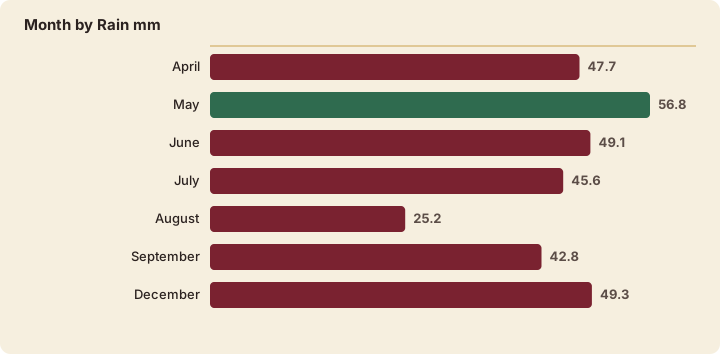
Summer evenings are the reliable pick: the ERA5 reanalysis, 1991-2020, shows July and August mean daily highs of 28.2 C and 28.6 C with August the driest month at 25.2 mm of rain, and the Opera Open season runs in the theatre from late June to early September. The trade-off is heat and crowds in July; June and September give similar light with mean highs of 25.9 C and 23.8 C and thinner tables. Winter evenings are cold, January's mean daily low is -2.6 C, but the Christmas market is the counterweight: the 2025/26 edition ran 28 November 2025 to 4 January 2026, and the 2026/27 "Soul of Christmas" edition runs 1 December 2026 to 7 January 2027 in the Kapana and Central Square areas.
May carries the highest monthly rain total in the normals, 56.8 mm, with March close behind at 55.0 mm, so spring evenings are mild, April's mean high is 17.1 C, but carry the wetter-odds caveat. The seasonal events calendar matters as much as the weather. Autumn brings Kapana Fest in October and the Plovdiv Jazz Fest fall edition, 6 to 8 November 2026 at the Boris Hristov House of Culture, plus the Old Town "Revived Heritage" festival days, 16 to 23 September 2026. The site's best time to visit and weather pages carry the month-by-month detail.
| Month | Mean daily high C | Mean daily low C | Rain mm | Evening character |
|---|---|---|---|---|
| April | 17.1 | 6.4 | 47.7 | Mild, dusk-lit ruins |
| May | 21.9 | 11.5 | 56.8 | Warm but wettest month |
| June | 25.9 | 15.4 | 49.1 | Opera Open opens late June |
| July | 28.2 | 17.9 | 45.6 | Peak season, hot evenings |
| August | 28.6 | 18.1 | 25.2 | Driest month, festival peak |
| September | 23.8 | 13.8 | 42.8 | Opera Open finale, heritage days |
| December | 7.0 | -0.8 | 49.3 | Christmas market until early January |
How Do You Build A Night Walk Through Plovdiv?
The standard evening walk runs from Central Square past the Roman Stadium sphendone, up through Kapana to Hisar Kapia and the Old Town lanes, and finishes on the Three Hills slopes looking down over the lit city, with every stop on the route free and open. It needs no ticket, no booking and no transport, and it can be walked in either direction depending on where dinner falls. Reverse it if you want the theatre's hillside silhouette as the final image rather than the first.
The route's logic is the city's own layering. The modern pedestrian Main Street follows the line of the Roman Stadium, whose seating lies beneath it, so the walk starts on top of the monument and meets its visible sphendone partway along. Kapana interrupts with its maze, the district's name records exactly that trap-like quality, and Hisar Kapia gates the climb into the revival-era houses of the Old Town.
For visitors with more than one evening, split the themes. One night for the ruins-and-viewpoints walk, one for Kapana's tables and live music, and, if dates align, one for a performance inside the theatre. The itinerary pages for one day and two days show how the evening slots into a fuller stay, and the where to stay page covers which quarters keep you within walking distance of all of this.
| Evening walk stop | What you see after dark | Ticket |
|---|---|---|
| Central Square and Bishop's Basilica exterior | Lit modern plaza beside the basilica, about 83 m long | Free to walk past |
| Roman Stadium sphendone | The lit northern curve beneath the Main Street | Free to view |
| Kapana lanes | Tables, galleries, music in the creative district | Free streets |
| Hisar Kapia | Floodlit Ottoman-era gate | Free |
| Old Town lanes and houses | Lit revival facades and cobbles | Free streets |
| Ancient Theatre exterior | Hillside silhouette above the city, lit | Free to view from outside |
A guided version of the ruins-and-viewpoints half exists, and the featured walk on this page covers exactly the Old Town and theatre ground. Check availability for the operator's current evening slots.
Can You Drink Bulgarian Wine At Night In Plovdiv?
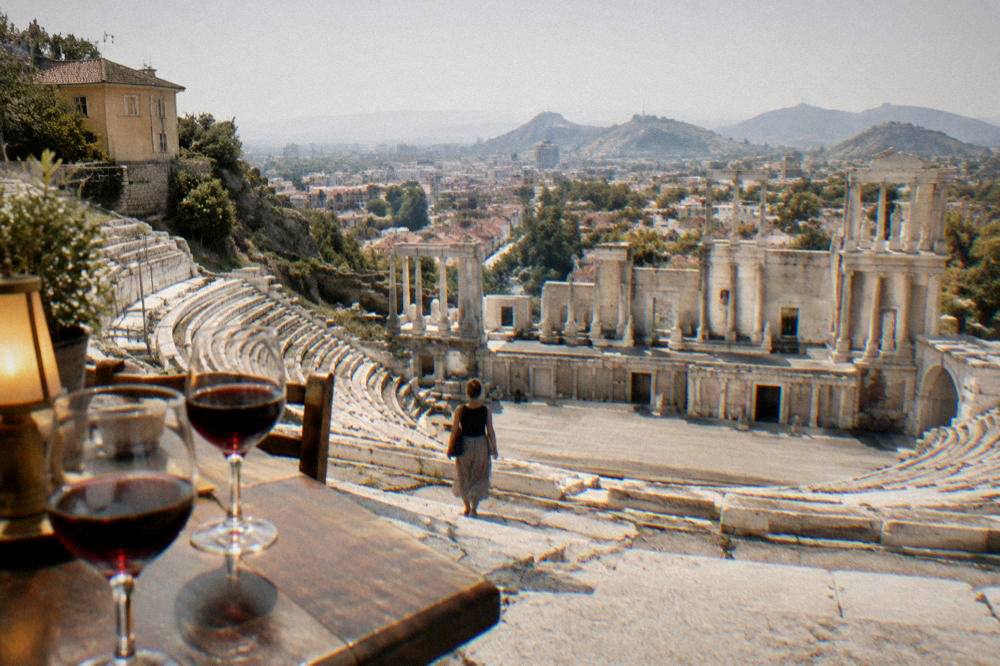
Yes, and the evening is arguably the right time for it: Bulgarian reds such as Mavrud and Rubin from the surrounding Thracian Valley anchor the tasting lists, and central Plovdiv runs short guided tastings as well as full private trips out to the wineries. Inside the city, tasting sessions with cheese and cured meats operate in the centre, and a guided city tour with sunset wine tasting combines the walk and the glass in one product. None of these is a bar recommendation, they are bookable experiences, and prices are on their booking pages.
The regional version takes the evening elsewhere. The Thracian Valley wineries sit in the countryside around Plovdiv, and private day tours from the city reach them and return, with the wine tasting as the centrepiece. The site's Bulgarian wine and rakia pages cover what is in the glass; this page's job is only to say that the tasting format works as a late-afternoon-into-evening plan, with the private valley version below.
What About Plovdiv With Kids Or In Winter At Night?
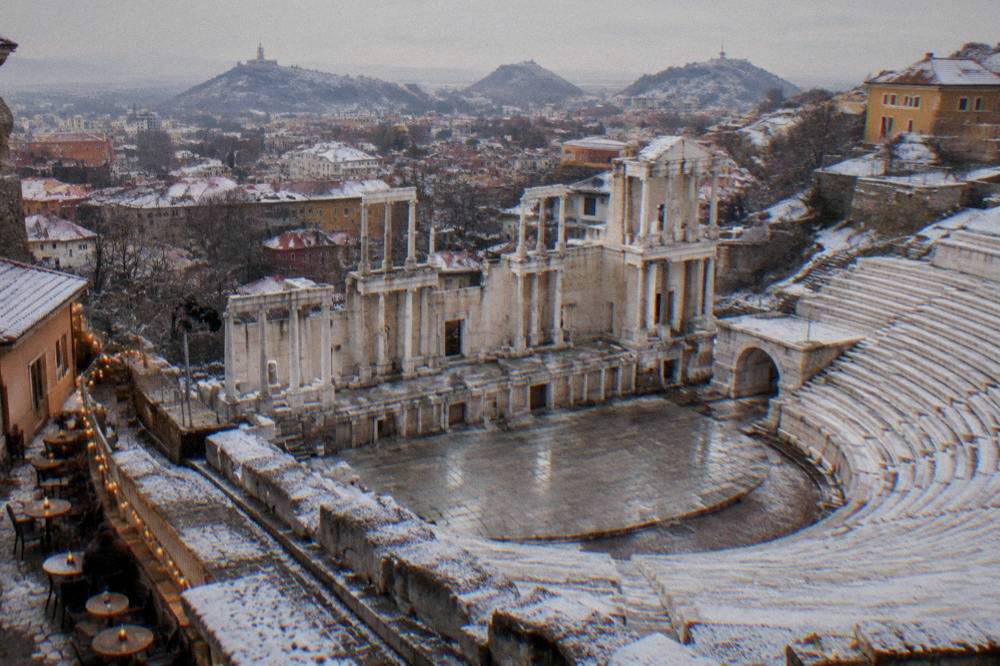
Winter evenings pivot around the Christmas market, which ran from 28 November 2025 to 4 January 2026 and returns 1 December 2026 to 7 January 2027 as the "Soul of Christmas" edition in the Kapana and Central Square areas, and around the singing fountains in Tsar Simeon Garden, which the city washes weekly and maintains year round. The January mean daily low of -2.6 C in the ERA5 reanalysis, 1991-2020, means hats and ice-aware shoes, but the market lights and the indoor programme, jazz in November, fairs in February, keep the evenings full. The jazz fest fall edition is indoors at the Boris Hristov House of Culture, 6 to 8 November 2026.
With children, the free elements are the strongest: the sphendone, the squares, Kapana's streets and the fountains garden all cost nothing, and the costume photo experience in the Old Town lanes doubles as an evening activity that ends with pictures. The site's Plovdiv with kids page carries the daytime half of that plan. Steep cobbles and winter ice are the two practical limits on a family evening walk, and both are managed with footwear and a shorter route.
Parking and driving in the evening follow the daytime rules, so the parking guide is the place to check before bringing a car into the centre at night. The simpler answer is that nothing on the standard evening route needs one.
Common Questions About Plovdiv At Night
Is Plovdiv good at night?
Yes. The Ancient Theatre, the Roman Stadium sphendone, Hisar Kapia and the Old Town lanes are lit after dark and free to walk, Kapana runs the tables and music, and in summer the Opera Open festival turns the theatre into a stage from late June to early September.
Is the Old Town of Plovdiv open in the evening?
The streets, Hisar Kapia, Kapana and Nebet Tepe are public spaces with no closing time. The ticketed interiors close by about 18:00 in summer and 17:30 in winter, per the Old Plovdiv ticket page, so treat the evening Old Town as a walk, not a museum visit.
Can you go inside the Ancient Theatre at night?
Only for an event. Daytime visiting ends at 18:00 from April to October, but Opera Open and other concerts use the theatre as an evening venue, and the 2026 opera season ran 23 June to 9 September. Event tickets are sold separately from the 3.58 euro daytime entry.
Is Plovdiv safe at night?
It is generally reported as safe for evening walking in the centre, with normal city care. The real hazards are physical: steep cobbles in low light and winter ice, with the January mean daily low at -2.6 C in the ERA5 reanalysis, 1991-2020. The emergency number is 112.
What is there to do in Plovdiv at night for free?
The full evening walk is free: Central Square, the Roman Stadium sphendone, Kapana, Hisar Kapia, the Old Town lanes and the theatre's lit exterior all sit on public ground. Only the interiors, the 3D hall and any performance tickets cost money.
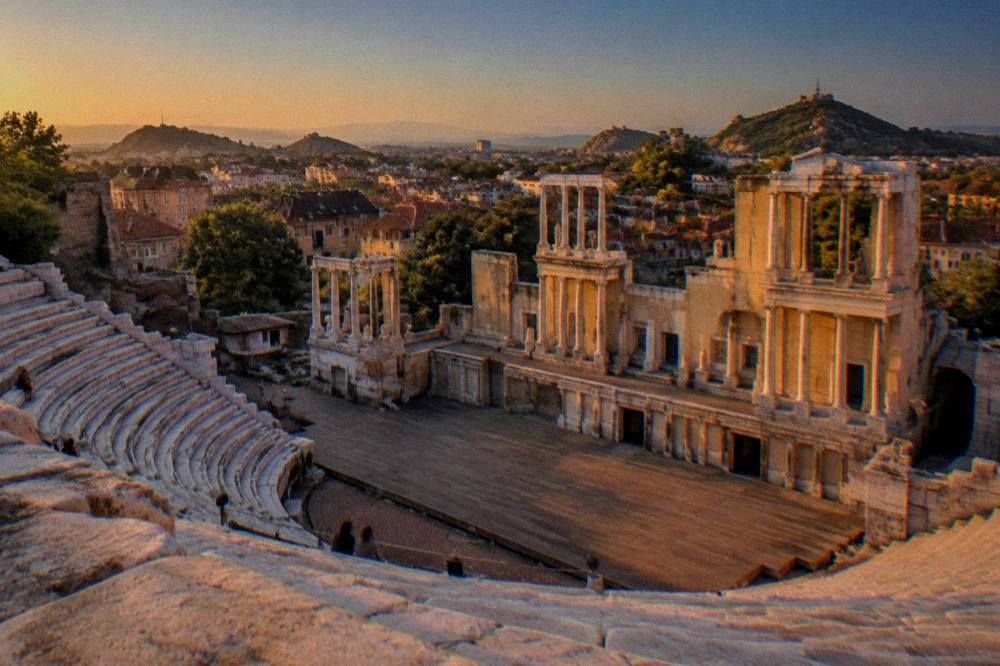
The evening is when Plovdiv's layers show best: a Roman stadium under a pedestrian street, an Ottoman gate under floodlight, revival houses on cobbles, and a theatre still doing the job it was cut into the hill for in the 1st century. Bring grip on your shoes, check the theatre calendar before you book anything else, and let the hill do the routing.