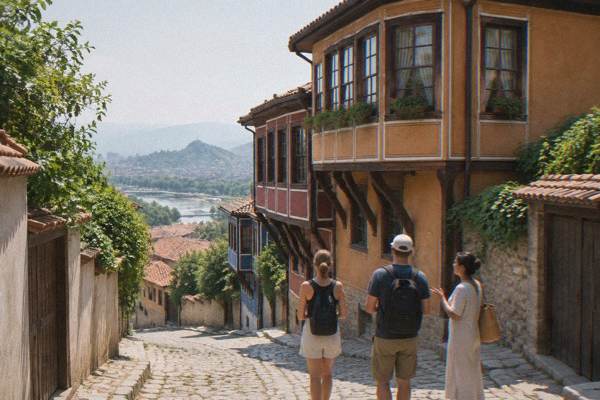
Kichuk Parizh: The Little Paris Quarter Of Plovdiv
Kichuk Parizh, the quarter whose name means Little Paris, is one of central Plovdiv's named areas, a short walk from the Old Town, Kapana and the Roman sights of Bulgaria's second city.
Short answer
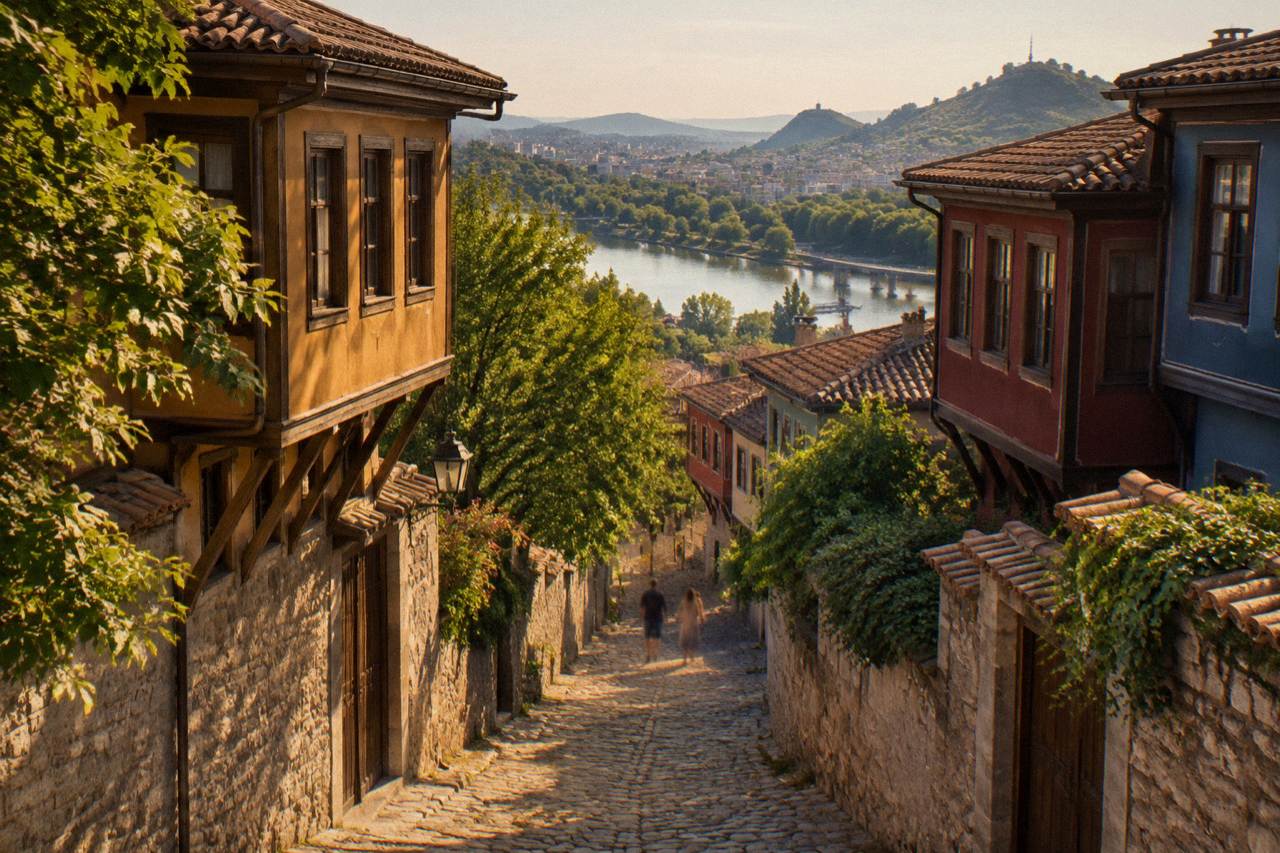
Kichuk Parizh is a central quarter of Plovdiv whose name means Little Paris. It sits within the walkable historic belt of the city, close to the Old Town, Kapana and Main Street, and makes a calm base or stroll between the bigger sights.
Kichuk Parizh is the quarter of Plovdiv, in southern Bulgaria, whose name translates literally as Little Paris. Bulgaria's second-largest city is inland, built around six hills, and often described as one of the oldest continuously inhabited cities in Europe, and this quarter belongs to its central, walkable belt rather than to any distant suburb. The Plovdiv Travel Guide treats it here as what it is for a visitor: a named piece of the city fabric that sits beside the headline sights, rewarding a slow pass through on foot rather than a dedicated expedition. This page sets out what the quarter is, how it connects to the Old Town and Kapana, and how tickets, weather and events shape a visit that includes it.
What Is Kichuk Parizh In Plovdiv?
Kichuk Parizh is a central quarter of Plovdiv whose Bulgarian name means Little Paris, a nickname earned by its domestic architecture and street character rather than by any monument or ticketed site. It holds no ancient theatre, no basilica and no museum of its own, and everything it offers is free, open and outdoors: streets, facades and a location that puts the city's major Roman and revival-era sights within an easy walk.
The name is the quarter's whole story. Plovdiv grew through the nineteenth and early twentieth centuries as a prosperous provincial capital, and its wealthier residential streets of that era picked up the Paris comparison, hence Little Paris. That layer of the city sits beside, and in places interlaces with, the far older layer that draws the crowds: the Ancient Theatre of Philippopolis, the Roman Stadium and the Thracian settlement on Nebet Tepe. The Old Town guide covers that ancient core in detail, and the practical point for this page is simple: Kichuk Parizh belongs to the same walkable centre, so a visitor does not choose between them.
It helps to picture the geography before anything else. Plovdiv is built around six hills, a number that surprises people who have read that the city had seven: the seventh, Markovo Tepe, was partly quarried away in the 1930s, and six remain. The Old Town climbs the Three Hills group, Kapana and Main Street fill the flat ground below, and quarters like Kichuk Parizh extend the historic fabric outward from that core. Everything a visitor comes to Plovdiv for sits inside this compact belt, which is why the city rewards walkers and punishes nobody for arriving without a car.
One honest caveat belongs early. The quarter has no museum, no ticket desk, no published opening hours and no official visitor infrastructure of its own. What it has is atmosphere and position, and the sections below are built around using both: what to see in and around it, how the nearby paid sites work, what the weather does through the year, and which events give the centre of Plovdiv its calendar.
Where Does Kichuk Parizh Sit Among Plovdiv's Central Quarters?
Kichuk Parizh sits in the central belt of Plovdiv, within the walkable ring that also holds the Old Town, the Kapana creative district and Main Street, and no bus, taxi or tour vehicle is needed to move between them. The quarter works best as a passage on foot, folded into a route that starts at the Roman sights and ends in the lanes of Kapana, whose name means The Trap in reference to its maze of narrow streets.
Kapana deserves its mention here because it anchors the southern end of this belt. The municipal tourism site states that the name means The Trap and describes a dense grid of small streets, now the city's creative district, free and open at all hours. Kichuk Parizh and Kapana belong to the same scale of city: low-rise, pedestrian-friendly, built for wandering. The Kapana guide covers that district's craft shops, bars and street life, and the Main Street and center guide covers the pedestrian spine that ties the belt together, with the Roman Stadium's visible sphendone set into it.
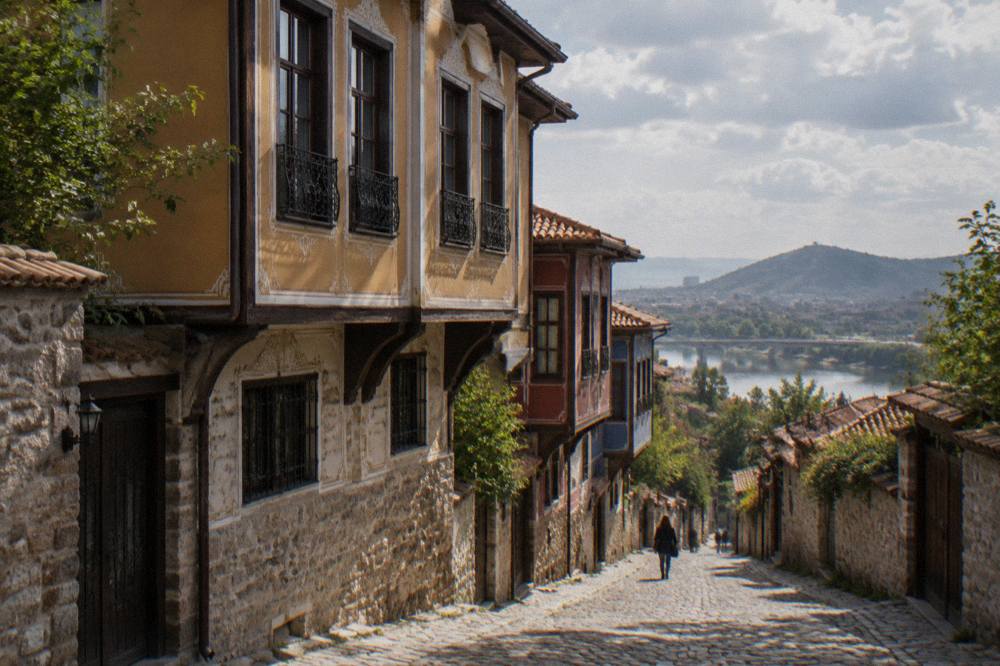
Because the whole belt is compact, a walking tour is the natural way to see it, and Plovdiv has several. A private option covers the central quarters and the Roman landmarks at the reader's own pace, and the private city walking tour of Plovdiv is the one this site features for exactly this kind of route, with a guide who can be steered toward the streets that interest you. For readers who prefer to plan their own line across the city, the self-guided options on the main things to do page sketch the same geography without a guide.
The tour below pairs best with a stay anchored in this part of the city: a private walk for the streets themselves.
A final geographic note: the quarter's position makes it a sensible place to sleep as well as to stroll, and any accommodation will apply the municipal tourist tax, so confirm the rate at booking. Confirm both at booking. The where to stay overview on the main guide frames the trade-offs between quarters without inventing numbers.
What To See Around Kichuk Parizh In Plovdiv?
The sights around Kichuk Parizh in Plovdiv are the city's core set: the Ancient Theatre of Philippopolis with its 28 concentric rows of marble seats, the Roman Stadium's northern sphendone, the free open-air complex of Nebet Tepe, the Bishop's Basilica mosaics and the houses of the Old Town. The quarter itself adds streets and facades, all free, while every paid site around it follows the Old Plovdiv ticket list.
Distance is the friend here. Nothing in this list is more than a stroll from anything else in it, which is why the one day Plovdiv itinerary and the longer two day itinerary both run on foot. The table below groups the core sights by what they cost and when they open, using the figures from the Old Plovdiv ticket list and the official museum pages.
| Sight | Entry | Hours | Notes |
|---|---|---|---|
| Nebet Tepe | Free | Open-air, unrestricted | Restoration opened March 2025 |
| Kapana district | Free | Public streets | Name means The Trap |
| Hisar Kapia gate | Free | Public landmark | Open at all hours |
| Ancient Theatre | 3.58 euro | Apr to Oct 9:30 to 18:00, Nov to Mar 9:00 to 17:30 | Lunch break 12:30 to 13:00 |
| Roman Stadium sphendone | Free | Open-air | 3D hall 3.68 euro, combined 5.11 euro |
| Bishop's Basilica | 7.57 euro | Daily 9:00 to 18:00 | Over 2,000 sq m of floor mosaics |
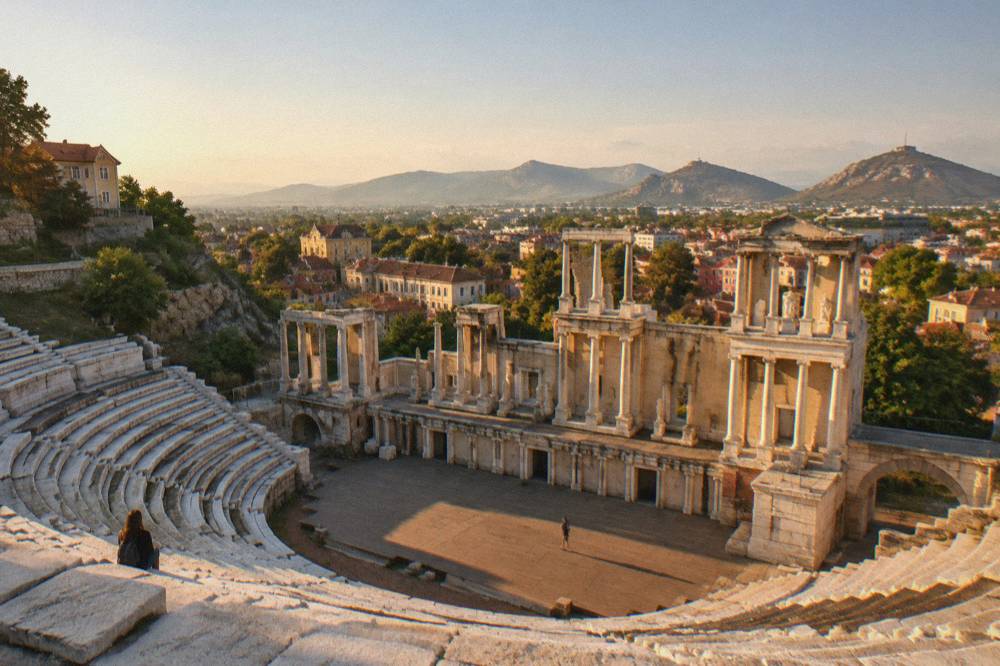
The Ancient Theatre is the one that defines most visits. The city's tourism site dates it to the 90s of the 1st century AD and describes 28 concentric rows of marble seats; this site deliberately reports the rows rather than a capacity figure, because capacity numbers circulating online are secondary. The Ancient Theatre guide unpacks its history, and one practical point matters for planning: the theatre is a live venue, and the Opera Open season runs there from 23 June to 9 September 2026, so performance days can shift the feel of the whole Old Town slope.
Nebet Tepe is the counterweight: free, open and, since the EU-funded restoration project officially opened in March 2025, easier to read as an archaeological site than it was before. The city's tourism site dates the first settlement on the hill to the 4th millennium BC, which is the basis for Plovdiv's description as one of the oldest continuously inhabited cities in Europe. The Nebet Tepe guide covers what the hill shows and what remains interpretation.
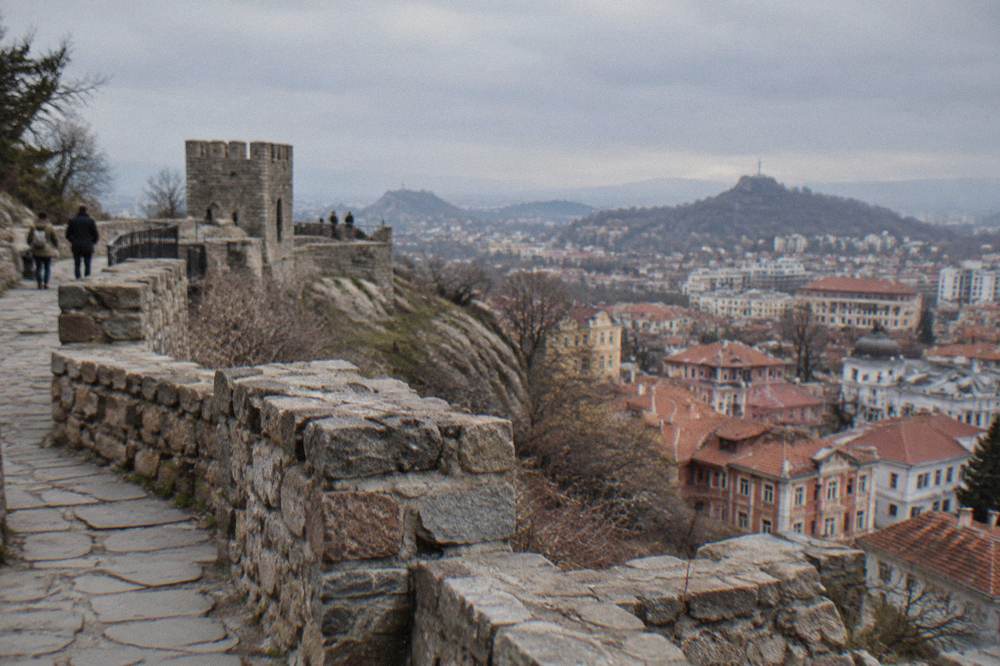
For readers who want a guide through all of this rather than a map, the featured private walking tour below is the strongest fit: it covers the central quarters and the Roman landmarks together, which is exactly the spread a Kichuk Parizh-based visit wants.
How Do Tickets And Hours Work For The Sights Near Kichuk Parizh In Plovdiv?
Tickets for the sights around Kichuk Parizh in Plovdiv follow the Old Plovdiv price list: any one Old Plovdiv site except the Bishop's Basilica costs 3.58 euro for an adult, a combined ticket covering up to five sites costs 10.74 euro, and the Bishop's Basilica is priced separately at 7.57 euro because it sits under its own heading on the list. Children under 7 enter free everywhere on the list.
The full list, from the Old Plovdiv ticket page, is worth reading closely because the structure is not obvious. Concessions are consistent: pupils and students pay 1.53 euro at single Old Plovdiv sites, a family ticket for parents with children aged 7 to 16 costs 7.16 euro, and groups over ten pay a reduced adult rate of 3.07 euro. The combined ticket covering up to five sites excludes the Small Basilica and the Bishop's Basilica, which is the trap to know about: a reader who assumes "combined" means everything will be asked to pay again at the Basilica door.
| Ticket | Adult | Student | Family |
|---|---|---|---|
| One Old Plovdiv site | 3.58 euro | 1.53 euro | 7.16 euro |
| Combined, up to 5 sites | 10.74 euro | 4.09 euro | 21.47 euro |
| Bishop's Basilica, single | 7.57 euro | 3.58 euro | 15.34 euro |
| Roman Stadium 3D hall | 3.68 euro | 1.23 euro | listed per site |
| Stadium eastern sector plus 3D | 5.11 euro | 2.05 euro | listed per site |
The validity period of the combined ticket is not stated on the page itself, so plan to use it within a single visit rather than banking it across days.
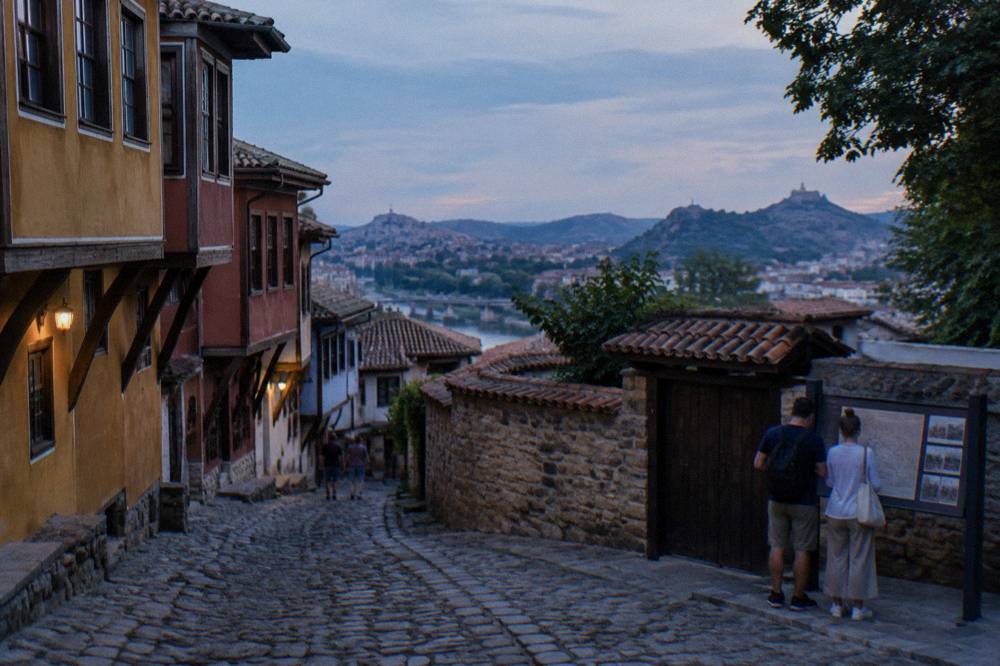
The museums nearby run on their own schedules. The Regional Ethnographic Museum, in the Kuyumdzhiev House, is closed Mondays and opens 9:00 to 18:00 in summer, 9:00 to 17:00 in winter; its guide page carries the details. The Regional History Museum is free on the first Thursday of the month. The houses of the Old Town, such as Balabanov House, follow the single-site ticket, and the Balabanov House guide covers that property specifically. For readers stacking several quarters and sights into one route, the full Plovdiv itinerary sequences them day by day.
What Is The Weather Like Around Kichuk Parizh In Plovdiv?
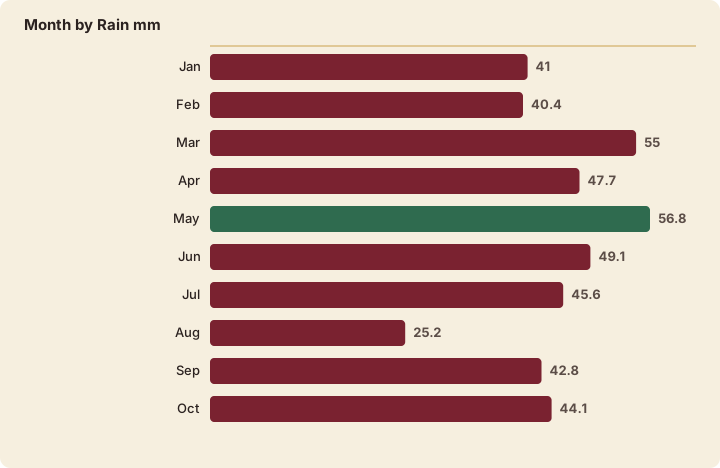
Plovdiv has a continental climate, with modelled mean daily highs of 28.2 C in July and 28.6 C in August against 5.9 C in January, and nights in January averaging -2.6 C, according to the ERA5 reanalysis for 1991 to 2020. Rain runs highest in May at 56.8 mm and lowest in August at 25.2 mm, so summer walks around the central quarters are warm and generally the driest of the year.
Those figures come from a modelled grid cell over the city, not a weather station, and reanalysis smooths urban heat, so treat them as a planning baseline rather than a forecast. For a quarter whose whole appeal is walking outdoors, the shape of the year matters more than any single month: July and August are for slow mornings and long evening shade, spring and autumn are the comfortable walking seasons, and winter is quiet, cold and occasionally under snow, which the site's winter coverage treats as its own experience.
| Month | Mean high C | Mean low C | Rain mm |
|---|---|---|---|
| Jan | 5.9 | -2.6 | 41.0 |
| Feb | 8.0 | -1.1 | 40.4 |
| Mar | 12.1 | 2.1 | 55.0 |
| Apr | 17.1 | 6.4 | 47.7 |
| May | 21.9 | 11.5 | 56.8 |
| Jun | 25.9 | 15.4 | 49.1 |
| Jul | 28.2 | 17.9 | 45.6 |
| Aug | 28.6 | 18.1 | 25.2 |
| Sep | 23.8 | 13.8 | 42.8 |
| Oct | 18.1 | 8.8 | 44.1 |
| Nov | 12.3 | 3.8 | 39.7 |
| Dec | 7.0 | -0.8 | 49.3 |
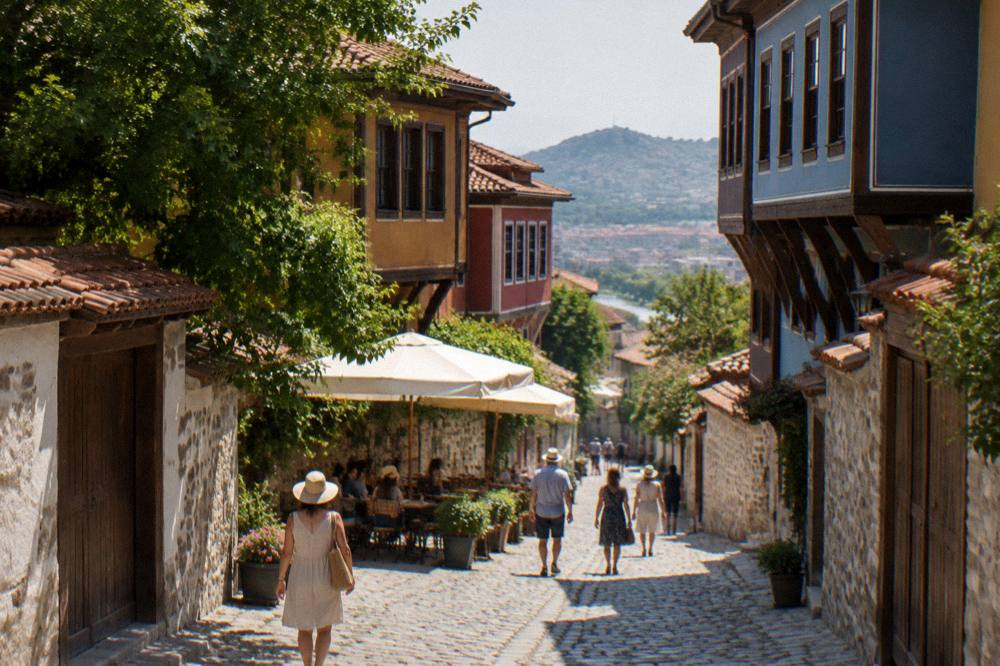
Two seasonal consequences are worth flagging. The Old Plovdiv sites shorten their hours in winter, from 9:30 to 18:00 down to 9:00 to 17:30, which tightens a winter afternoon itinerary. And the Opera Open season fills the Ancient Theatre with evening performances from late June into September 2026, which changes the character of the whole Old Town slope on show nights, in a way that rewards checking the theatre calendar before assuming a quiet sunset at the top rows.
Which Plovdiv Events Reach The Streets Around Kichuk Parizh?
Plovdiv's 2026 to 2027 calendar reaches the centre of the city, around Kichuk Parizh and its neighbouring quarters, with Opera Open at the Ancient Theatre from 23 June to 9 September 2026, the autumn Kapana Fest across the first two October weekends, the Plovdiv Jazz Fest from 6 to 8 November 2026, and the Soul of Christmas programme running 1 December 2026 to 7 January 2027 across Kapana and Central Square.
Each of those is a reason to time a walk, not just a diary entry. Kapana Fest, held on 2 to 4 and 9 to 11 October 2026 around the bridge over Gladstone Street and Central Square, brings stalls and performances into the streets at the quarter's doorstep. The jazz fest sits indoors at the Boris Hristov House of Culture. The Christmas programme, under the name Soul of Christmas for 2026/27, spreads across Kapana and the square, and the site's Christmas and New Year coverage carries the detail. The table below lines up what is confirmed.
| Event | Dates | Where |
|---|---|---|
| Opera Open | 23 June to 9 Sept 2026 | Ancient Theatre |
| Kapana Fest, autumn | 2 to 4 and 9 to 11 Oct 2026 | Bridge over Gladstone St, Central Square |
| Plovdiv Jazz Fest, fall | 6 to 8 Nov 2026 | Boris Hristov House of Culture |
| Soul of Christmas | 1 Dec 2026 to 7 Jan 2027 | Kapana and Central Square |
| Old Town festival days | 16 to 23 Sept 2026 | Old Town, free events |
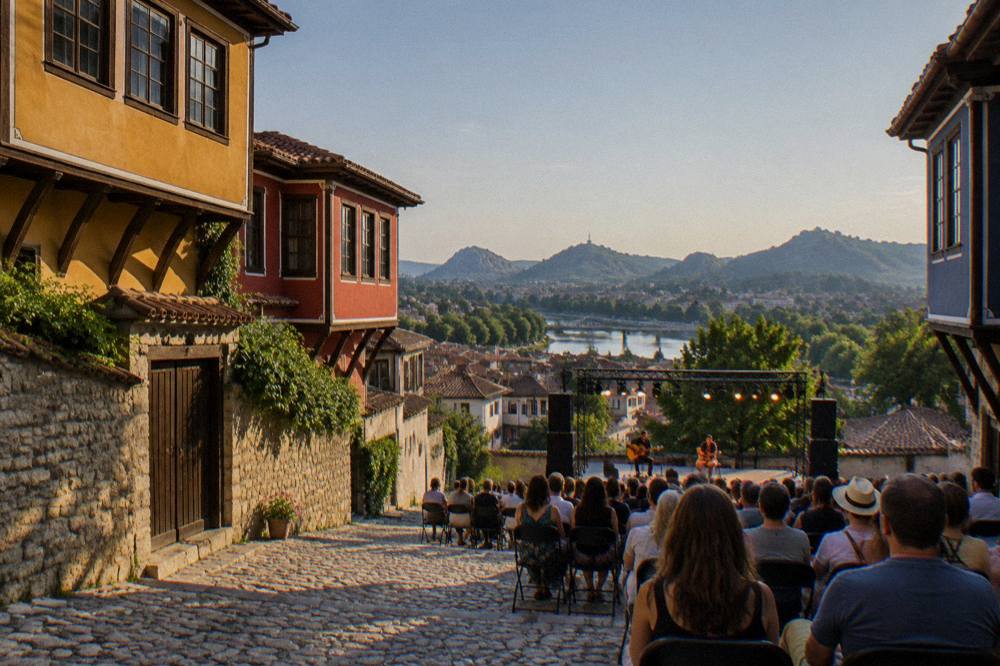
Evenings are when the central quarters earn their keep, and two of the tours on this site are built exactly for that slot. A guided city walk that ends with a sunset wine tasting pairs the street-watching with Bulgarian wine, and a private Thracian Valley tasting day turns the same interest into a trip out to the wine country that begins beyond the city edge. The private walking tour remains the best single pick for a first day anchored in this quarter.
How Does A Visit To Kichuk Parizh Fit Into A Longer Plovdiv Trip?
A visit to Kichuk Parizh fits into a longer Plovdiv trip as the connective tissue between the headline sights: one unhurried pass through its streets slots between the Old Town in the morning, Main Street and the Roman Stadium at midday, and Kapana in the evening, and the quarter rewards being scheduled as part of a walking day rather than as a stop with a fixed duration. Most itineraries on this site place it exactly there.
The practical building blocks are already on this site. A first day can follow the one day itinerary with the quarter folded into the afternoon; a second day opens the day trip menu, with Bachkovo Monastery, free to enter, the closest headline option, and Asen's Fortress on the same road south. Readers with a week can extend into the Bulgaria itinerary, and those arriving from the capital can start with the Sofia day trip page, since direct trains between Sofia and Plovdiv take about 2 h 40 to 3 h 05 per the BDZ timetable.
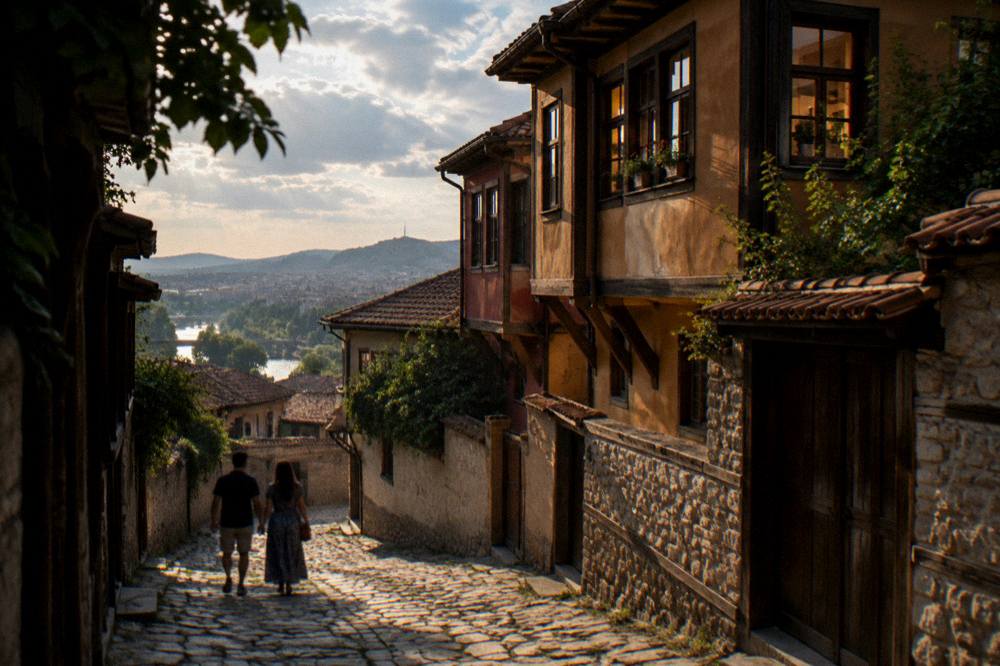
Money is straightforward in 2026: Bulgaria uses the euro, adopted on 1 January 2026, and card acceptance in the centre is ordinary. Crowd-reported price levels put an espresso and a half-litre of draught beer each at around 2 euro, approximate crowd-reported figures, and tipping around 10 percent in restaurants is the local habit. The emergency number is 112, plugs are type C and F at 230 V, and the country is a full Schengen member since 1 January 2025, so the usual Schengen entry rules apply to visa-free visitors from the United States, United Kingdom, Canada and Australia.
For the evening after the walk, the sunset wine walk below is the tour that best matches this quarter's mood, and it can be checked against the private walking tour for whichever slot in the day the reader prefers.
For a day given over entirely to wine, the private Thracian Valley tasting trip below leaves the city behind and returns the same day, and it completes the set of tours this page recommends around a stay in the Little Paris quarter.
Common Questions About Kichuk Parizh In Plovdiv
What does Kichuk Parizh mean?
The name is Bulgarian for Little Paris, a nickname attached to a quarter of central Plovdiv known for its domestic architecture from the city's prosperous late nineteenth and early twentieth century period. The name refers to character and streetscape, not to any monument.
Is Kichuk Parizh in Plovdiv free to visit?
Yes. The quarter is a set of ordinary public streets with no ticket, gate or opening hours. The paid sights nearby, such as the Ancient Theatre at 3.58 euro and the Bishop's Basilica at 7.57 euro, follow the Old Plovdiv ticket list and are separate from the quarter itself.
How far is Kichuk Parizh from the Old Town of Plovdiv?
The quarter sits within the same walkable central belt as the Old Town, Kapana and Main Street, so moving between them is done on foot and no transport is needed. The city's core sights, from the Ancient Theatre to the Roman Stadium, all sit inside this compact area.
Is Plovdiv Old Town a UNESCO World Heritage Site?
No. "The Ancient Plovdiv" sits on Bulgaria's UNESCO Tentative List, submitted in 2004, which is a waiting list and not an inscription. Plovdiv Old Town is not a World Heritage Site, and the distinction is worth knowing when guides blur it.
What currency do I need in Kichuk Parizh, Plovdiv?
The euro. Cards are accepted widely in the centre.
When is the best weather for walking the central quarters of Plovdiv?
Late spring and early autumn combine comfortable walking temperatures with the city's event calendar.