Church Of Saints Constantine And Helena: Frescoes In The Old Town
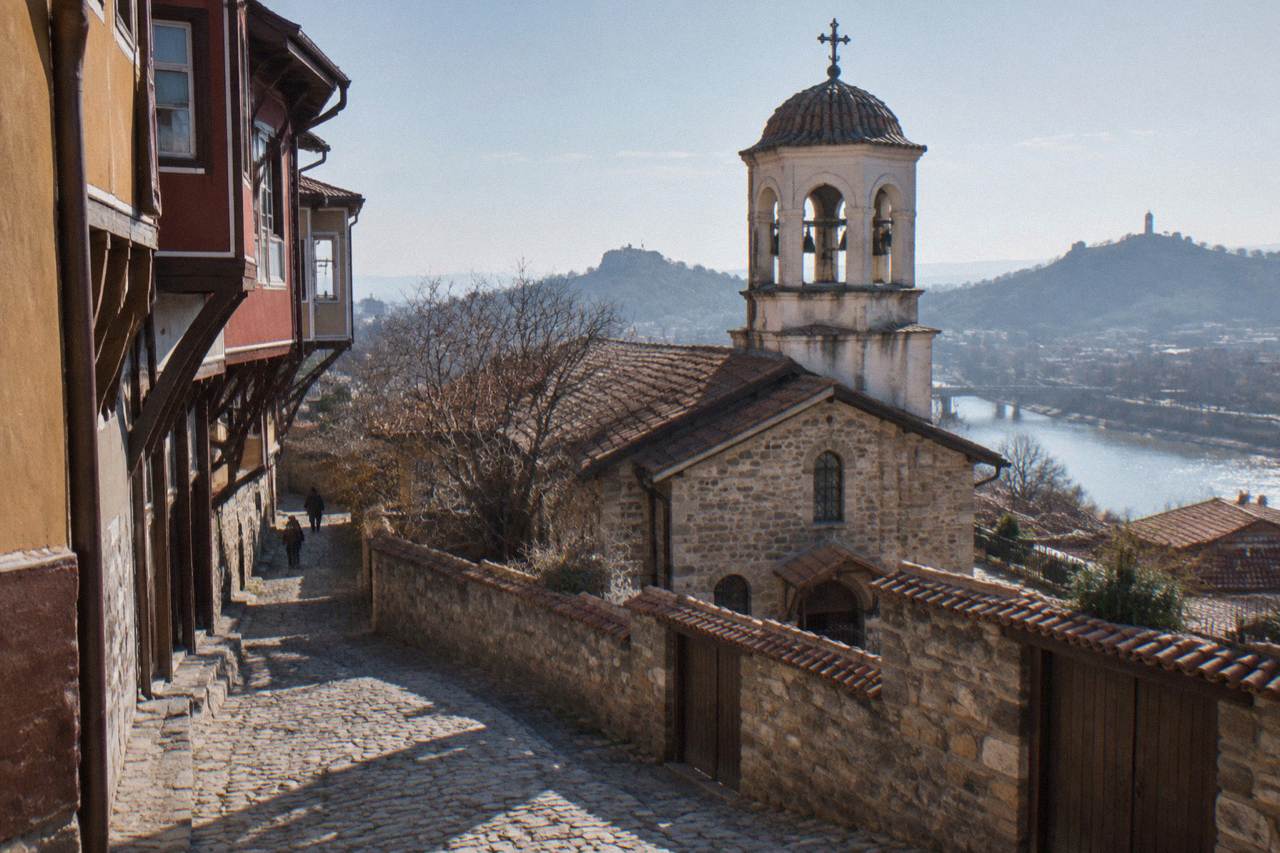
The Church of Saints Constantine and Helena is one of the small Orthodox churches tucked into the lanes of Plovdiv's Old Town, a city in southern Bulgaria built around six hills and often described as one of the oldest continuously inhabited cities in Europe.
Short answer
The Church of Saints Constantine and Helena is a working Orthodox church in Plovdiv's Old Town, known for its interior frescoes. It stands among the Revival-era houses and Roman ruins of the Three Hills, a few minutes on foot from Hisar Kapia. No ticket or opening schedule is published, so treat a visit as a short stop on an Old Town walk and confirm locally.
The Church of Saints Constantine and Helena is a small working Orthodox church in Plovdiv, a city in southern Bulgaria, inland, with no sea coast, built around six hills and often described as one of the oldest continuously inhabited cities in Europe. The church sits in the Old Town, the restored historic core on the Three Hills where Roman ruins, Revival-era houses and working churches share the same narrow lanes. It is the frescoes that give the church its reputation: guides to the Old Town describe an interior covered in painted scenes, and the church is named for the emperor Constantine and his mother Helena, figures central to the early Christian history of the Balkans. This page lays out what the church is, where it stands, how it fits into an Old Town walk and what a visit to the surrounding streets involves in practice.
What Is The Church Of Saints Constantine And Helena In Plovdiv?
The Church of Saints Constantine and Helena is a functioning Bulgarian Orthodox church in Plovdiv's Old Town, dedicated to the emperor Constantine the Great and his mother Helena, and known for the frescoes that cover its interior walls and ceilings. It holds regular services and is not a ticketed museum site, so a visit is a short, quiet stop rather than a half-day attraction. What the church offers is continuity.
The dedication itself carries weight. Constantine, the Roman emperor who legalised Christianity, and Helena, associated with pilgrimage to the Holy Land, are among the most common dedications in Orthodox church life, and a church bearing their name in a city of Philippopolis's Christian antiquity sits comfortably in that context. Plovdiv's Old Town layers its history vertically, and the church belongs to the later, living layers rather than the excavated Roman ones.
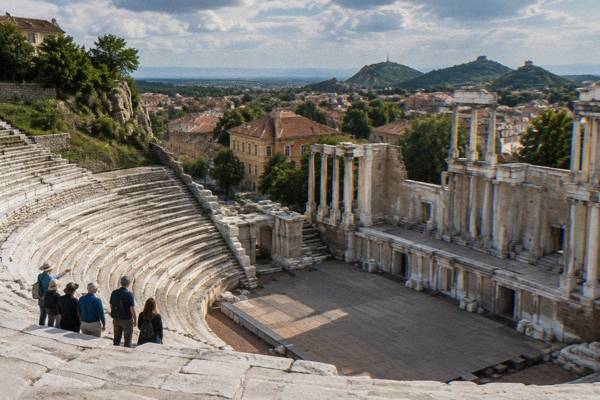
That distinction shapes how to visit. The Ancient Theatre of Philippopolis, the Roman Stadium and the Bishop's Basilica are ticketed, timed sites with published schedules on the Old Plovdiv ticket page. The Church of Saints Constantine and Helena is not on that list. It is part of the street fabric of the Old Town, the kind of place a walker passes, steps into when open, and steps out of ten minutes later with a picture of painted walls in mind.
Where Is The Church Located In Plovdiv's Old Town?
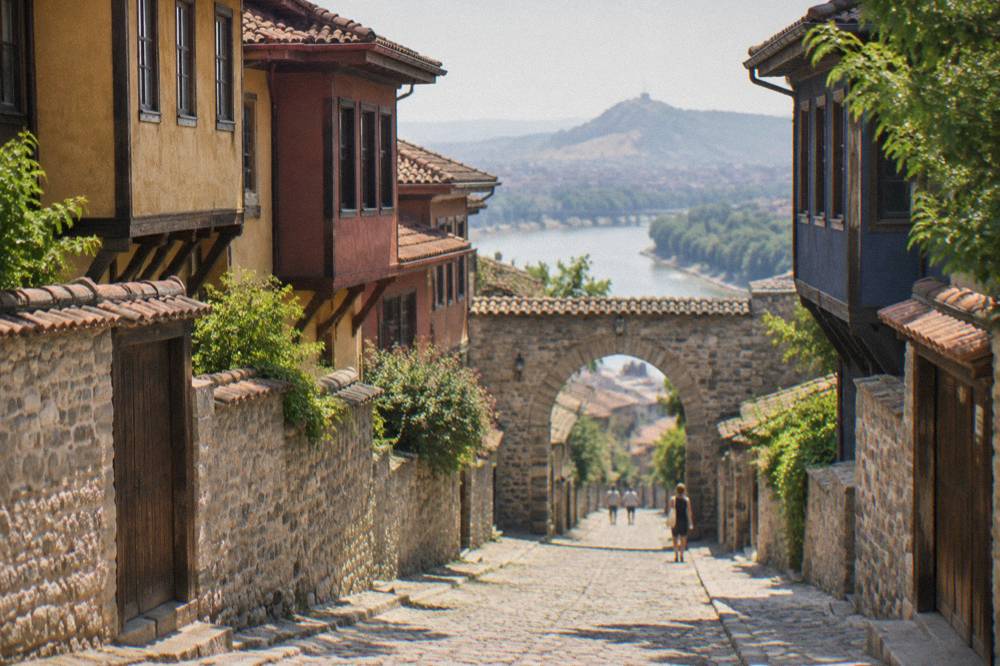
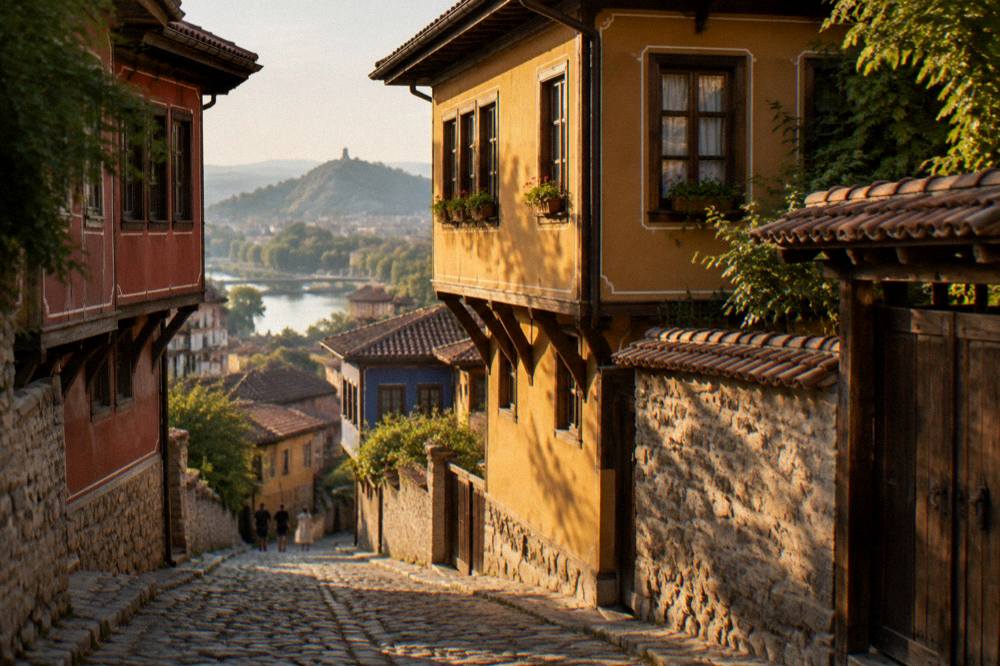
The church stands inside the Old Town of Plovdiv, the historic district on the Three Hills (Nebet Tepe, Dzhambaz Tepe and Taksim Tepe), within a few minutes' walk of Hisar Kapia, the old eastern gate, and the cobbled lanes that link the Revival-era house museums. The Old Town is compact and entirely walkable, and the church sits in the middle of the route every visitor ends up taking: up from the centre, through Hisar Kapia, past the house museums, and along to the Ancient Theatre. There is no separate transport step. The city's e-ticket single fare on the local buses is 0.50 euro, and the Old Town lanes themselves are pedestrian in character, steep in places and cobbled throughout.
Hisar Kapia is the natural landmark to get around by. The gate is a public landmark, free and open at all hours, and the streets immediately above it are the heart of the Old Town. The Hisar Kapia guide covers the gate and the lanes around it in detail. From there the walk climbs gently past restaurants and small courtyards toward the house museums, with the church among the buildings along the way.
For orientation, the whole district fits into a short loop. The Old Town area guide maps the lanes, the terraces and the viewpoints, and the one-day itinerary on Plovdiv in one day places the church's stretch of the Old Town into a full walking day. Nothing in this part of the city needs a vehicle, and the hills mean comfortable shoes matter more than transit planning.
What Can You See Inside The Church?
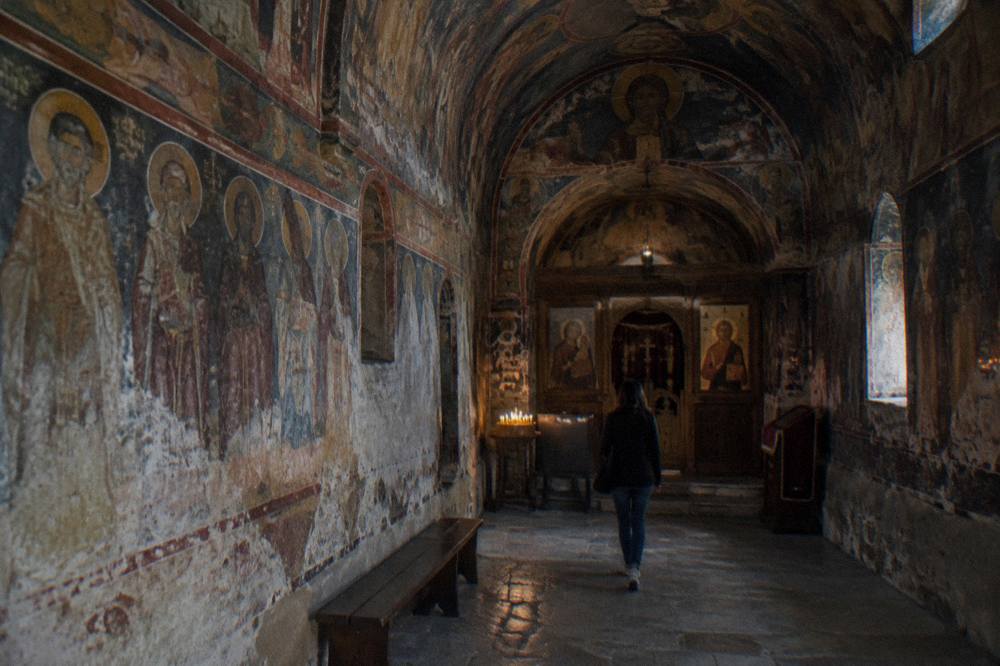
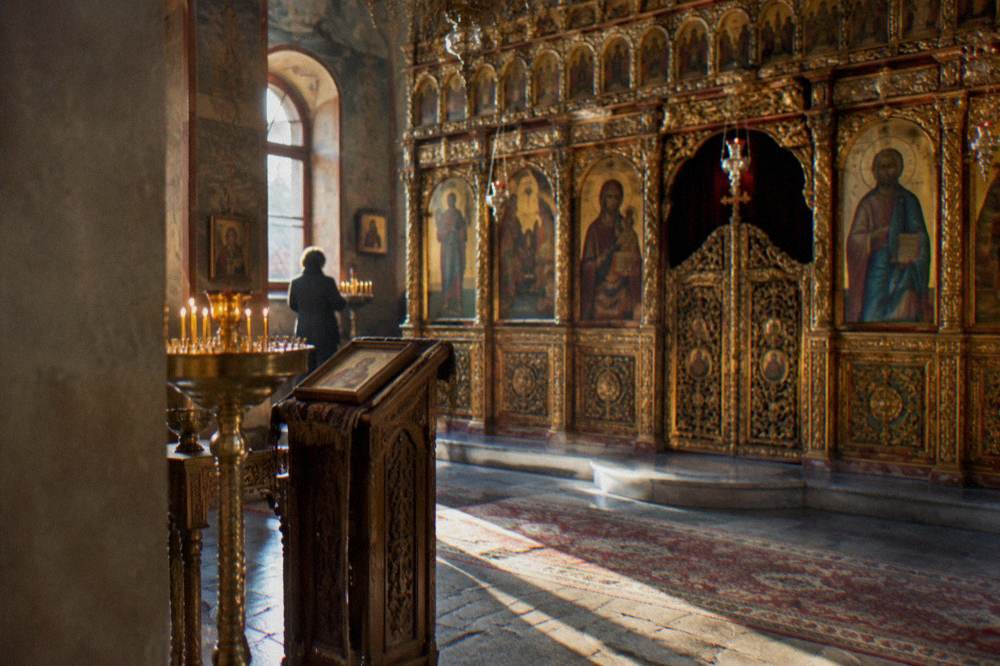
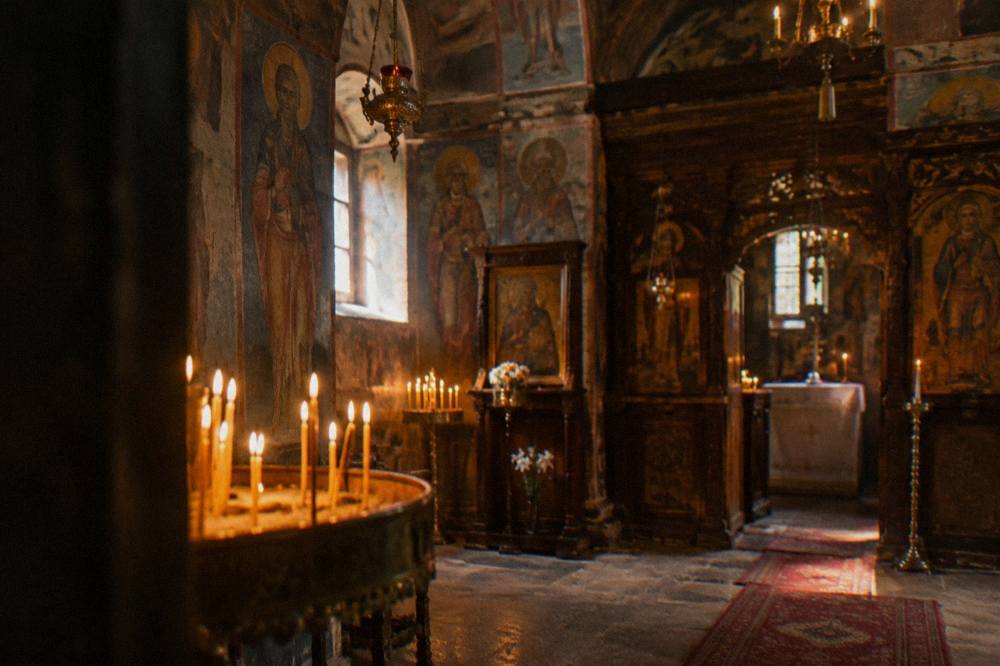
Inside, the Church of Saints Constantine and Helena is described in Old Town guides as a fresco-painted interior in the Orthodox tradition: walls and ceilings covered in scenes of saints, angels and biblical episodes, with an iconostasis separating the nave from the sanctuary. Orthodox church interiors follow a settled visual logic, with the dome or ceiling given to Christ Pantocrator imagery and the lower walls to narrative cycles, and this church fits that pattern. As a working church it may be closed between services, and photography rules vary by community, so the practical advice is to confirm on arrival and behave as a guest rather than a ticket holder.
The frescoes are the reason the church earns a place on Old Town routes. The church's painted interior belongs to that world.
A short etiquette note serves any Orthodox church visit in Bulgaria. Dress modestly, with shoulders and knees covered. Speak quietly, and if a service is running, stand at the back and observe rather than move around. Candles are usually offered for a small coin donation.
How Does The Church Compare With Plovdiv's Other Old Town Churches?
Plovdiv's Old Town and the streets below it hold several working Orthodox churches besides Saints Constantine and Helena, including the Church of Saint Marina on the main pedestrian street and the Cathedral of the Dormition near the centre, and the difference between them is one of role: some are parish churches on busy routes, while others sit quietly in the Old Town lanes. The Church of Saint Marina, for example, sits directly on the modern pedestrian spine of the city, while the Old Town churches sit among museum houses and Roman ruins.
The table below places the churches and religious buildings a visitor is likely to encounter on the same walk. Ticket prices are given only where the Old Plovdiv ticket page or the city's own pages publish them, and the Dzhumaya Mosque, which is free and open to visits from 6:00 to 23:00, is included because it stands on the same central route.
| Building | Where it sits | Entry |
|---|---|---|
| Dzhumaya Mosque | 2 Zhelezarska St, main pedestrian street | Free, open to visits 6:00 to 23:00 |
The Church of Saint Marina guide, the Cathedral of the Dormition guide and the Armenian Church of Saint Kevork guide cover those buildings individually. Read together they make one point: Plovdiv's religious architecture is not a museum district with a single ticket, it is a living set of working buildings scattered along one walkable route.
What Do Old Plovdiv Tickets Cost Around The Church?
The Old Plovdiv ticket page lists a single-site adult ticket at 3.58 euro, a student ticket at 1.53 euro and a family ticket at 7.16 euro, with a combined ticket covering up to five sites at 10.74 euro for adults, and children under 7 and visitors with over 50% disability enter free. The combined ticket excludes the Small Basilica and the Bishop's Basilica, which are priced separately: the Bishop's Basilica is 7.57 euro for adults, and the combined basilicas ticket price is best confirmed at the ticket desk. The church covered by this page is not a ticketed Old Plovdiv site at all.
The full price list from the Old Plovdiv ticket page, in euro only:
| Ticket | Adult | Student | Family |
|---|---|---|---|
| One Old Plovdiv site (except Bishop's Basilica) | 3.58 euro | 1.53 euro | 7.16 euro |
| Combined ticket, up to 5 sites | 10.74 euro | 4.09 euro | 21.47 euro |
| Bishop's Basilica, single | 7.57 euro | 3.58 euro | 15.34 euro |
| Roman Stadium 3D hall | 3.68 euro | 1.23 euro | not listed |
Group rates for parties over 10 and free entry for students and seniors on the first Thursday of the month are listed on the same ticket page. The validity period of the combined ticket is not published: confirm at the first ticket desk you use. Everything else covered here is indexed on Plovdiv Travel Guide.
The practical takeaway for a walk that includes the Church of Saints Constantine and Helena is that the church itself costs nothing and needs no planning, while the sites around it, the Ancient Theatre, the house museums, the basilicas, are where the ticket decisions happen. The Ancient Theatre of Philippopolis guide and the Balabanov House guide break down the two most visited of those sites.
How Do You Visit The Church On A Plovdiv Walking Tour?
The natural way to visit the Church of Saints Constantine and Helena is as one stop on an Old Town walking route, and Plovdiv has guided options that cover the Old Town and its Roman landmarks, including an audio-guided walk that visits the Old Town and the Roman sites in the district, along with a classic two-hour guided city walk and a longer private option. Tip-based walks also run locally, and for those the rule is to confirm the meeting point and the tip expectation with the guide directly. The church is a pause on a route, not a destination with a queue, so any tour that covers the Old Town lanes will pass within a minute or two of its door.
The Plovdiv walking tour guide explains what a guided city walk covers and how to choose one. For visitors who prefer to move at their own pace, the audio-guided walk is the closest fit for a route built around the Old Town's churches and Roman landmarks:
A self-guided version works just as well. The Plovdiv self-guided walk and the Plovdiv itinerary guide both route the Old Town lanes, and the free-things-to-do page on free things to do in Plovdiv lists the costless entries, including the open-air sites that surround the church. Whichever way the walk is structured, the church belongs in the middle stretch, between Hisar Kapia below and the Ancient Theatre above.
What Is Near The Church Of Saints Constantine And Helena?
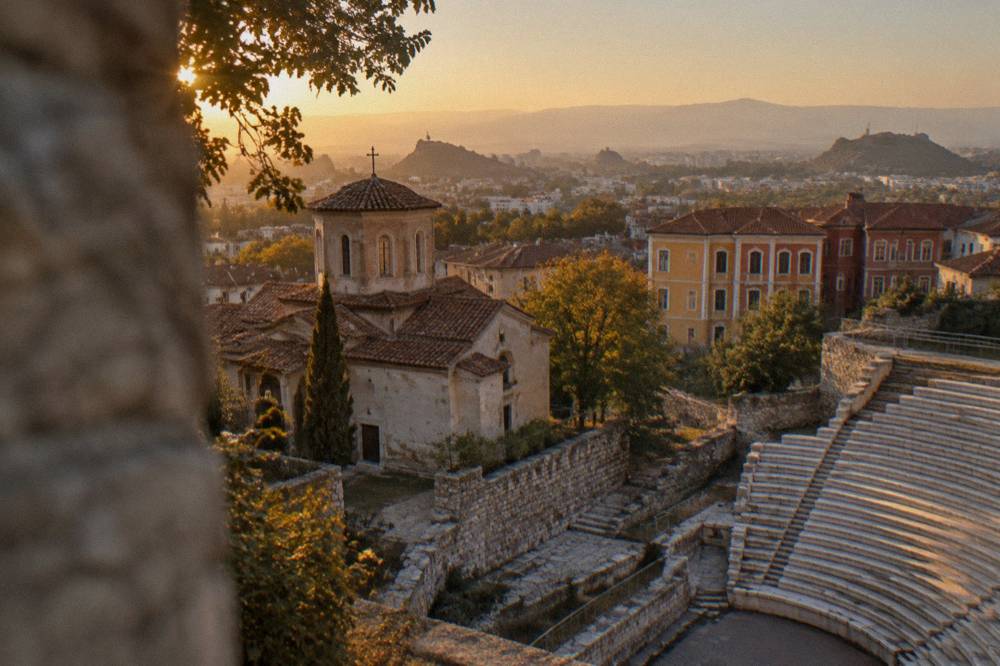
Everything in the Old Town is near the church: the walk from its door reaches Hisar Kapia within a few minutes, the house museums of the Old Town cluster around the same lanes, Nebet Tepe's free open-air archaeological complex sits at the top of the hill, and the Ancient Theatre stands a short climb beyond it. The district is small enough that "near" means minutes, not transport. Below the Old Town, the main pedestrian street runs out to the Roman Stadium, whose northern sphendone is free to view, and the Kapana creative district, whose name means "The Trap" and whose maze of narrow streets is free and open, lies a few minutes further.
| Nearby site | What it is | Entry |
|---|---|---|
| Hisar Kapia | Old gate, public landmark | Free, open at all hours |
| Nebet Tepe | Open-air archaeological complex, hilltop | Free |
| Ancient Theatre | Roman theatre, 28 concentric rows of marble seats | 3.58 euro adult |
| Roman Stadium sphendone | Open-air northern curve of the Roman stadium | Free to view |
| Kapana | Creative district, name means "The Trap" | Free, open streets |
| Ethnographic Museum | Kuyumdzhiev House, Revival-era interiors | about 3.07 euro adult, closed Monday |
The Nebet Tepe guide, the Ethnographic Museum guide and the Hindliyan House guide cover three of those stops in depth. The Roman Stadium's full story, including why only the northern part is accessible, is on the Roman Stadium guide.
For visitors with children, the Plovdiv with kids guide routes the same district with family stops in mind, and for evening plans the Plovdiv at night guide picks up where an Old Town walk ends. If the day runs long, the wider list on things to do in Plovdiv is the site's full index.
When Is The Best Time To Visit Plovdiv For The Old Town?
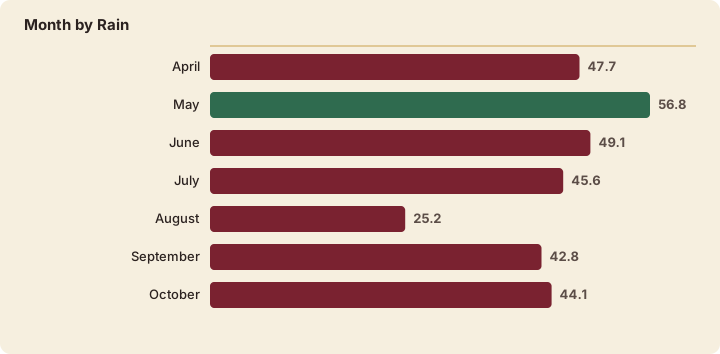
The ERA5 reanalysis for Plovdiv, 1991 to 2020, puts the mean daily high at 28.6 C in August and 5.9 C in January, with May the rain-saturated month at 56.8 mm and August the leanest at 25.2 mm, so late spring and early autumn combine comfortable walking temperatures with the Old Town's outdoor life, while summer days are hot but dry. The Old Town's lanes are steep and cobbled, and the church itself, like the house museums around it, involves standing and climbing, so temperature matters more here than in a flat museum city. Winter visits are quiet and cheap, with January nights at a mean low of -2.6 C.
| Month | Mean daily high | Mean daily low | Rain |
|---|---|---|---|
| April | 17.1 C | 6.4 C | 47.7 mm |
| May | 21.9 C | 11.5 C | 56.8 mm |
| June | 25.9 C | 15.4 C | 49.1 mm |
| July | 28.2 C | 17.9 C | 45.6 mm |
| August | 28.6 C | 18.1 C | 25.2 mm |
| September | 23.8 C | 13.8 C | 42.8 mm |
| October | 18.1 C | 8.8 C | 44.1 mm |
The event calendar shapes the choice too. Opera Open ran 23 June to 9 September 2026 at the Ancient Theatre, the autumn Kapana Fest ran 2 to 4 and 9 to 11 October 2026, and the Plovdiv Jazz Fest fall edition runs 6 to 8 November 2026. The Christmas market edition "Soul of Christmas" is listed for 1 December 2026 to 7 January 2027. The best time to visit Plovdiv guide and the Plovdiv festivals guide carry the full calendar reasoning.
How Do You Reach The Old Town From Sofia Or Plovdiv Airport?
Direct BDZ trains from Sofia to Plovdiv take about 2 h 40 to 3 h 05, buses take about 1 h 45 to 2 h 20 (reported), and Plovdiv Airport at Krumovo sits about 12 to 14 km southeast of the centre with a small route list that includes London, Milan Malpensa, Bratislava and Manchester, so the overwhelming majority of international visitors arrive via Sofia and reach the Old Town by train or bus. The BDZ timetable shows multiple direct departures daily, while trains routed via Karlovo take far longer and are worth avoiding. Confirm the rail fare at the station.
Once you've made your way to the city, book a hotel in Plovdiv here.
| Route | Mode | Typical time | Notes |
|---|---|---|---|
| Sofia to Plovdiv | Direct BDZ train | about 2 h 40 to 3 h 05 | Multiple daily departures |
| Sofia to Plovdiv | Train via Karlovo | far longer | Avoid for speed |
| Sofia to Plovdiv | Bus | about 1 h 45 to 2 h 20 (reported) | Sofia Central Bus Station to Plovdiv Yug |
| Plovdiv Airport to centre | Bus or taxi | about 20 to 35 min by bus | Small route list, check the airline |
The Sofia to Plovdiv guide, the Plovdiv Airport guide and the how to get to Plovdiv guide cover each route in detail, including the railway junction modernisation due to finish in 2026 and what it means for station access. Once in the city, the Old Town is a walk from the centre, and the getting around Plovdiv guide handles the local buses, whose e-ticket costs 0.50 euro.
For a day built around the church and its lanes, a guided option can carry the logistics:
Common Questions About The Church Of Saints Constantine And Helena
Is the Church of Saints Constantine and Helena in Plovdiv free to enter?
It is a working Orthodox church rather than a ticketed Old Plovdiv site, so treat entry as free and confirm locally, with a small donation customary if candles are lit.
What is the Church of Saints Constantine and Helena known for?
The church is known for its frescoes, painted interior walls and ceilings in the Orthodox tradition, and for its setting among the lanes of Plovdiv's Old Town near Hisar Kapia. Guides to the Old Town describe it as a short, atmospheric stop on the standard walking route.
How far is the church from Hisar Kapia?
The church stands inside the Old Town a few minutes on foot from Hisar Kapia, the old eastern gate. The whole district is compact and pedestrian in character, so the church, the house museums and the Ancient Theatre all sit on one short walk.
Can you visit the church on a guided tour of Plovdiv?
Yes. Guided walks cover the Old Town and its Roman landmarks, including an audio-guided option, and tip-based walks also run locally. Any route through the Old Town lanes passes close to the church's door.
Is the church part of the Old Plovdiv combined ticket?
No. The Old Plovdiv combined ticket covers up to five ticketed sites such as the Ancient Theatre and the Revival-era house museums, and excludes the Small Basilica and the Bishop's Basilica. Working churches are not on that ticket list.
The Church of Saints Constantine and Helena rewards exactly the kind of unhurried Old Town walk that Plovdiv does best: a short stop for the frescoes, then back out into the lanes toward Hisar Kapia, the house museums and the theatre above.