Cathedral Of The Dormition Of The Mother Of God
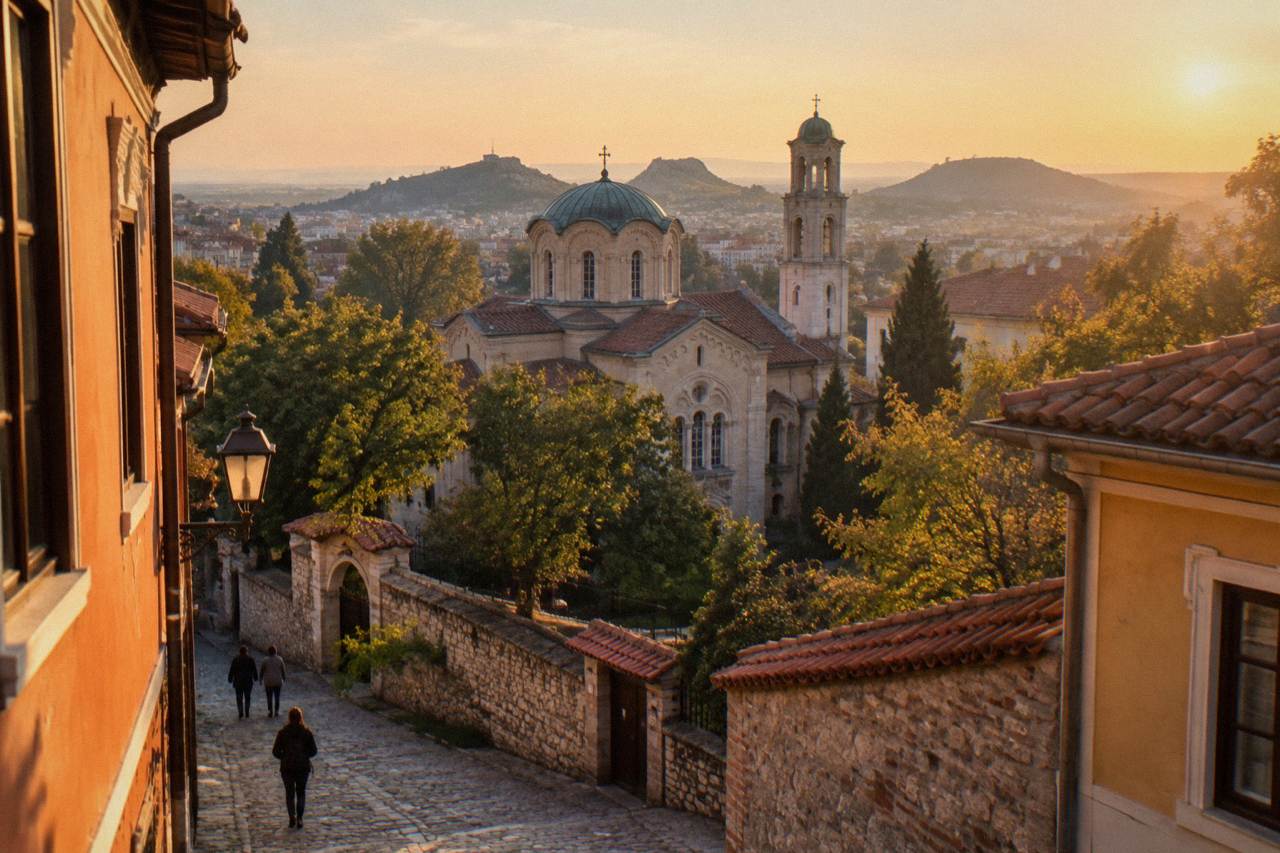
The Cathedral of the Dormition of the Mother of God is Plovdiv's main Orthodox cathedral, standing inside the Old Town core of Bulgaria's second-largest city, a short walk from the Ancient Theatre and Nebet Tepe.
Short answer
The Cathedral of the Dormition of the Mother of God is the principal Orthodox cathedral of Plovdiv, in southern Bulgaria. It stands in the Old Town, within walking distance of the Ancient Theatre of Philippopolis, Nebet Tepe and the Dzhumaya Mosque. Bulgaria uses the euro since 1 January 2026, and the cathedral sits in a district where the main ticketed sights cost a few euro each on the Old Plovdiv price list.
Plovdiv, in southern Bulgaria, is an inland city built around six hills, and its Old Town holds one of the densest clusters of historic buildings in the country. Among them stands the Cathedral of the Dormition of the Mother of God, the city's principal Orthodox cathedral. This page lays out what the cathedral is, how it fits into a day in the Old Town, what the surrounding sights cost on the official Old Plovdiv price list, and how to plan the visit. For the wider picture, the Plovdiv Travel Guide covers the whole city, and the things to do in Plovdiv roundup is the natural starting point.
What Is The Cathedral Of The Dormition In Plovdiv?
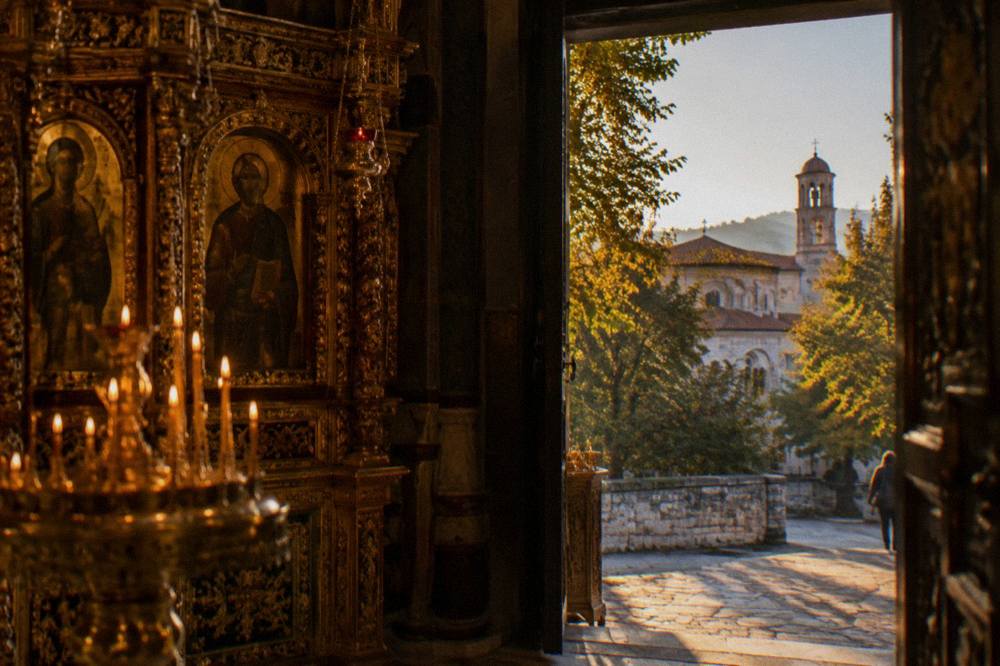
The Cathedral of the Dormition of the Mother of God is the main Orthodox cathedral of Plovdiv, Bulgaria's second-largest city, and one of the working religious buildings inside the Old Town historic core. It is a functioning Orthodox church rather than a museum, which means entry follows the customs of an active place of worship rather than a ticketed attraction. The cathedral gives the surrounding neighbourhood its religious anchor, standing among the revival houses and Roman sites that make Old Plovdiv the city's most visited district.
The Old Town district around it is managed in large part by the Old Plovdiv municipal institute, whose official ticket page prices the Roman and house museums on the hill. The cathedral itself is part of a different layer of the city: the layer of living congregations. Plovdiv has several active Orthodox churches, an Armenian church and one of Bulgaria's largest working mosques, the Dzhumaya Mosque, which the city's own page describes as the second-largest in the country by built area, about 1,500 square metres. A visit to the cathedral therefore sits naturally inside a walk that also takes in the Church of Saint Marina, the Church of Saints Constantine and Helena and the Armenian Church of Saint Kevork.
Visitors should confirm locally on arrival.
A practical way to see the cathedral in context is with a guide. The related tour below covers the Old Town on foot:
The walk gives the cathedral, the Roman sites and the revival houses a narrative thread, which is useful in a district where five different historical layers sit within a few hundred metres of each other.
Where Is The Cathedral Of The Dormition In Plovdiv Located?
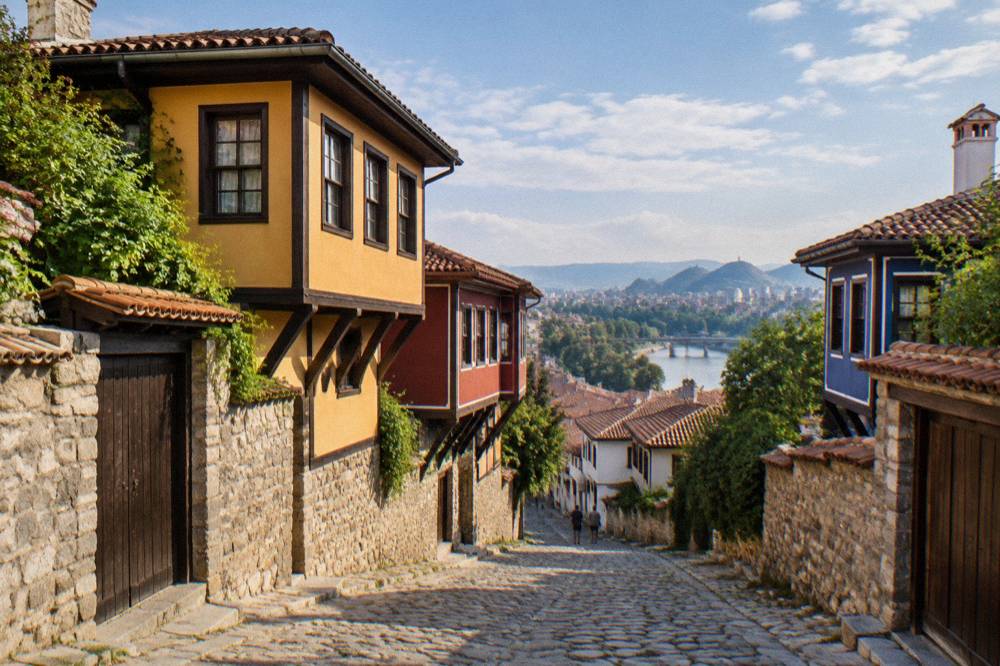
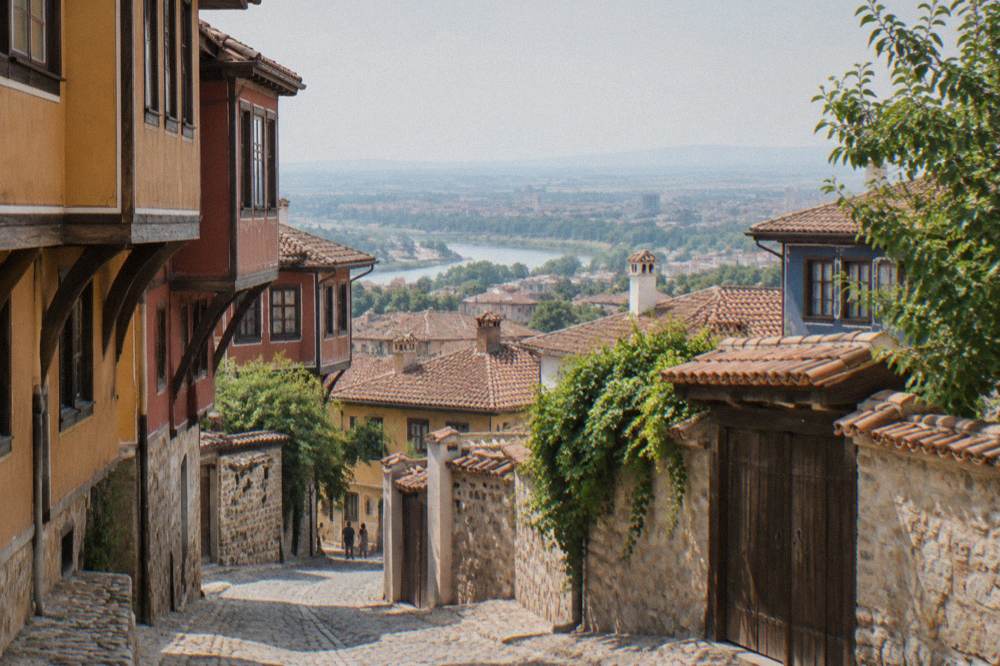
The Cathedral of the Dormition of the Mother of God stands in the Old Town of Plovdiv, on the Three Hills ridge at the heart of the city, a few minutes on foot from the Ancient Theatre of Philippopolis and the Nebet Tepe complex. The Old Town is pedestrian-friendly, compact and free to wander, with the cathedral sitting among streets that climb between the Dzhambaz, Nebet and Taksim hills.
The six hills of Plovdiv define the city's geography. The Three Hills group, Nebet Tepe, Dzhambaz Tepe and Taksim Tepe, carries the Old Town. The table below shows all six, with their heights as published by the municipal tourism site:
| Hill | Bulgarian name | Height |
|---|---|---|
| Youth Hill | Dzhendem Tepe | 285.5 m |
| Hill of the Liberators | Bunardzhika | 265 m |
| Danov Hill | Sahat Tepe | 227 m |
| Nebet Tepe | Nebet Tepe | 207 m |
| Dzhambaz Tepe | Dzhambaz Tepe | 212 m |
| Taksim Tepe | Taksim Tepe | 195 m |
There were seven hills until the 20th century; Markovo Tepe was partly quarried away in the 1930s, leaving six. The Old Town spreads over the Three Hills group, and every major sight in this article is within an easy walk of every other one.
Getting to the Old Town is straightforward. Most international travellers arrive via Sofia, with direct trains taking about 2 h 40 to 3 h 05 according to the BDZ timetable, or via Plovdiv Airport (Krumovo), whose own flight search lists Belfast, Birmingham, Bratislava, London, Manchester, Milan and Tel Aviv. The guide to getting there covers the routes in detail. Within the city, the e-ticket costs 0.50 euro, and the Old Town itself is best explored entirely on foot.
Here are three of the strongest ways to spend a day built around the cathedral and the Old Town:
The walking tour stays inside the city; the wine tasting adds a food-and-drink hour in the centre; the fortress day trip extends the same region beyond the city limits to Asen's Fortress and the Rhodope foothills.
What Can You See Inside And Around The Cathedral Of The Dormition?
Inside the cathedral, the visitor experience is that of an active Orthodox church: an iconostasis, icons, candles and liturgical space, with services held through the week, so the interior is best treated with the customs of a working place of worship, modest dress and quiet. Around it, the Old Town supplies the sights with firm published details: the Ancient Theatre with its 28 concentric rows of marble seats, the free Nebet Tepe complex, the Roman Stadium sphendone and the revival-house museums on the Old Plovdiv ticket list.
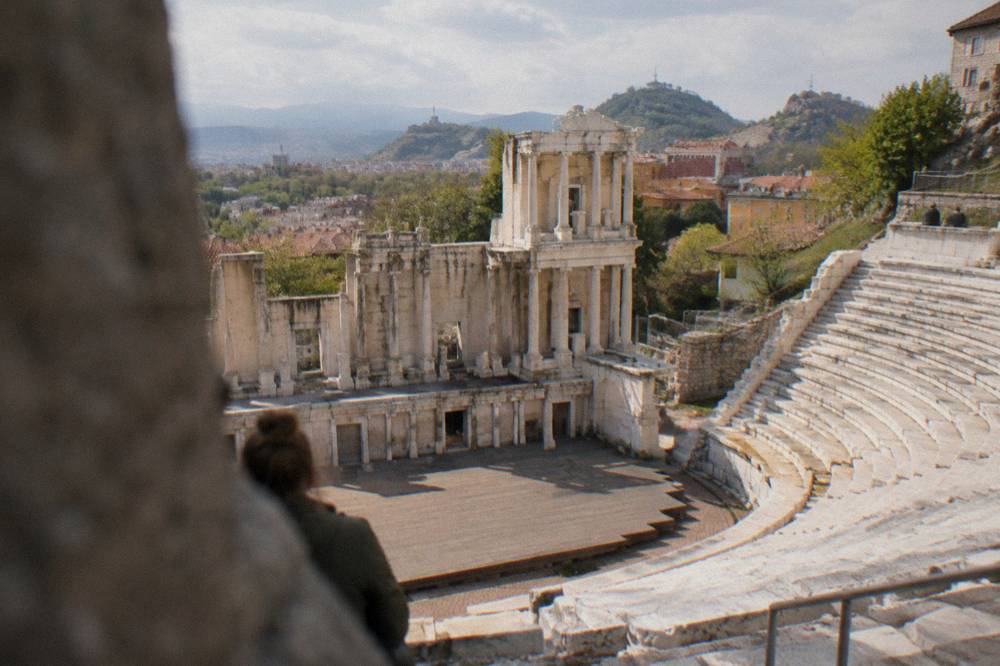
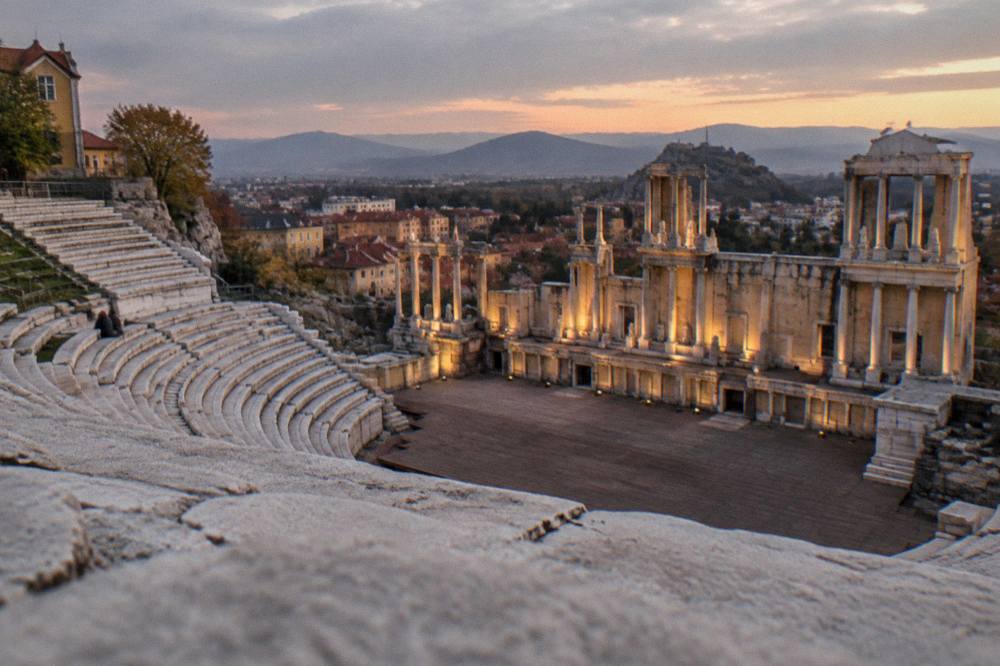
The Ancient Theatre of Philippopolis, built in the 90s of the 1st century AD, is open daily, April to October 9:30 to 18:00 and November to March 9:00 to 17:30, with a lunch break at 12:30 to 13:00. The Roman Stadium, built in the 2nd century AD on the model of the Stadium at Delphi, is accessible at its northern sphendone for free, with a paid 3D hall. The Ancient Theatre guide and the Nebet Tepe guide cover each site in depth.
The Old Plovdiv price list is the key planning document for the ticketed sites, and it is printed in euro. The single-site ticket, valid for one site except the Bishop's Basilica, costs 3.58 euro for adults, 1.53 euro for pupils and students, and 7.16 euro for a family of parents with children aged 7 to 16. Children under 7 and visitors with more than 50% disability enter free. The combined ticket covering up to five sites, excluding the Small and Bishop's Basilicas, costs 10.74 euro for adults.
| Old Plovdiv ticket | Adult | Student | Family |
|---|---|---|---|
| Single site (except Bishop's Basilica) | 3.58 euro | 1.53 euro | 7.16 euro |
| Combined, up to 5 sites | 10.74 euro | 4.09 euro | 21.47 euro |
| Bishop's (Great) Basilica, single | 7.57 euro | 3.58 euro | 15.34 euro |
| Roman Stadium 3D hall | 3.68 euro | 1.23 euro | not listed |
| Stadium Eastern sector + 3D hall | 5.11 euro | 2.05 euro | not listed |
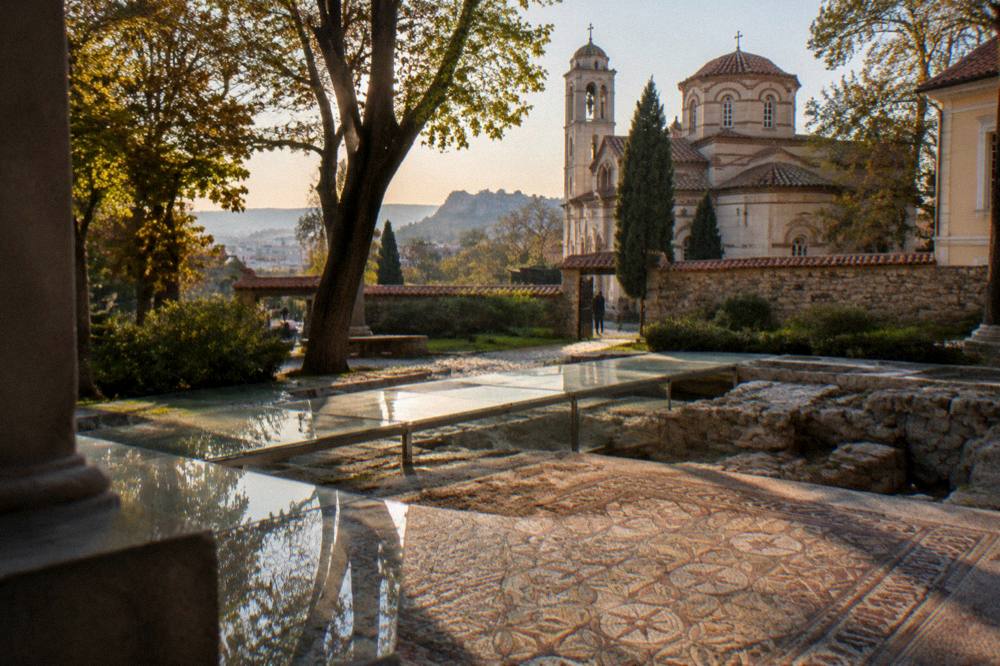
The Bishop's Basilica is priced separately from the one-site and combined tickets, and the validity period of the combined ticket is not published, so confirm it at the ticket desk. The first Thursday of the month brings free entry for students and seniors at Old Plovdiv sites, and the Regional History Museum is free for everyone that day. The Eirene mosaic and Episcopal Basilica page covers the basilica layer of the Old Town in detail.
If a guided loop of these streets appeals, this mid-article option is the one to consider:
A guided walk saves the map work in a district where gates, stairs and dead ends are part of the design, and the booking page shows the current departure details.
How Much Time Should You Spend At The Cathedral Of The Dormition In Plovdiv?
Plan on 20 to 30 minutes inside the cathedral itself, treating it as one stop inside a half-day Old Town circuit that also takes in the Ancient Theatre, Nebet Tepe and one or two revival houses. A half day covers the Old Town comfortably; a full day adds the Kapana creative district, the Main Street and the Bishop's Basilica mosaics. Visitors short on time can see the cathedral, the Ancient Theatre and Nebet Tepe in about two hours.
The pacing question is really a question about the whole Old Town. The district is small but dense, and the vertical streets between the hills slow walkers down in a pleasant way. A sensible structure is to start at the top of the ridge, at Nebet Tepe, work down through the cathedral and the house museums, and finish at the Ancient Theatre, or reverse the route. The one day in Plovdiv itinerary and the two day version give hour-by-hour plans built on exactly this geometry.
Lunch and coffee sit at the bottom of the hill in Kapana, whose name means "The Trap", a maze of narrow streets that the municipal tourism site describes as the city's creative district, free and open at all hours. The Kapana guide maps it. For food specifically, the food and drink roundup is the companion page.
A second option for filling the afternoon:
Bulgarian wine has its own page on this site, and a tasting hour in the centre pairs well with a morning of churches and marble rows.
How Does The Cathedral Of The Dormition Compare With Plovdiv's Other Churches?
Plovdiv's sacred buildings span Orthodox churches, an Armenian apostolic church and a large working mosque, and the Cathedral of the Dormition is the Orthodox centrepiece among them. The Dzhumaya Mosque is open to visits from 6:00 to 23:00 and is free, the second-largest mosque in Bulgaria by built area at about 1,500 square metres. No individual church's opening hours or ticket prices were confirmed in official sources, so each should be confirmed on site.
The comparative point worth holding onto is that Plovdiv's religious architecture is not a museum row: these are working buildings. The mosque, on 2 Zhelezarska Street in the city centre, asks visitors for modest dress and to avoid prayer times, and no single construction year can be given for it, because the city's own page states that sources give years between the 14th and 16th centuries. The Orthodox churches, including Saint Marina, Saints Constantine and Helena and the Armenian Church of Saint Kevork, follow the rhythm of services rather than museum schedules.
| Sacred building in Plovdiv | Type | Entry | Hours to rely on |
|---|---|---|---|
| Cathedral of the Dormition of the Mother of God | Orthodox cathedral | confirm on site | confirm on site |
| Church of Saint Marina | Orthodox church | confirm on site | confirm on site |
| Church of Saints Constantine and Helena | Orthodox church | confirm on site | confirm on site |
| Armenian Church of Saint Kevork | Armenian apostolic | confirm on site | confirm on site |
| Dzhumaya Mosque | Working mosque | free | 6:00 to 23:00 |
The Dzhumaya Mosque row is the one with firm published hours; every church row carries the same advice, because hours for churches were not confirmed in the official sources. The Dzhumaya Mosque page covers that building's rules for visitors in full.
What Is The Best Time Of Year To Visit The Cathedral Of The Dormition In Plovdiv?
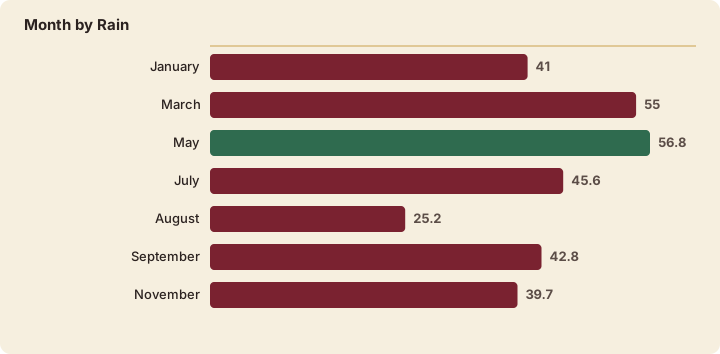
Late spring and early autumn give Plovdiv the most comfortable walking weather for a visit built around the cathedral and the Old Town, with ERA5 reanalysis 1991-2020 modelled mean daily highs of 21.9 C in May and 23.8 C in September. July and August are the warmest months, at 28.2 C and 28.6 C, and January is the coolest, with a mean daily high of 5.9 C and a mean low of -2.6 C.
Any month works, because the sights are compact and the cathedral is indoors.
The climate table below is drawn from ERA5 reanalysis, 1991-2020, for the grid cell over Plovdiv Old Town. These are modelled normals, not a station record, and reanalysis smooths urban heat.
| Month | Mean daily high | Mean daily low | Rain |
|---|---|---|---|
| January | 5.9 C | -2.6 C | 41.0 mm |
| March | 12.1 C | 2.1 C | 55.0 mm |
| May | 21.9 C | 11.5 C | 56.8 mm |
| July | 28.2 C | 17.9 C | 45.6 mm |
| August | 28.6 C | 18.1 C | 25.2 mm |
| September | 23.8 C | 13.8 C | 42.8 mm |
| November | 12.3 C | 3.8 C | 39.7 mm |
May has the highest monthly rain total in the normals at 56.8 mm and August the lowest at 25.2 mm, though the difference is modest and no month is a washout. The event calendar is a better seasonal filter than the rain column. Opera Open ran 23 June to 9 September 2026 at the Ancient Theatre, Kapana Fest's autumn edition ran 2 to 4 and 9 to 11 October 2026, and the Plovdiv Jazz Fest fall edition runs 6 to 8 November 2026. Christmas in Plovdiv is scheduled for 1 December 2026 to 7 January 2027 across the Kapana and Central Square areas. The best time to visit guide and the festivals page carry the full calendar.
Winter has its own pull, and the Plovdiv in winter guide makes the case. Whatever the month, the practical rules of the trip do not change: Bulgaria uses the euro since 1 January 2026, it has been a full Schengen member since 1 January 2025, and prices on the Old Plovdiv list are quoted in euro.
What Else Should You See Around The Cathedral Of The Dormition In Plovdiv?
Within a short walk of the cathedral sit the Ancient Theatre, Nebet Tepe, Hisar Kapia, the revival houses of the Old Town and the Roman Stadium, and beyond them the Kapana district, the Main Street and the singing fountains of Tsar Simeon Garden. Further out, day trips reach Bachkovo Monastery, Asen's Fortress, Koprivshtitsa and the Rhodope Mountains, all reachable from Plovdiv on tours or by public transport.
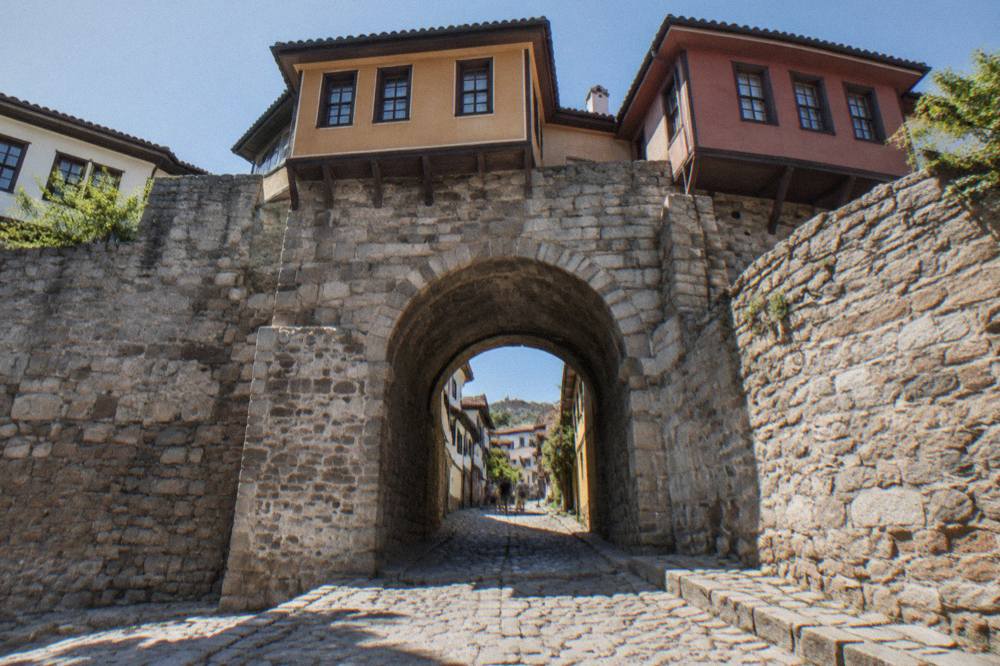
The near circle first. Hisar Kapia, the old gate, is a public landmark open at all hours, and the Hisar Kapia page explains its layers. The revival houses, Balabanov House, Hindliyan House and Lamartine House, are the ticketed interiors of the Old Town, each covered by the single-site price of 3.58 euro. The Ethnographic Museum, in the Kuyumdzhiev House, is closed on Mondays and costs about 3.07 euro, though that figure comes from a news agency report rather than the museum's own page, so confirm at the desk.
| Sight near the cathedral | Type | Cost basis |
|---|---|---|
| Ancient Theatre of Philippopolis | Roman theatre, ticketed | 3.58 euro single site |
| Nebet Tepe | Open-air ruins, free | free |
| Hisar Kapia | Public gate | free |
| Kapana district | Public streets | free |
| Roman Stadium sphendone | Open-air ruins | free |
| Tsar Simeon Garden and singing fountains | Public park | free |
The free tier of the Old Town is generous: two Roman sites, a gate, a park and a whole creative district cost nothing. That is why the cathedral visit scales up or down so easily, from a two-hour circuit to a two-day stay. The three day itinerary and the Roman Plovdiv guide extend the walk further into the imperial layer of the city.
If a longer stay appeals, book a hotel in Plovdiv here.
For the outer ring, here are the day options that pair best with an Old Town morning:
The third option leaves the city for the hills: Asen's Fortress, perched above Asenovgrad on the road to the Bachkovo Monastery, which is a working monastery reported to be free to enter, about 30 km from Plovdiv with minibuses from the Rodopi bus station taking 35 to 45 minutes. The Rhodopes day trip guide covers the mountain routes, and the Asen's Fortress page covers the fortress itself, though its entry fee is unclear in available sources, so confirm on arrival.
A final consideration is timing the cathedral stop against the rest of the day. The Old Plovdiv sites keep a lunch break, 12:30 to 13:00, which is a natural slot to descend into Kapana for a meal and return for the afternoon houses. The cathedral, as a working church, will have its own rhythm of services; the respectful approach is to arrive outside service times, dress modestly and confirm opening times on site.
Common Questions About The Cathedral Of The Dormition In Plovdiv
Is the Cathedral of the Dormition in Plovdiv free to enter?
It is a working Orthodox church, so confirm locally on arrival. The surrounding Old Plovdiv ticketed sites cost from 3.58 euro on the official list.
How far is the Cathedral of the Dormition from the Ancient Theatre of Philippopolis?
Both stand in the Old Town of Plovdiv, within a short walk of each other on the Three Hills ridge. The Ancient Theatre is open daily, April to October 9:30 to 18:00 and November to March 9:00 to 17:30, with a lunch break at 12:30 to 13:00.
What currency do I need for the sights around the Cathedral of the Dormition in Plovdiv?
The euro.
Can I visit the Cathedral of the Dormition and the Dzhumaya Mosque on the same day?
Yes, both are in central Plovdiv and the walk between the Old Town and the city centre is short. The Dzhumaya Mosque is open to visits from 6:00 to 23:00 and is free, with modest dress expected and prayer times to avoid.
Is the Cathedral of the Dormition part of a UNESCO World Heritage Site?
No. Neither the cathedral nor the Old Town is inscribed. "The Ancient Plovdiv" sits on Bulgaria's UNESCO Tentative List, submitted in 2004, which is a waiting list and not an inscription.
What is the best month to visit the Cathedral of the Dormition in Plovdiv?
Any month works, since the cathedral itself is indoors.
